26, July 2018
Cameroon is a close U.S. ally — And its soldiers carried out a shocking execution of women and children 0
A SOLDIER WALKS alone down a dirt road with an automatic rifle strapped to his back. It’s an innocuous beginning to a disturbing video.
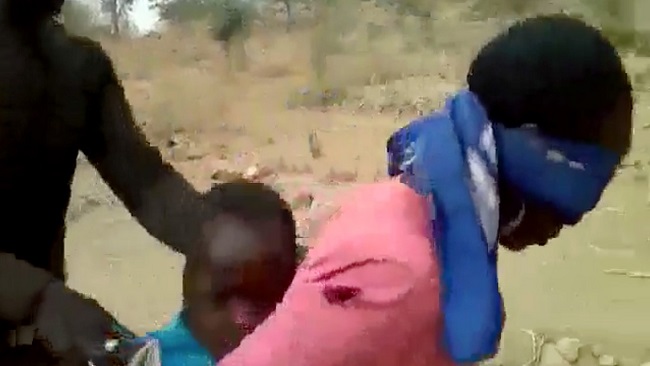
Moments later, a group of soldiers and civilians follows. Another man – dressed in military fatigues and wearing aviator sunglasses — repeatedly strikes a woman who clutches the hand of a young girl, perhaps 7 or 8 years old. “You are going to die,” says the soldier, who refers to the woman as “BH,” an apparent reference to Boko Haram. He steers her off the road, and the young girl, likely her daughter, follows. Another soldier does the same to a second woman who has a toddler strapped to her back, guiding her into a dirt expanse.
Videos of executions have become commonplace in our news culture, with the Islamic State, Al Qaeda, and other terror groups filming atrocities and sharing them on social media. But this video from Cameroon is particularly cold-blooded. The soldiers make the women kneel on the ground. One of the soldiers gestures to the young girl and says, “Yes. Little girl, come here,” directing her to stand next to her mother. He then pulls the girl’s shirt over her head, blindfolding her.
Gunshots follow in fast succession.
The violence seems to have ended until a soldier goes to inspect the bodies. “The child is still alive,” he says, standing over the young girl, who has collapsed to the ground and lies on her back, with no perceptible movement. Another shot is fired at her. A few feet away, the toddler strapped to the other woman’s back lies motionless. All of them – the two women and two children — have been executed.
“I had to watch the video many times in order to analyze it,” said Ilaria Allegrozzi, Amnesty International’s Lake Chad researcher and no stranger to atrocity videos associated with the Boko Haram conflict in the region. “It haunted me for days afterward. It’s one of the most disturbing videos I have ever seen in my career.”
The atrocity in this video was not carried out by Boko Haram or ISIS or Al Qaeda. It appears to have been committed by members of Cameroon’s armed forces – a military that receives substantial aid from the United States, whose troops operate from secretive drone bases in the north of the country. It is one of America’s closest military allies on the continent.
“Cameroon is a vital partner in the fight against Boko Haram, ISIS-West Africa, and other violent extremist organizations in the Lake Chad Basin region,” Maj. Sheryll Klinkel, a Pentagon spokesperson, told The Intercept. “Our relationship with Cameroon is designed to promote stability and security within the region.”
Snippets of the video have been published by a variety of news outlets, but none have shown the executions. The Intercept has obtained the full video and is publishing it with subtitles (the dialogue is in French). With the U.S. government offering no indication that it is reconsidering its aid to Cameroon’s military — the State Department and the Pentagon have merely called on Cameroon to investigate what happened — it is in the public interest for an authenticated and translated version of the entire video to be made available.
The video first came to public attention earlier this month, when it began to circulate online. Government spokesperson Issa Tchiroma Bakary quickly branded it as “fake news” and said it was “an unfortunate attempt to distort actual facts and intoxicate the public.”
Amnesty International soon issued a detailed analysis of the footage in a report that accused Cameroon’s armed forces of responsibility. “The Cameroonian authorities’ initial claim that this shocking video is fake simply doesn’t stand up to scrutiny. We can provide credible evidence to the contrary,” said Samira Daoud, deputy director of Amnesty International’s West Africa office. “Given the gravity of these horrific acts — the cold-blooded and calculated slaughter of women and young children — these hasty and dismissive denials cast serious doubt over whether any investigation will be genuine.”
After Amnesty released its report, State Department spokesperson Heather Nauert issued a statement expressing concern about the executions. “International media, Amnesty International, and Cameroonian human rights organizations attribute the actions portrayed in the video to the Cameroonian military,” the statement read. “We call on the Government of Cameroon to investigate thoroughly and transparently the events depicted in the video, make its findings public, and if Cameroonian military personnel were involved in this atrocity, hold them accountable.”
The Pentagon echoed the State Department’s position. “We are aware of the video. At this time, we cannot confirm the authenticity of the video, nor can we confirm any possible military affiliation of those shown in this troubling video,” Klinkel told The Intercept by email. “We echo the State Department’s call for the Government of Cameroon to investigate thoroughly and transparently the events depicted in the video, make its findings public, and if Cameroonian military personnel were involved in this atrocity, hold them accountable.”
Allegrozzi says more is necessary. “This should be part of a broader effort by the government to put an end to grave human rights violations by Cameroon’s security forces fighting Boko Haram,” she told The Intercept.
With media and political pressure mounting, Cameroon’s government seemed to backtrack and reportedly arrested four soldiers, three of them directly implicated in the killings, according to a July 19 article from Agence France-Presse. But the minister of defense, Joseph Beti Assomo, has also accused the writer and activist Patrice Nganang of creating the video in order to “overwhelm” Cameroon’s armed forces.
ACCORDING TO AMNESTY, the executions of the two women and two young children were likely carried out by members of Cameroon’s armed forces in the Far North region of the country. “Both the weapons and uniforms of the soldiers in the video are indicative of the Cameroon army, and display patterns consistent with a number of possible units, including regular infantry and the Rapid Intervention Battalion (BIR), the special forces of the Cameroonian army,” reads a statement issued by the human rights group.
It’s unclear when the executions of the four unarmed civilians occurred, but emergence of the video comes roughly one year after Amnesty, the London-based research firm Forensic Architecture, and The Intercept exposed illegal imprisonment, torture, and killings by Cameroonian troops – specifically the BIR — at a remote military base that is also used by U.S. personnel and private contractors for drone surveillance and training missions. As the U.S. military fortified the Cameroonian site, known as Salak, and supported the elite local troops based there, Amnesty found that suspects held at the outpost were subjected to water torture, beaten with electric cables and boards, or tied and suspended with ropes, among other abuses.
The United States has a long tradition of working with unsavory regimes — from Chile’s brutal military dictatorship under Augusto Pinochet to Indonesia’s brutal military dictatorship under Suharto — and training with “partner-nation” security forces that have been implicated in serious criminal acts. A 2016 joint investigation by The Intercept and 100 Reporters, analyzing 6,176 leaked diplomatic cables, found that the process to weed out human rights abusers from U.S. training programs relied on highly questionable vetting procedures.
If the response of the U.S. military to the Salak disclosures is any indication, the latest controversy over the videotaped executions in Cameroon will not fundamentally alter America’s relationship with the West African nation.
After the Salak revelations, U.S. Africa Command launched an investigation, but never publicly announced details about its aims. According to a State Department official who spoke on the condition of anonymity, AFRICOM’s investigation “did not consider Cameroonian human rights violations but focused on whether DoD [Department of Defense] personnel had knowledge of abuses by Cameroonian military forces.”
It appears, in other words, that the U.S. military was less concerned with what the Cameroonians were doing, than whether any Americans knew about it. According to Klinkel, the Pentagon spokesperson, the investigation “looked into the involvement, knowledge, reporting, and training of U.S. forces deployed to Cameroon as they relate to allegations in the Amnesty International report” and “whether U.S. forces were aware of any actual or alleged human rights abuses committed by Cameroonian forces prior to the Amnesty International report.”
While the investigation, headed by Brig. Gen. Timothy McAteer, concluded last November, the report was never made public. For nearly one year, AFRICOM has ignored periodic requests from The Intercept seeking comment about the parameters, scope, and findings of its probe. “I do not have a timeline on when the investigation results will be publicly released,” Klinkel told The Intercept.
“The results of the investigation have yet to be publicly released and this must be rectified,” Amnesty’s Ilaria Allegrozzi, said. “The report must be publicly released, not only to find out if any U.S. military personnel were aware of incommunicado detention and torture, but also to convey to the Cameroonian authorities how seriously the United States takes this issue.”
Following the 2017 torture revelations, U.S. military assistance to some, if not all, military units in Cameroon was reportedly suspended. The Pentagon claimed not to “have anything” on the subject, but the State Department official told The Intercept that “the suspension was based on the [U.S. government] analysis of all sources of credible information, including the 2017 Amnesty International report.” The official said assistance was suspended “to all Cameroonian security force units where there is credible information implicating those units in the commission of gross violations of human rights,” also known as GVHR. The official did not, however, specify which Cameroonian units had been cited and whether they had any connection to the 2017 allegations. “The suspension of assistance to these units will remain in effect until the allegations of GVHR are resolved, and the Government of Cameroon has taken effective steps to hold perpetrators accountable, as appropriate,” the official told The Intercept.
In April, the State Department released its annual human rights assessment of Cameroon and cited Amnesty’s 2017 findings, detailing a raft of abuses, including
Arbitrary and unlawful killings through excessive use of force by security forces; disappearances by security forces and Boko Haram; torture and abuse by security forces including in military and unofficial detention facilities; prolonged arbitrary detentions including of suspected Boko Haram supporters and individuals in the Anglophone regions; harsh and life- threatening prison conditions. … In the Far North region, security forces also were reported responsible for holding incommunicado, torturing, and in at least 10 cases killing suspected Boko Haram and Islamic State (ISIS)-West Africa supporters in detention facilities run by the military and intelligence services.
Klinkel said that the State Department report did not result in any changes to the assistance provided to Cameroon. “DoD provides assistance ONLY to Cameroonian units who have NOT been credibly implicated in gross violations of human rights after a thorough vetting process,” she wrote in an email. “U.S. law prohibits DoD from providing any training, equipment, or other assistance to a unit of a foreign security force if DoD has credible information that the unit has committed a gross violation of human rights.”
Just 10 days before the State Department took Cameroon to task in print, Peter Barlerin, the U.S. ambassador there, presided over a ceremony celebrating the transfer of two American-made surveillance aircraft to the Cameroon Air Force. He seemingly contradicted key findings of the human rights report. “Cameroon is a model of effective cooperation between the army and the inhabitants of the Far North to ensure their safety,” Barlerin told the audience. “Cameroon’s efforts to collaborate with the United States and credible international organizations in the provision of training on human rights, respect for the law of armed conflict, and the control of the army by civilians deserve special mention.”
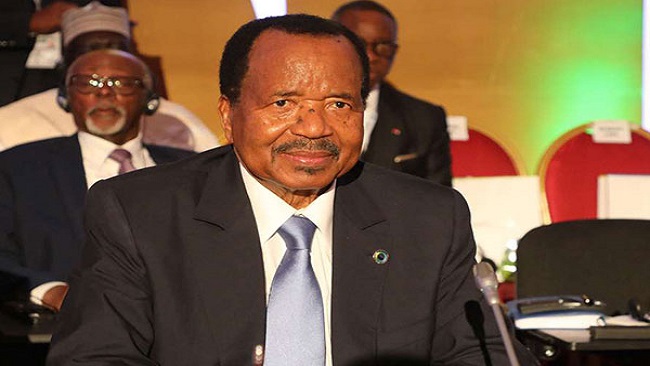
In May, at an event marking the start of a two-year State Department-funded counter terrorism initiative, Barlerin called attention to the fact that the United States “advises and assists Cameroonian forces, trains its forces, and provides intelligence, surveillance, and reconnaissance support.” Days later, in prepared remarks, he noted that Cameroon’s military was, indeed, guilty of “targeted killings, detentions without access to legal support, family, or the Red Cross, and burning and looting of villages.” He nonetheless “congratulated” Cameroonian President Paul Biya – who has now held power for 35 years — on “joint efforts to fight Boko Haram and the Islamic State in the Far North.”
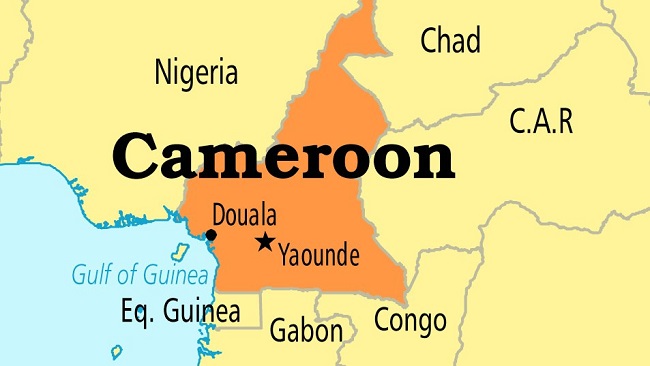
On July 3, in remarks at a U.S. Independence Day celebration at the Hilton hotel in Cameroon’s capital, Yaoundé, Barlerin seemed to suggest an agree-to-disagree mindset. “It is good to see an opening in Cameroon with regard to national and international organizations working in the field of human rights — we do not have to agree on everything to discuss around a table,” he said.
Source: The Intercept















26, July 2018
Shootings on Video in Cameroon ‘May Not Be Isolated Cases,’ U.N. Fears 0
In the video, a man in a military uniform leads a woman down a dirt road, smacking her in the head several times as she holds a little girl’s hand and stumbles along. Another woman trails them with an infant strapped to her back. The group is blindfolded and made to sit on the ground.
Armed uniformed men raise their weapons and fire.
“The girl is still breathing,” someone says after the shooters pause, and one walks over to the limp bodies.
A uniformed man approaches the girl and fires again.
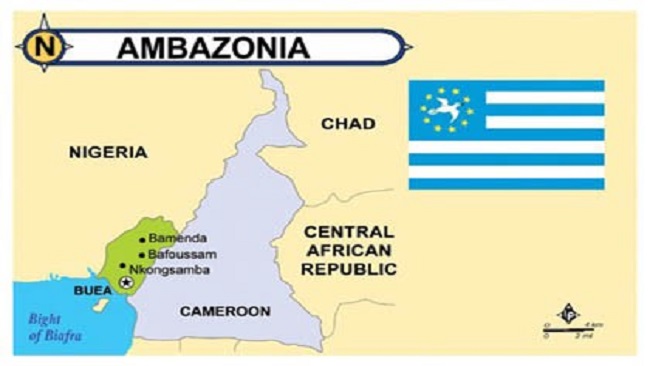
This graphic video, which has circulated on social media in recent days, appears to show soldiers in Cameroon executing two women, a child and baby on suspicion of being affiliated with Boko Haram. It has drawn outrage from human rights advocates and riled secessionist groups that have taken up arms in English-speaking areas of the country and say that they, too, have suffered abuses at the hands of the military.
On Wednesday, the United Nation’s high commissioner for human rights expressed alarm at continuing violence in Cameroon, saying he was “utterly appalled” by the horrific video.
“The government of Cameroon has an obligation to investigate this atrocious crime urgently,” said Zeid Ra’ad al-Hussein, the high commissioner. “I am deeply worried that these killings captured on camera may not be isolated cases.”
The United States Department of State has called for an inquiry, and Cameroonian officials have said they would investigate the episode. Some officials have told various groups that four soldiers have been arrested in the shootings, but others have denied that, calling it “fake news.”
A presidential election due to be held in October — in which President Paul Biya, now in his 36th year of power, is running for re-election — is adding to tension.
Videos of abuses by security forces posted to social media have served to escalate the violence. In English-speaking areas, it has worsened significantly in recent weeks and claimed at least 425 lives, according to the United Nations agency Unicef.
Many of the clips cannot be verified. The statement from the United Nations said it had repeatedly asked to enter English-speaking areas, but the government had denied access.
The recent video appears to have been filmed in the Far North, a region where Boko Haram operates. Its timing could not be determined, but diplomats believe it to be authentic.
Such action, as horrible as it is, did not come as a surprise to some human rights activists in Cameroon who say that security forces have been acting with impunity for years, especially in the fight against Boko Haram. Amnesty International and other groups have publicized numerous abuses.
“These extrajudicial killings are part of a broader pattern,” said Agbor Balla, a human rights lawyer in Cameroon.
Cameroonian defense officials said they had arrested a soldier in the rape of a woman in Bamenda, a major city in the English-speaking area. News of the arrest followed the publication of a video of the woman recounting being attacked after failing to produce identification at a military checkpoint.
Actions of both security forces and armed separatists in southern Cameroon have been condemned by human rights groups. Military forces have used deadly force on unarmed protesters, firing on some from helicopters and torching homes. Separatists have carried out kidnappings and targeted killings of police officers and local officials, and have burned schools.
Tens of thousands of civilians caught in the middle of the violence have fled — both from Boko Haram areas and from areas where armed separatists are operating. Government officials have pledged to investigate abuses, and have made arrests in some cases. But rarely have they broadly publicized any such actions. The United Nations may start monitoring the area remotely, its statement said.
Source: New York Times