
18, November 2017
Ambazonia Crisis: Human Rights Must Be Respected To End Cycle Of Violence 0
The Government of Cameroon must engage representatives of the Anglophone population in a meaningful political dialogue and halt renewed violence in the south-west and north-west, where the country’s English-speaking minority are reportedly suffering worsening human rights violations, a group of UN experts* has warned.
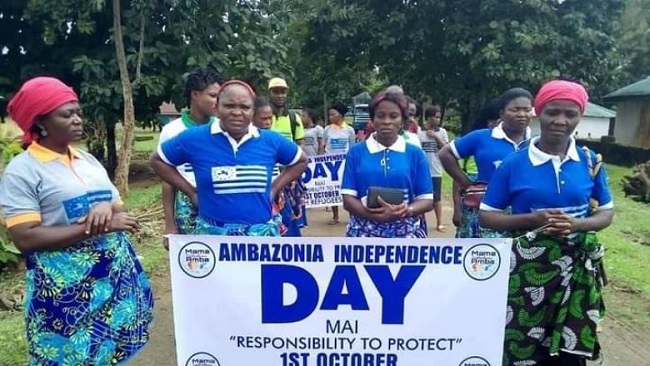
“We urge the Government to adopt all necessary measures consistent with Cameroon’s human rights obligations to end the cycle of violence,” the experts said in a joint statement. Up to 17 people have reportedly been killed, and dozens wounded and arrested in demonstrations in the country’s Anglophone regions since 1 October.
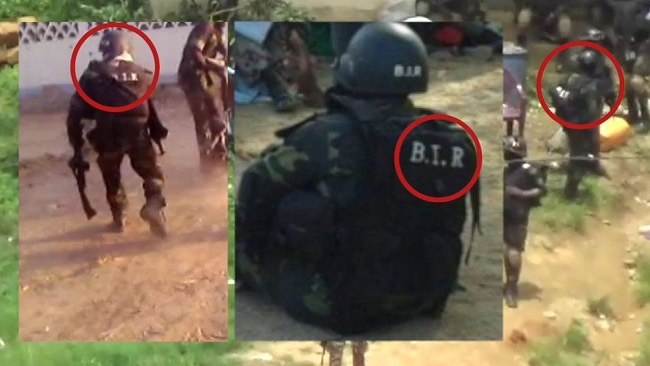
The experts are disturbed by reports of a series of measures taken by the national authorities, including curfews, a ban on public meetings, and other restrictions aimed at preventing peaceful protests. Excessive use of force by the security services, injuries, mass arrests, arbitrary detentions, torture and other ill-treatment have also been reported.
Freedom of expression has been reportedly limited by the blocking of internet connections and of access to social media platforms such as Twitter, WhatsApp and Facebook, which a UN expert has previously condemned.
“These restrictions must stop immediately, and the Government must ensure a thorough, impartial and independent investigation into all allegations of human rights violations perpetrated during and after the events of 1 October. The Government must take effective measures to prosecute and sanction all those responsible for such violations.”
The appeal for action comes nearly a year after UN experts publicly urged the Government to halt violence against the English-speaking minority , following reports that Anglophone protesters in Buea and Bamenda had suffered undue force.
The experts also denounced any use of violence against members of the security forces, after reports that several were killed last week.
Since December 2016, the experts have repeatedly raised concerns directly with the Government of Cameroon and continue to monitor and seek clarification of the alleged human rights violations in the north-west and south-west of the country.
Source: Modern Ghana






19, November 2017
News of Libya ‘slave market’ stirs controversy 0
News of black men being put on sale at a Libyan “slave market” has drawn outrage from the African Union (AU) and triggered violent protests in Paris.
Guinean President Alpha Conde, who is also the chairman of the AU, demanded on Friday that the “despicable trade” be stopped, the slaves be set free, and the perpetrators be put on trial.
The outrage was sparked by a CNN report showing footage of a live auction in Libya where black youths were being sold for hundreds of dollars to buyers as farmhands.
“These modern slavery practices must end, and the African Union will use all the tools at its disposal,” Conde said.
The black youths on sale in Libya are generally African asylum seekers from nations such as Guinea, Senegal, the Gambia, Mali, Nigeria, and Niger. Media reports say many of the asylum seekers end up in the wrong places and lose their freedom to gangs that are either led or are in cahoots with human traffickers.
The asylum seekers-turned-slaves had sought to cross through the country and travel over the Mediterranean Sea to Europe, where they sought to ultimately settle.
Libya has opened an investigation into the slavery report, saying it would free the slaves, according to the CNN.
“A high-level committee has been convened encompassing representatives from all the security apparatus to oversee this investigation,” said Anes Alazabi, an official with the internationally-recognized government of Libya’s Anti-Illegal Immigration Agency.
“Priorities of the investigation are not only to convict those responsible for these inhumane acts, but also to identify the location of those who have been sold in order to bring them to safety and return them to their countries of origin,” said the Libyan official.
Libya has been in a state of near chaos since 2011, when its long-time dictator, Muammar Gaddafi, was ousted, and rival militia groups and factions started vying for power and territory.
Protest in Paris
In related news, protesters carrying signs reading “No to slavery in Libya,” gathered in front of the Libyan Embassy in Paris on Saturday to protest the practice of slavery.
Culled from Presstv