30, June 2023
UN Security Council votes to end Mali peacekeeping mission 0
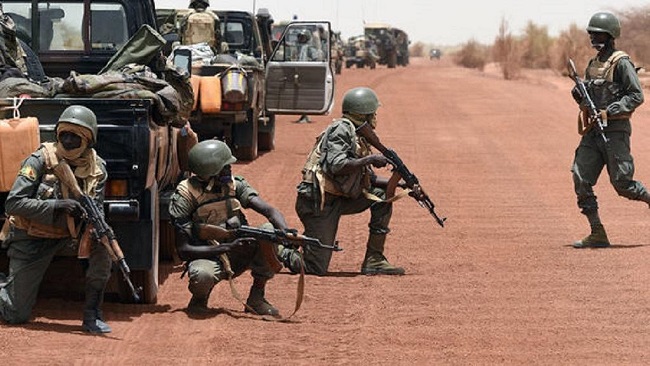
The UN Security Council on Friday ended a decade-old peacekeeping mission in Mali, whose military junta has aligned with Russia and demanded the withdrawal of the international force battling jihadists.
Bowing to the principle that peacekeepers need the consent of the host government, the Security Council voted unanimously to start immediately winding down the mission despite fears by Western powers of new instability in the troubled nation.
The vote came two weeks after Malian Foreign Minister Abdoulaye Diop stunned the Security Council by calling the UN operation known as Minusma a “failure” and urging its immediate end.
Mali’s relations with the United Nations have deteriorated sharply since a 2020 coup brought to power a military regime which also severed defense cooperation with France, the former colonial power.
The junta instead has rallied behind Russia and brought in the Wagner Group, the ruthless mercenaries involved in a mutiny against President Vladimir Putin last week.
“We deeply regret the transitional government’s decision to abandon Minusma and the harm this will bring to the Malian people,” senior US diplomat Jeffrey DeLaurentis told the Security Council.
But he said that the United States voted for the resolution as it agreed with the logistical timeline for the withdrawal, which is set to be complete by the end of the year.
Russia’s deputy ambassador to the UN, Anna Evstigneeva, said the authorities in Bamako were seeking to take “full responsibility” for security and that Russia “will continue to provide comprehensive support to Mali for normalizing the situation.”
Under the resolution led by France, the peacekeepers will cease their main activity from Saturday and focus on a departure by the end of the year.
The peacekeepers will still be empowered to protect against “imminent threats of violence to civilian” in areas surrounding them.
Deadly and costly
Minusma has been the most costly mission for the UN, at $1.2 billion a year, and 174 peacekeepers have died since its creation in 2013.
Despite tensions with the junta, the UN mission had widely been expected to be extended until the Malian foreign minister’s intervention. Secretary-General Antonio Guterres earlier in June had proposed renewing Minusma but streamlining its activities.
In a report, Guterres acknowledged shortcomings but called the mission “invaluable.” He noted that several countries in the region saw extremist groups as an “existential threat” whose violence could spill over and wanted to strengthen Minusma.
With 13,000 troops and police in Minusma, its termination will be a Herculean task with the United Nations needing to take away equipment, helicopters and armored vehicles.
“Securing the constructive cooperation of the Malian authorities will be essential to facilitate the process,” said a spokesperson for UN peacekeeping operations.
While the withdrawal was a given, the timeline was the focus of heated negotiations in recent days, according to diplomats.
Mali, with the backing of veto-wielding Russia, had pushed for Minusma to leave as quickly as possible, while some other nations feared that even six months was too rushed.
Richard Gowan, an expert at the International Crisis Group, said that UN officials feared that Wagner will simply take over Minusma facilities once the mission is completed.
Julie Gregory of the Stimson Center said the end of the mission could have a dire effect on civilians.
“It’s likely that violent extremists will take the opportunity to increase violence” with a potential for increased confrontation with national forces, especially in the north,” Gregory said.
Russia has insisted that its paramilitary forces will continue to operate in Mali and other African nations, notably the Central African Republic, despite the aborted mutiny of the Wagner Group’s chief Yevgeny Prigozhin.
Russia had long insisted that Wagner was a private group but acknowledged after the rebellion that it had been directly funding its overseas operations, which have been widely criticized by the West and human rights groups.
“Ultimately it is for the Malian transitional authorities to choose its partners,” said James Kariuki, Britain’s deputy ambassador to the United Nations. “But let’s be clear: the Wagner Group, whether operating autonomously or under direct control from Moscow, is not the answer — in Mali or anywhere else.”
Source: AFP















4, July 2023
Putin, Xi, Modi welcome Iran as 9th member of Shanghai Cooperation Organization 0
Russian President Vladimir Putin, Chinese President Xi Jinping and Indian Prime Minister Narendra Modi have welcomed Iran’s accession into the Shanghai Cooperation Organization (SCO) as the ninth full member of the influential security and trade alliance.
Iran gained full-fledged membership of the SCO on Tuesday, during the 23rd virtual summit of the SCO hosted by India, becoming the ninth member of the bloc, which also includes China, Russia, India, Pakistan, Uzbekistan, Kyrgyzstan, Kazakhstan and Tajikistan.
“The Islamic Republic of Iran will now participate in our organization in a full-fledged format. I would like to extend congratulations on this occasion to the president of Iran, Mr. Ebrahim Raeisi, and sincere greetings to him,” Putin said during his address to the one-day-long summit.
“In less than two years, our Iranian partners completed all the necessary procedures and now our shared task is to help our colleagues to productively join in the multifaceted activities taking place within the framework of the SCO,” the Russian leader added.
Being a Eurasian political, economic, international security and defense bloc, the SCO boasts to be the world’s largest regional organization in terms of geographic scope and population, grouping around 40 percent of the world population in approximately 60 percent of Eurasia.
Source: Presstv