13, July 2021
Taliban say do not want to fight inside Afghanistan’s cities 0
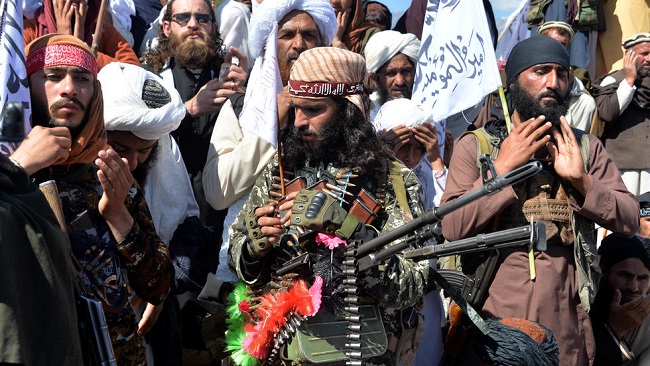
The Taliban do not want to battle government forces inside Afghanistan’s cities, a senior insurgent leader said Tuesday, as the militants also warned Turkey against extending its troop presence.
The insurgents have swept through much of northern Afghanistan in recent weeks, and the government now holds little more than a constellation of provincial capitals that must largely be reinforced and resupplied by air.
On Tuesday, the head of a Taliban commission that oversees government forces who surrender to the insurgents urged the residents of cities to reach out to them.
“Now that the fighting from mountains and deserts has reached the doors of the cities, Mujahiddin don’t want fighting inside the city,” Amir Khan Muttaqi said in a message tweeted by a Taliban spokesman, using another term for the group.
“It is better… to use any possible channel to get in touch with our invitation and guidance commission,” he said, adding this would “prevent their cities from getting damaged”.
The strategy is one well-worn by the Taliban — particularly during their first rise to power in the 1990s — cutting off towns and district centres and getting elders to negotiate a surrender.
In a separate statement Tuesday, the Taliban said Turkey’s decision to provide security to Kabul airport when US-led forces leave was “reprehensible”.
“We consider stay of foreign forces in our homeland by any country under whatever pretext as occupation,” the group said, days after Ankara agreed with Washington to provide security for Kabul airport.
– Rapid changes –
As foreign forces wind up their withdrawal — due to be completed by August 31 — the situation on the ground is changing rapidly.
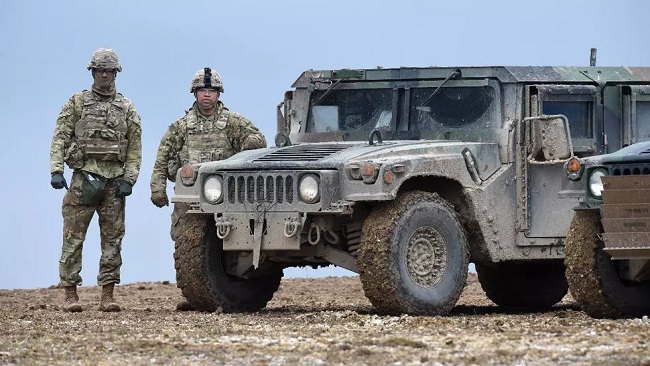
The top US general in Afghanistan relinquished his command Monday at a ceremony in the capital, the latest symbolic gesture bringing America’s longest war nearer to an end.
The pace of the pullout — and multiple offensives launched by the Taliban — have raised fears that Afghanistan’s security forces could be swiftly overwhelmed, particularly without vital US air support.
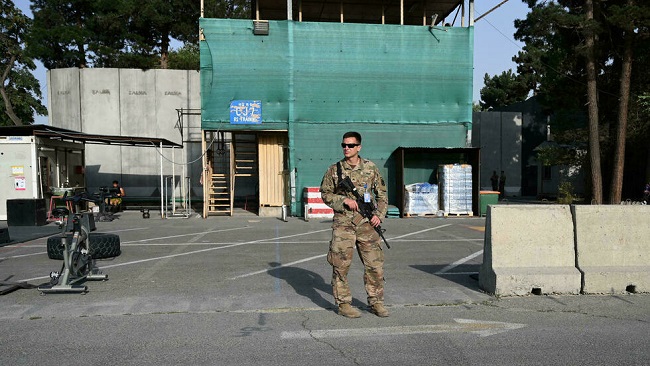
Around 650 American service members are expected to remain in Kabul, guarding Washington’s sprawling diplomatic compound.
But Turkish President Recep Tayyip Erdogan said Friday he had agreed with the United States on the “scope” of how to secure Kabul airport.
Peace talks between the insurgents and the government supposedly taking place in Doha have largely fizzled out, and the Taliban now appear set on a complete military victory.
But claims by the hardline group to control 85 percent of the country are impossible to verify independently — and strongly disputed by the government.
Last week in Moscow, a visiting Taliban delegation said the group now controls more than half the country’s near-400 districts — a claim steadfastly rejected by security forces spokesman Ajmal Omar Shinwari.
Still, the situation has alarmed foreign nations, and on Sunday India became the latest country to evacuate some of its diplomats.
On Monday, Russia announced it was relocating some diplomats to Uzbekistan, while China also evacuated 210 nationals from Afghanistan.
Source: AFP













14, July 2021
Cuba: One dead, more than 100 arrested after anti-government protests 0
One person died and more than 100 others, including independent journalists and dissidents, have been arrested after unprecedented anti-government protests in Cuba, with some remaining in custody on Tuesday, observers and activists said.
A 36-year-old man named by the state news agency as Diubis Laurencio Tejeda died during an anti-government protest on the outskirts of Havana on Monday, the interior ministry said.
The ministry said it “mourns” his death while the news agency said he had taken part in “disturbances.”
Relatives and friends of those detained during and after Sunday’s historic demonstrations engaged in a desperate search on Tuesday for news on their whereabouts.
“They took him from the house handcuffed and beaten, without a shirt, without a mask,” said a 50-year-old woman who did not wish to give her name, enquiring about her 21-year-old son at a police station in the capital.
“They took many from the neighbourhood, young and old,” she said, before leaving empty-handed.
Cuba’s San Isidro free speech protest movement published late on Monday a list on Twitter of 144 people held or reported as disappeared after thousands of Cubans took to the streets in dozens of cities and towns in a spontaneous outburst of public anger.
Droves of demonstrators chanted “Down with the dictatorship” in protests dispersed by police in some 40 different locations Sunday.
About 100 protesters again gathered in Havana Monday evening, shouting “Down with communism.”
The rallies were unlike any seen since the Cuban revolution. They came as the country endures its worst economic crisis in 30 years, with chronic shortages of electricity, food and medicine and a recent worsening of the coronavirus pandemic.
But Cuba’s foreign minister Bruno Rodriguez denied on Tuesday there had been a “social outbreak” on Sunday, insisting that the people still support “the revolution and their government.”
‘Economic suffocation’
Havana blamed the show of discontent on the United States pursuing a “policy of economic suffocation to provoke social unrest in the country.”
Cuba has been under US sanctions since 1962.
But Washington pointed the finger at “decades of repression” in the one-party communist state.
Cuba’s Catholic church called for “understanding” in a statement published on the Bishops Conference website, adding that “the people have the right to express their needs, desires and hopes.” The bishops also criticised the government’s “immobility that contributes to giving continuity to the problems, without solving them.”
Many Cubans were looking for loved ones.
“They took my daughter yesterday (Monday) and I have no news of her,” said a woman at a Havana police station.
A young man said his brother, 25, was taken from a neighbor’s house. “They gave him a tremendous blow, unjustly, and took him away,” he said.
A police official told worried family members that those arrested were taken to different detention centers, without providing details of who went where.
Julie Chung, acting assistant secretary in the US State Department’s Bureau for Western Hemisphere affairs, called in a tweet Monday for the “immediate release” of the detainees.
“Violence and detentions of Cuban protesters & disappearances of independent activists… remind us that Cubans pay dearly for freedom and dignity,” she said.
Those held included dissident Guillermo Farinas, former political prisoner Jose Daniel Ferrer and artist Luis Manuel Otero Alcantara.
‘Counterrevolutionary elements’
Granma, the official newspaper of Cuba’s governing Communist Party, said Tuesday that President Miguel Diaz-Canel had met with his retired predecessor Raul Castro and the rest of the communist party politburo on Sunday to discuss the protests.
They “analysed the provocations orchestrated by counterrevolutionary elements, organized and financed from the United States for destabilisation purposes,” Granma said.
Mobile internet was down in Cuba for much of Sunday and on Monday the authorities cut access to major social media platforms, according to London-based group NetBlocks.
The United States on Tuesday urged Cuba to end the internet restrictions and demonstrate “respect for the voice of the people by opening all means of communication, both online and offline.”
‘Treated like rubbish’
Among those arrested was theatre director Yunior Garcia, a leader of the 27N movement which was born after a much smaller protest by members of the art community on November 27 last year to demand free speech.
Garcia said on Facebook that he and a group of friends were beaten “and forcefully dragged and thrown into a truck.”
“We were treated like rubbish,” he said, adding they were taken to a detention center in Havana where they saw “dozens of young people” arrive.
He was released on Monday afternoon.
Also arrested on Monday was Camila Acosta, a Cuban correspondent for the Spanish newspaper ABC, its foreign editor said.
Spain’s foreign ministry on Tuesday urged the Cuban authorities to respect the right to protest and demanded that Cuba “immediately” release Acosta.
The last major protests, and the first since the revolution that brought Fidel Castro to power in 1959, were in 1994.
Those were also against economic hardship but were limited to the capital and quickly put down by police.
(AFP)