13, October 2018
Consortium of CPDM Crime Syndicates: Presidential election still isn’t decided. What happens next? 0
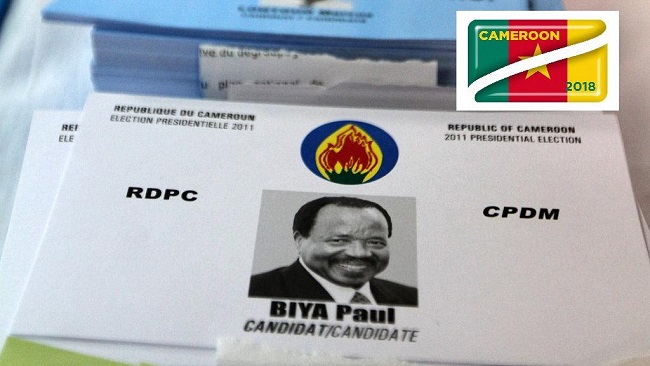
Cameroon held presidential elections on Sunday, and although an opposition leader has claimed victory, official results have yet to be released. Social media is abuzz with unverified election results, many of which proclaim various opposition leaders as the winners of the elections.
Furthermore, at least two presidential candidates have submitted petitions for partial or total cancellation of the elections to the Constitution Council (within the 72 hours following the close of the poll, as stipulated in the electoral code), reporting electoral irregularities.
But how surprised and concerned should Cameroonians and the international community actually be about what’s happened since Sunday’s election? I asked Cameroonian political science professor Landry Signé to help make sense of what just happened in the nation’s elections. Here’s what you need to know:
Kim Yi Dionne: Analysts expect President Paul Biya (of the ruling CPDM party) to win reelection for his seventh term in office. Still, Cameroon Renaissance Movement party candidate Maurice Kamto proclaimed Monday to have won the election. What should we know about Kamto’s claim?
Landry Signé: First, even some voices from Kamto’s coalition believe Biya to have received more votes than Kamto. Second, in addition to the government, other key opposition parties have condemned Kamto’s proclamation — largely because it is prohibited to self-proclaim results. Finally, we might interpret Kamto’s action as a strategy to gain more international attention, put pressure on the incumbent and gain more legitimacy nationally in order to be perceived as the main voice of the opposition — and the most credible alternative to President Biya.
K.Y.D.: Even setting Kamto’s claim aside, should there be concern about the fact that it’s been five days since the polls closed and the elections board still hasn’t released the results?
L.S.: Electoral law in Cameroon actually gives the institutions in charge of elections up to 15 days to announce the results. Even if this period seems long, it is consistent with previous elections and the rules regulating electoral administration in Cameroon. This period cannot be circumvented except through legal proceedings that would have had to occur before the election.
K.Y.D.: But there have been reports of election irregularities in the elections, right?
L.S.: Yes, observers noted there was unbalanced media coverage of candidates (Biya received three times more coverage than any other presidential candidate), issues with voters having the resources they need to cast their votes, and there were allegations of interference with the electoral process on Election Day. But this is not surprising: Cameroon has a long history of imperfect elections, and it is difficult to change old habits.
To be sure, I’m not saying the instigators of irregularities should get a pass, but the extent of incidents is not significant enough to affect the final outcome. Even without these irregularities, Biya would still win.
K.Y.D.: Why do you think Biya would still win?
L.S.: This is largely explained by a very good but divided opposition. With so many good candidates this year, they have managed to divide the popular vote.
In addition, an area where Biya would have received the least support had very low turnout. Voter turnout in the Anglophone regions was quite low, given a separatist crisis. Separatists in the northwest and southwest regions clashed with state forces in the period leading up to the election and on Election Day, causing many to avoid going out to vote.
Even without a divided opposition and without the separatist crisis, an opposition victory would have still been unlikely. Only 50 percent of eligible Cameroonians registered to vote, and registered voters tend to be pro-CPDM (the ruling party). Furthermore, CPDM’s resources and organizational capabilities are unmatched.
K.Y.D.: I know it’s still early, but does this election leave you resigned or hopeful?
L.S.: I’m actually optimistic about Cameroon’s democratic future. The number of good opposition candidates, the realization of the importance of registering and voting, as well as the current debate on policy options that each candidate has to create a better future for Cameroonians, are giving hope that a transition may be less far off than we think and may possibly happen at the ballot box. There are also emerging voices within CPDM that are advocating for the renewal of the political elite through democratic means. But, if there is really an interest in seriously challenging the CPDM, the opposition will have to come together to mount a successful challenge.
Culled from Washington Post












14, October 2018
Outgoing US Ambassador slams UN for electing Cameroon and other human rights abusers to Human Rights Council 0
Outgoing U.S. Ambassador to the U.N. Nikki Haley criticized the U.N. Friday after its General Assembly elected new members to the controversial Human Rights Council — including countries with poor human rights records.
The 18 new members were selected from five regional blocs of countries, and their elections were largely predetermined since they were not challenged by other countries.
While other countries with stronger human rights records were voted in — such as Argentina, Czech Republic and Denmark — the addition of those with poor records was cited as evidence by Haley that the U.S. was right to withdraw from the body earlier this year.
“Today, the U.N. chose new members for the Human Rights Council. Yet again, countries with poor human rights records ran uncontested. This lack of standards continues to undermine the organization and demonstrates again why the United States was right to withdraw from it earlier this year,” she said in a statement.
“The United States will continue to support reforms that would make the Human Rights Council credible. More importantly, the United States will continue to be the world’s human rights leader regardless of the suspect composition and poor decisions of the Human Rights Council,” Haley, who is stepping down from her role in January, added.
Haley urged the body to reform in a speech in Geneva in 2017 focusing on its anti-Israel bias and also its membership — which she said led to human rights abusers being protected on the council.
“For too long the human rights council has been a protector of human rights abusers and a cesspool of political bias,” she said in June of this year, announcing the United States’ departure.
The elections had been criticized by a host of other human rights groups as well. Ahead of the vote, Human Rights Watch said the election risks undermining the council’s effectiveness and credibility.
“UN member countries should show their outrage at the Philippines and Eritrea by leaving two spots on the ballot sheet blank and keeping them off the council,” said Louis Charbonneau, U.N. director at Human Rights Watch. “Philippines President Rodrigo Duterte’s abusive ‘war on drugs’ has been a killing frenzy that has left thousands dead. In Eritrea, the authorities persecute and jail government critics and force citizens into indefinite national service.”
Eritrea has been widely condemned as one of the most repressive countries in the world. A report to the Human Rights Council last year by a U.N. special rapporteur condemned Eritrea for its “indefinite length of conscription” and said that the government had “an ongoing unwillingness to meet its obligations and commitments under regional and international human rights instruments.”
Matthew Lee, a U.N. journalist who runs the Inner City Press blog and has focused on alleged human rights abuses in Cameroon, told Fox News that Cameroon’s elevation to the Council was “an outrage.”
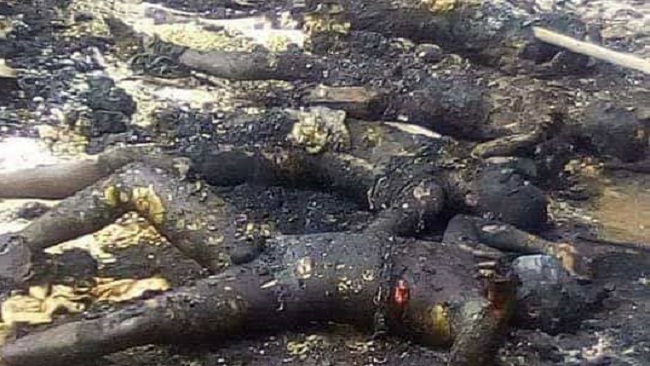
“Only this year the government of 36-year ruler Paul Biya has been found burning villages in the Anglophone areas of the country, disappearing political opponents, and summarily executing women and children, on film,” he said.
The new members will take their seats at the council in January. One of the body’s more controversial members, Venezuela, will be replaced after serving two terms on the council.
Farhan Haq, a spokesman for U.N. Secretary-General Antonio Guterres, said that the matter was a question for the member states themselves.
“Ultimately we don’t evaluate or second guess the decisions made by member states,” he said. “They are the ones who chose to run people for these seats and their the governments who vote for them.”
Culled from Fox News