29, July 2024
South Africa: Ex-President Jacob Zuma expelled from ANC 0
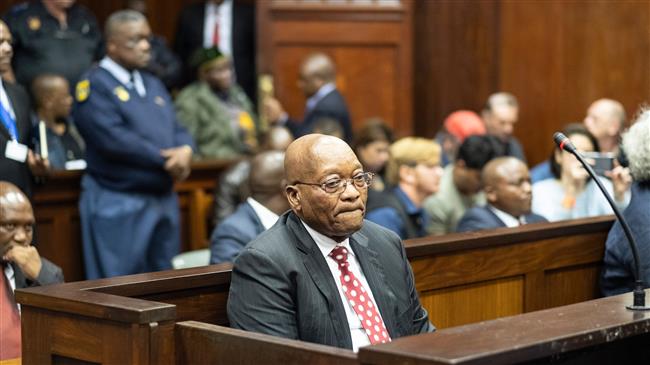
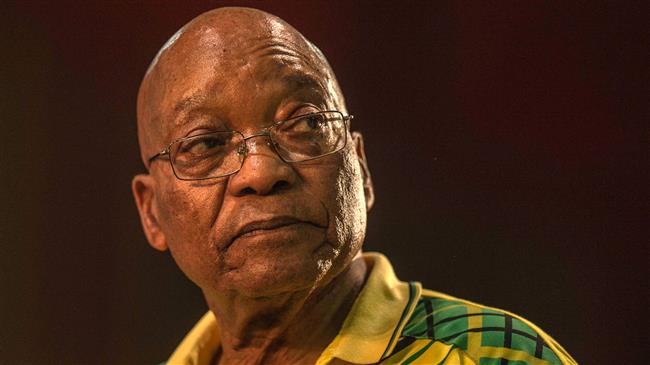
South Africa’s former President Jacob Zuma has been expelled from the African National Congress (ANC), the party he once led, after campaigning for a rival party in the 29 May general election, local media is reporting.
The ANC’s disciplinary committee found him guilty of “prejudicing the integrity” of the party by joining uMkhonto we Sizwe (MK), and has given him three weeks to appeal against its ruling, local media is quoting a leaked ANC document as saying.
The ANC has not officially confirmed his expulsion, while MK said Mr Zuma had not been notified of the decision taken by a “kangaroo court”.
Mr Zuma, 82, was an ANC veteran but fell out with the party after he was forced to quit as president in 2018 over corruption scandals. He has always denied any wrongdoing.
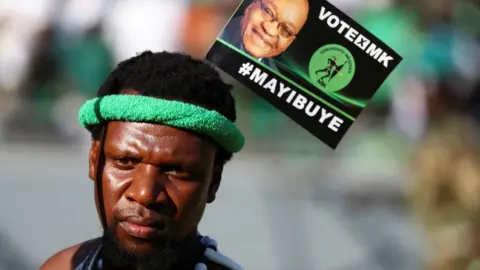
He had been suspended by the ANC in January after creating MK, which now sits in opposition to the ANC-led government in parliament.
In a statement, MK said it was shocked to learn from media reports that Mr Zuma had been expelled.
The disciplinary proceedings were conducted “in a manner akin to a kangaroo court”, the party said.
“It is a foundational legal principle that no person, not even those accused of a serious crime, should be punished or sentenced in their absence,” it added.
The ANC’s disciplinary committee held a virtual hearing, which Mr Zuma refused to attend, saying he wanted to be physically present.
In 2021 he was jailed for contempt of court after refusing to fully co-operate with an inquiry into corruption during his nine-year presidency.
His arrest sparked the deadliest riots since the end of white-minority rule in 1994 and led to the deaths of more than 300 people.
And he now faces corruption charges over a 1999 arms deal.
South Africa’s current president, Cyril Ramaphosa, replaced Zuma in 2018, promising to clean up government.
But in the 29 May elections, the ANC suffered its worst result in 30 years, pushing the ruling party to form a coalition to share power.
uMkhonto we Sizwe – meaning “spear of the nation” – became the country’s third-largest party, largely by taking votes from the ANC.
It won almost 15% of the vote and obtained 58 seats in the 400-member parliament.
MK became the official opposition in parliament after the second-biggest party, the Democratic Alliance (DA), joined the coalition government.
Mr Zuma is barred from being an MP because he was given a 15-month prison sentence for contempt of court.
He has chosen an ex-judge, who was impeached for gross misconduct, to lead MK in parliament.
Source: BBC










13, September 2024
Senegal’s president dissolves parliament to call a snap legislative election 0
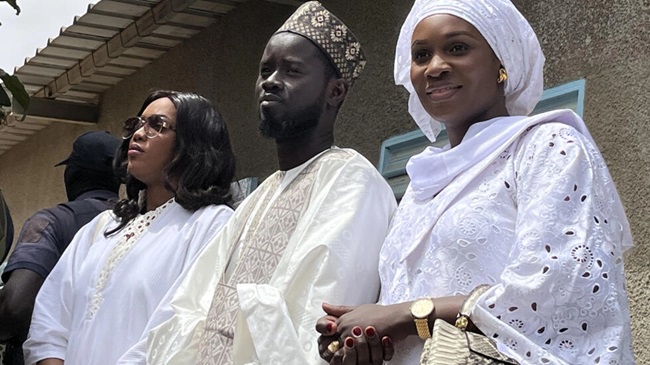
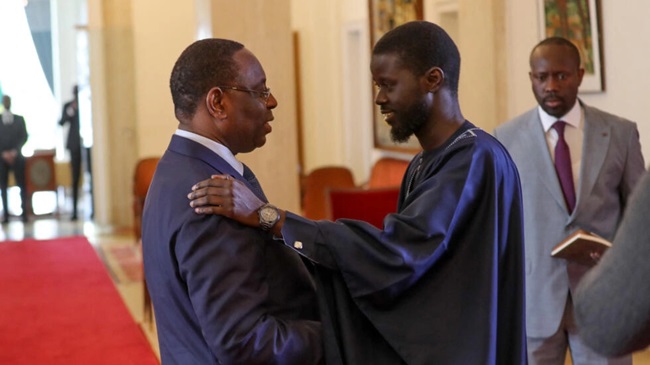
President Bassirou Diomaye Faye of Senegal dissolved the opposition-dominated parliament on Thursday, paving the way for a snap legislative election six months after he was voted in on an anti-establishment platform.
The new election has to take place within the next 90 days, according to the country’s constitution. Analysts say that Faye’s political party, PASTEF, has a high chance of securing a majority, given his popularity and his victory margin in the presidential election.
Faye, 44, won the vote in April to become Africa’s youngest elected leader, less that two weeks after he was released from prison.
His rise has reflected widespread frustration among Senegal’s youth with the country’s direction — a common sentiment across Africa, which has the world’s youngest population and a number of leaders accused of clinging to power for decades.
During the presidential campaign, he promised widespread reforms to improve the living standards of ordinary Senegalese, including fighting corruption, reviewing fishing permits for foreign companies, and securing a bigger share from the country’s natural resources for the population. He was elected with 54% of the votes.
But six months later, these pledges have yet to materialize.
Faye and Ousmane Sonko, the country’s prime minister and a popular opposition figure who helped catapult Faye to victory, have blamed the parliament. Their political party, PASTEF, does not hold a majority in the assembly, which Faye says has blocked him from executing the promised reforms.
In June, the Benno Bokk Yakaar coalition led by the former President Macky Sall cancelled a budgetary debate in a dispute over whether Sonko was required to issue his government’s policy roadmap, with Sonko arguing that he was not required to.
The tensions between the government and the parliament are “unprecedented,” Alioune Tine, founder of Afrikajom think tank, told The Associated Press. “It is all the result of the dysfunctions of the electoral process of the 2024 presidential election,” Tine said.
Faye’s decision to dissolve the national assembly does not come without risks, Gilles Yabi, political analyst and founder of WATHI think tank, told the AP.
The assembly has until the end of December to vote on the budget for next year, but new legislative elections might make it hard to meet this deadline.
The presidential election in April tested Senegal’s reputation as a stable democracy in West Africa, a region rocked in recent years by coups and attempted coups.
Both Faye and Sonko were released from prison less than two weeks before the vote following a political amnesty announced by outgoing President Macky Sall. Their arrests had sparked months of protests and concerns that Sall would seek a third term in office despite term limits. Rights groups said dozens were killed and about 1,000 were jailed.
Over 60% of Senegalese are under 25, and 90% work in informal jobs. Senegal has been hit by skyrocketing inflation in recent years, making it difficult for them to get by.
The country is also the major source of irregular migration to Europe, with thousands leaving every year on rickety, artisanal fishing boats in search of economic opportunities.
Thursday’s announcement came days after one such boat carrying almost 90 people capsized, killing at least 39.
Source: AP