24, July 2025
Togo: Furious protests at move to cement ruling family’s grip on power 0
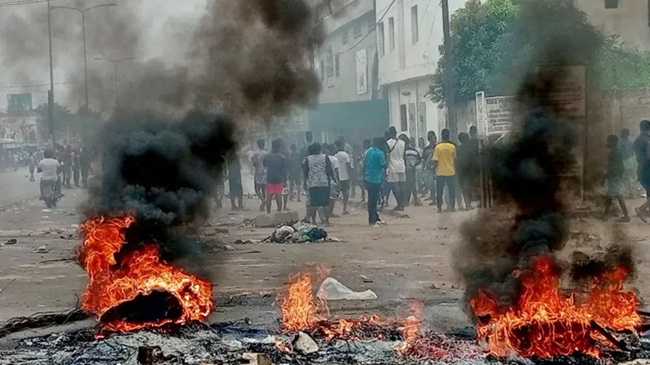
A new constitution that has allowed Togo’s long-time head of state Faure Gnassingbé to shift to a new role as all-powerful prime minister – and escape the constraint of presidential term limits – has triggered anger on the streets of the capital, Lomé. Protests are set to continue this Friday.
At least five demonstrators have died while confronting official security forces in recent weeks.
But it is not the orthodox political opposition – predictably crushed in local elections last week – that has mobilised frustrated young Togolese people.
Instead it is musicians, bloggers and activists who have tapped into popular anger and weariness with a regime that has been in power – under the leadership of Faure Gnassingbé or, before him – his father Gnassingbé Éyadéma, for almost six decades.
That outstrips even Cameroon’s 92-year old President Paul Biya – who has just confirmed his intention to stand for an eighth successive term in elections later this year – or Gabon’s father-and-son presidents, Omar Bongo and Ali Bongo, latter of whom was deposed in a coup in August 2023.
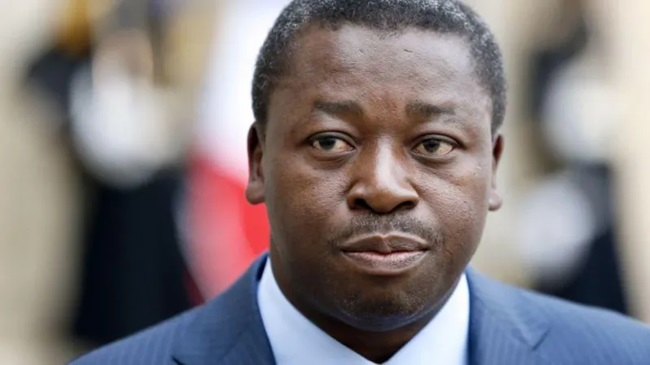
The lessons of that episode did not escape Faure Gnassingbé, a shrewd and often discreet operator who quickly moved to devise a new constitutional structure for Togo, to prolong his own hold on power while playing down his personal profile, in a bid to defuse accusations of dynastic rule.
He will no longer need to stand for re-election in his own name.
The 59-year-old holds the premiership because his Union pour la République (Unir) party dominates the national assembly – and will continue to do so for the foreseeable future, thanks to a constituency map gerrymandered to over-represent its northern heartlands and understate the voting weight of the pro-opposition coastal south.
Gilbert Bawara, Togo’s civil service and labour minister, maintains the 2024 election was above board, with “all the major political actors and parties” taking part.
“The government cannot be held responsible for the weakness of the opposition,” Bawara told BBC Focus on Africa TV last week.
He added that those with a genuine reason to demonstrate could do so within the law, blaming activists abroad for inciting “young people to attack security forces” in an attempt to destabilise the country.
The new constitutional framework was announced at short notice in early 2024 and quickly approved by the compliant government-dominated national assembly. There was no attempt to secure general public approval through a referendum.
A one-year transition concluded this May as Gnassingbé – who had been head of state since 2005 – gave up the presidency and was installed in the premiership, a post now strengthened to hold all executive power and total authority over the armed forces.
To occupy the presidency, a role now reduced to a purely ceremonial function, legislators chose the 86-year old former business minister, Jean-Lucien Savi de Tové.
Source: BBC











30, July 2025
Ivory Coast: President Ouattara to run for fourth term in October election 0
Ivory Coast President Alassane Ouattara said Tuesday he will seek a fourth term in Ivory Coast’s October 25 election, as tensions rise over the exclusion of many heavyweight opposition candidates.
He had been earlier officially nominated by the ruling Rally of Houphouetists for Democracy and Peace (RHDP) party as its candidate, but had not yet said if he would contest.
“I am a candidate because the constitution of our country allows me to run for another term and my health permits it,” the 83-year-old said, adding that the world’s top cocoa producer was “facing unprecedented security, economic, and monetary challenges, the management of which requires experience”.
The 83-year-old president declared his plan in a televised announcement. He won a third term in 2020 after he initially said he wasn’t going to run again. However, he changed his position following the death of his hand-picked successor, Prime Minister Amadou Gon Coulibaly.
The opposition has accused the authorities of choosing their opponents by legal means, but the government insists the judiciary acts independently.
The two main opposition parties have launched a joint campaign to demand the reinstatement of their barred leaders ahead of the presidential election.
This alliance brings together the African People’s Party of Ivory Coast (PPACI) – led by former president Laurent Gbagbo – and the Democratic Party of Ivory Coast (PDCI), the country’s largest opposition force, headed by former international banker Tidjane Thiam.
Thiame has already been barred from running by a court because he has dual citizenship.
Ouattara’s candidacy is contested after he reset the presidential term limit in a constitutional change.
Source: Reuters