
6, August 2025
Biya: how an aging despot’s grip on power could unravel Central Africa 0
A few weeks ago, 92-year-old Cameroonian President Paul Biya announced his intention to run for an eighth term in the country’s forthcoming election. This announcement, shocking, albeit widely anticipated, is already fueling fear that the country’s stability could be at risk, with wider implications for regional security.
The aged leader, who has ruled Cameroon with an iron fist since 1982, is easily the oldest president anywhere in the world. Indeed, only a few Cameroonians alive remember a time without Biya in power. Yet recent health scares seem to suggest that he may have reached the limit of his natural abilities. In 2008, his regime carried out a constitutional amendment to annul the two-term limit — clearing Biya’s path to rule for life through elections that, although regular, have been neither free nor fair.
Under his 43-year rule, the country of 29 million has gone from a period of relative stability to one of crisis and conflict. Approximately four in 10 Cameroonians live below the national poverty line, while unemployment, especially among school leavers, is high. This is in spite of Cameroon’s rich endowment of natural resources, including oil and natural gas, aluminum and gold.
Since 2014, Cameroon has also come under attack by Boko Haram in the far north while a secessionist insurgency is devastating the country’s Anglophone regions. Cameroon is divided into French and English-speaking regions — a development rooted in the country’s colonial past. The conflict, now in its seventh year, was precipitated in late 2016 by the state’s mishandling of peaceful protests that erupted against the application of the French civil law system by courts in the Anglophone regions. The crisis has led to over 6,000 deaths and the displacement of a million people internally and to neighboring Nigeria.
In the same vein, the Boko Haram conflict has resulted in numerous deaths and the internal displacement of well over 300,000 people, not to mention the disruption of local economies that has led to widespread food insecurity.
To combat the threat, Biya, who is known for a non-aligned foreign approach that has permitted him to play off multiple great powers, recently has had to lean quite heavily on U.S. support for funding and training of the country’s elite Rapid Intervention Brigade (BIR), as well as troops from the Multinational Joint Task Force that Washington established with Cameroon’s neighbors, Nigeria and Chad. U.S. training of Cameroon’s military personnel is valued at $600,000 annually. Washington also has a drone base with approximately 200 personnel stationed in Garoua, a city in northeastern Cameroon, to support the military in its operations against extremism. Cameroon remains one of the diminishing number of former French colonies in sub-Saharan Africa that permits foreign military bases on its territory.
At the same time, Cameroon weighs heavily on Russian President Vladimir Putin’s expansionist aims in the Sahel and West Africa. The country recently renewed a military cooperation agreement with Moscow while playing host to Afrique Média, a Russia-linked news organization generally regarded as Putin’s mouthpiece in the region. Such great-power attention illustrates Cameroon’s potential strategic importance.
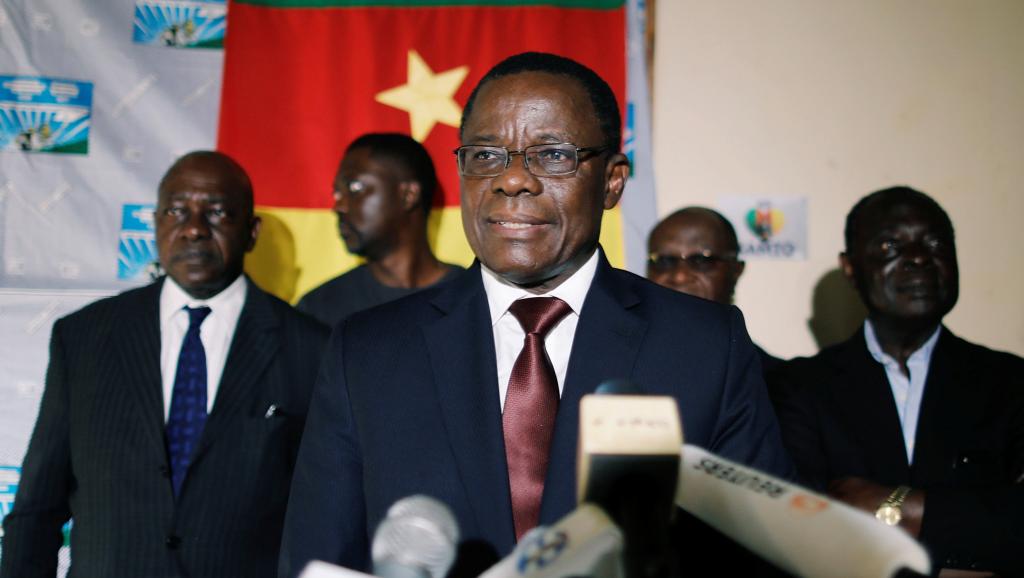
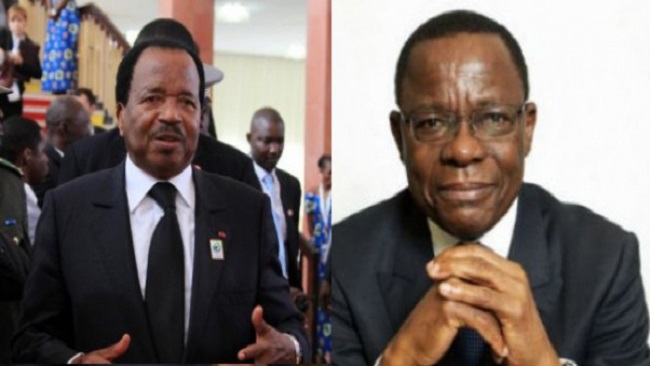
In the meantime, the integrity of the October 12 election is already in jeopardy. Out of 83 candidates who submitted applications to run for president, the electoral body, Elections Cameroon, only approved 13, disqualifying Biya’s main challenger, Maurice Kamto, who was the runner-up in the 2018 elections when he won 14.2 percent of the vote. Although those disqualified from the presidential race can file a legal challenge, many Cameroonians don’t believe that anything will come of it.
With Kamto’s exclusion, Biya and his Cameroon People’s Democratic Movement (RDPC) party will face less popular candidates, including two of the president’s allies, former Prime Minister Bello Bouba Maigari and Issa Tchiroma Bakary, who resigned in early June as employment minister. Unsurprisingly, their qualification has sparked accusations that Biya and the RDPC are orchestrating another sham election to retain their hold on power.
The resulting situation has heightened political tensions and fueled fears of unrest. On June 12, the U.S. Embassy in Yaounde, the capital, called for respect for press freedom and urged all parties concerned with the electoral process to act in a manner that “promotes peace, respects the rule of law, and upholds democratic norms.” But the situation remains uncertain as security forces have been deployed in the economic hub, Douala, and Yaounde, especially around the headquarters of the electoral council in anticipation of protests.
Biya’s insistence on running is, to put it mildly, bewildering. In a now distant era, Africa’s longstanding aging leaders, such as Senegal’s Léopold Sédar Senghor or Kenya’s Daniel Arap Moi, planned for their succession to both ensure a peaceful transition and preserve their legacies.. Biya’s current gambit suggests he has no such plans. His apparent determination to continue to rule until he nearly turns 100 — presidential terms run seven years — spells trouble to many Cameroonians.
Indeed, in a country where more than 60% of the population is under 25, Biya’s ambition may prove too much for the public and for the ambitions of other members of the ruling elite as they jockey for position in a post-Biya period. To a growing number of analysts, the evolving situation, especially if public protests become widespread and militant, could create a pretext for a military coup. Historically, Cameroon’s army has been loyal to Biya who has only experienced a coup once early in his long rule. Reputed as a master-manipulator of the security forces, Biya has managed to keep ambition in check by keeping the armed forces fragmented and through regular reshuffling.
But as the developments witnessed in Gabon just two years ago show, the specter of coup cannot be fully discounted in a situation of political stasis. In August 2023, Gabonese elite presidential guard mounted a coup that ended the half-century rule of the Bongo dynasty. The irony was that the coup occurred just hours after then-President Ali Bongo had pulled out all the stops to win an unconstitutional third term through an election that all observers, local and foreign, agree was neither free nor fair.
Before matters reach that point in Cameroon, regional bodies, including the African Union, the Economic Community of Central African States, and the Central African Economic and Monetary Community (CEMAC) may be able to exert influence on the upcoming electoral process to ensure greater inclusivity and adherence to basic democratic norms in the runup to the October election. The forthcoming poll is not simply a matter for Cameroonians alone but an important question for the region as well.
Culled from Responsible Statecraft














8, August 2025
Cameroon’s Constitutional Council: a government that crushes ballots will eventually meet bullets 0
In the long, bloodstained ledger of Africa’s democratic betrayals, few chapters are as pungently shameful, or spectacularly tragic, as the travesty recently staged by Cameroon’s Constitutional Council; a body that now stands as a consecrated altar and mausoleum of cowardice and injustice, where the will of the people is ritually sacrificed. The unconstitutional and cowardly exclusion of Maurice Kamto, the most credible opposition leader and MANIDEM’s rightful candidate for the 2025 presidential election, is not only naked provocation and an insult to voters; it is state-sponsored electoral banditry – a daylight mugging of democracy itself. Let’s be clear: this Council is not a legal institution – it is a shriveled coven of Beti tribal jingoists and partisan cronies, comprising one menopausal matriarch and a cabal of tired old men tottering between senility and servility. Lacking spine, vision, or honor, these Judas-hearted charlatans, traded principle for privilege, betraying their solemn oaths with the audacity of sycophants groveling for scraps and crumbs of power. These soulless merchants of betrayal are not judges; they are scribes of a dying regime, dressing Paul Biya’s dictatorship in the robes of law and stamping tyranny with the seal of legitimacy. Their loyalty lies not with the constitution they swore to uphold, but with the decrepit throne of an aging autocrat. Drunken on greed and self-centered pedestrianism, they bent over backwards to crawl where conviction and character demanded they stand tall. The arbitrary rejection of Kamto is shameful, pathetic, disgraceful and devoid of any perfunctory exaggeration. History will brand those traitors as footnotes in the annals of treason and judicial brigandage.
In rejecting Kamto’s candidacy amid the overwhelming evidence of conspiracy and fraud by ELECAM and MINAT, the Council did not just err in law – its members defecated on democracy; trading jurisprudence for sycophancy, and law for lèse-majesté; while reinforcing its image as an uncircumcised appendage and spineless puppet of the ruling CPDM party. What manner of justice crawls on its belly to serve the whims of power? What kind of court builds its rulings not on precedent, but on illegality and political expediency? The Council has now become what every dictatorship requires: a rubber-stamp chorus of cowards, cloaked in legality, but reeking of fear. With counterfeit authority, they mutilated the voters’ right to choose. These court-jesters are not guardians of the republic; they are the undertakers of the republic’s dying breath. This decision will be remembered as a national curse; a scar gouged into the face of Cameroonian democracy.
History Will Name Them
History has never been kind to those who mortgage the future of nations for the fleeting comfort of a tyrant’s approval. The names of these traitors- Clément Atangana, Florence Rita Arrey, Émile Essombe,
Paul Nchoji Nkwi, Jean Baptiste Baskouda, Sanda Bah Oumarou, Charles Étienne Lekene Donfack, Ahmadou Tidjani, Adolphe Minkoa She, Aaron Logmo Beleck, Monique Ouli Ndongo – shall be recorded, not with honor, but with the indelible ink of shame. Their legacy will not be that of learned jurists, but of accomplices to repression, the assassins of a people’s dream. Let them know: robes rot, titles fade, power expires, but betrayal is immortal. No amount of legal contortion will erase the truth. The Council did not interpret the law; they strangled it. They did not deliver judgment; they delivered complacency. They did not uphold the constitution; they cremated it, and then danced around its ashes like jesters in a haunted palace.
The ossified Biya regime is terrified – not of Kamto’s politics, but of his popularity -his ability to mobilize the nation, articulate the frustrations of a destitute people, and to present a vision of a new Cameroon. Instead of defeating him at the ballot box, they have chosen the path of the despot: eliminate the challenger, muzzle dissent, and rig the race before it begins. This is the logic of tyrants. Cameroon today is ruled not by law, but by fear dressed in constitutional disguise. Let us be absolutely clear: Kamto did not lose the 2018 presidential election – he was robbed like Fru Ndi in 1992. And now, the regime is ensuring that he does not even get a chance to contest. This is not just an electoral hold-up. This is a premeditated assassination of Cameroon’s already battered democratic system.
With Kamto removed from the ballot, October 12 is not an election – it is an anointing. A theatrical coronation of an already-entrenched regime, cloaked in the illusion of popular choice. This insult to democracy will not go unnoticed. Cameroonians are not blind. They see the charade and know what is happening. They smell the rot. They feel the betrayal. From Maroua to Bamenda, from Yaoundé to the Diaspora, they know that without a credible challenger like Kamto, the upcoming election is a pageant, not a poll – a coronation masquerading as choice. The message is clear: there is no ballot in Biya’s Cameroon; only bullets, bans, and betrayal.
In a country already buckling under multiple crises, from armed conflict in the Anglophone regions, to spiraling poverty, to corruption so rampant it is practically government policy; this decision is a match tossed onto a powder keg. Already, tensions are rising. Protests are breaking out. People are boiling with rage. The authorities are pushing the country dangerously close to the edge of chaos, and when the violence comes, let no one feign surprise. A government that crushes ballots will eventually meet bullets. Kamto has long stood for peaceful resistance and dialogue. But even his patience cannot pacify a generation that sees no future under a regime that treats their dreams with scorn and arrogance.
Where is the international community that claims to defend democracy and human rights? To remain silent in the face of such blatant democratic sabotage is to be complicit. To accept this travesty is to betray every Cameroonian who still believes in a better tomorrow. Sanctions must be considered. Visa bans on members of ELECAM and the Constitutional Council should follow. And international election observers must not lend legitimacy to a charade they know is rigged.
This Is Not Over
There is a river swelling in the hearts of Cameroonians. It is fed by anger, suffering, and stolen choices. When that river bursts its banks, it will wash away not only the symbols of oppression but those who enabled them with gavel and gown. The Constitutional Council may think itself safe within the marble chambers of privilege. But marble cracks, and chambers echo. When the people rise – and rise they will – no robe will be thick enough to shield them from the storm they helped sow. Kamto may be off the ballot, but he remains the face of the resistance, the voice of a silenced majority, and the nightmare of a regime on life support.
To the Constitutional Council: You have traded truth for tyranny, justice for a bowl of stale porridge, and history will not forgive you. You may silence one man. but you cannot silence a nation that has awakened to its own power. To Biya and his clique: you may block Kamto from the race, but you cannot block the tide of history. The hour is late. The mask has fallen. Every tyrant believes they can cheat time. But every regime that silences its people will, eventually, be silenced by them. The fight for Cameroon’s democracy is not over – it has just begun.
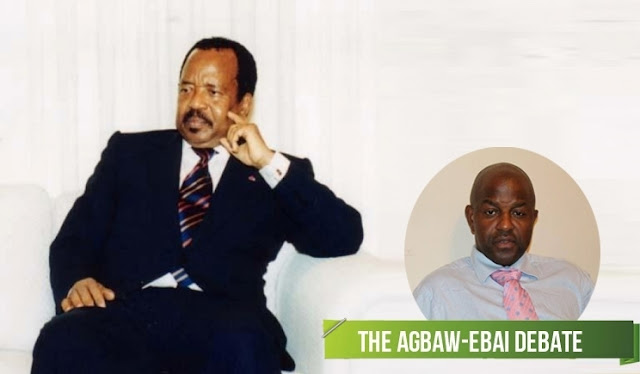
By Ekinneh Agbaw-Ebai