21, August 2025
Cameroon and France: Telling the necessary truth 0
This was arguably the most glaring “memory gap” in French colonial history. Between 1955 and 1970, France waged war in Cameroon against independence and later opposition movements, resulting in the deaths of tens of thousands and helping to install an authoritarian regime loyal to Paris. The silence that surrounded this “dirty war” was both an insult to the victims and a historical failure, as well as a major unspoken issue in relations between the two countries.
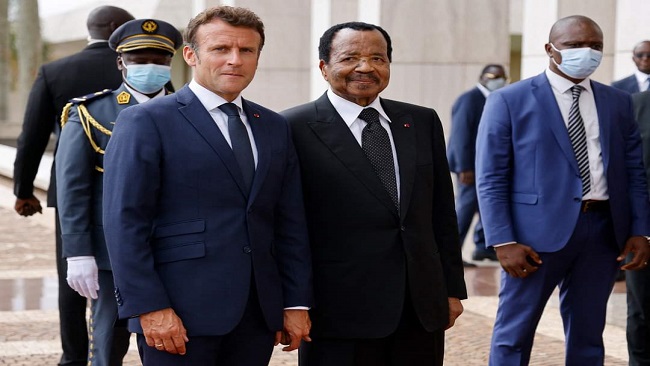
This is why we should welcome the move by French President Emmanuel Macron who, in a letter to his Cameroonian counterpart Paul Biya made public on August 12, acknowledged that a “war” had been waged in Cameroon by “the colonial authorities and the French army,” and stated that he acknowledged “France’s role and responsibility.”
It took many years before the reality of this brutal “pacification” carried out in secret, but long well-documented by writers, journalists and historians, was officially recognized. The “counter-revolutionary warfare” techniques first tested in Indochina and then in Algeria – destruction of villages, assaults on unarmed civilians, forced regroupment camps, torture, targeted assassinations – were used against supporters of the Union of the Peoples of Cameroon (UPC, a pro-independence party) and to crush the uprising of the Bamileke people. By delegating repression to local actors, France turned a colonial conflict into a civil war.
Macron’s initiative began in 2022 with the creation of a commission of French and Cameroonian historians tasked with “shedding light” on this chapter of history. The report from this commission, delivered in January 2025, found that the violence in Cameroon “transgressed human rights and the laws of war.”
While President François Hollande had merely referred in 2015 to “particularly violent repression,” Macron acknowledged, as the commission suggested, that France fought a true “war” in Cameroon. The president is thus continuing the necessary process of truth-telling that, from the genocide of the Tutsi in Rwanda to the Algerian War, must fill the gaps of amnesia – and even lies – that still weigh on French society and diplomacy, without any notion of “repentance.”
Of course, his gesture remains incomplete – the “violations of human rights” are not clearly defined – and ambiguous in form: It came as a letter addressed to Biya, who is himself the heir to autocrat Ahmadou Ahidjo (installed by France in 1960) and has ruled the country since 1982.
This is where the particular sensitivity of Macron’s attempted truth-telling operation regarding Cameroon lies. The “decolonization war” did not end with independence; Paris continued to repress opponents of the regime that had been put in place. Forgotten in France, this endless war continues to poison the political and social climate in Cameroon. As the end of Biya’s reign approaches – despite being 92 years old, he plans to seek an eighth presidential term in October – and as the demand for historical truth is stirring throughout Francophone Africa, it is time to put an end to the unspoken truths between France and Cameroon.
Source: Le Monde

















26, August 2025
The Griot at the Gate: A Rebuttal to Ashu Nyenty on Akere Muna’s Petition 0
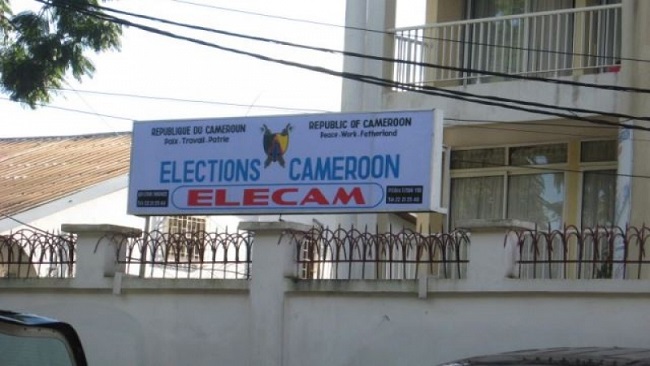
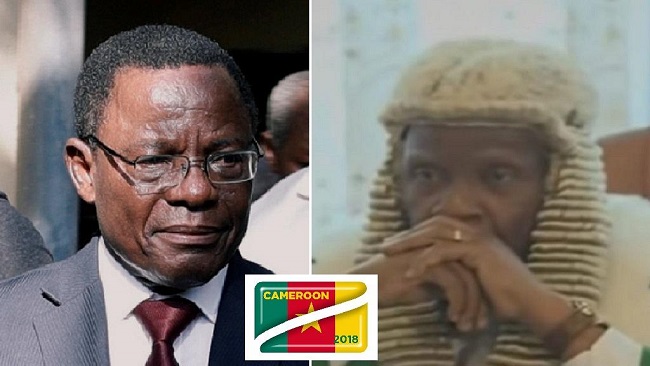
Quite predictably, the Constitutional Council missed another manifest rendezvous with history after it rejected the petition by Barrister Akere Muna, seeking the disqualification of the 93-year-old Paul Biya from contesting the upcoming presidential election. Akere Muna, anti-graft crusader, eminent jurist, former Bar Council and Pan-African Lawyers Union (PALU) president; and presidential candidate in the October 2025 election, had asked the Constitutional Council to declare Paul Biya ineligible to run. Citing Article 118 of the electoral code, Akere’s argument was simple but devastating: nemo dat quod non habet – one cannot give what one does not have – a president who has become a ghost, absent for weeks abroad, ruling through “high instructions” relayed by unelected proxies, incapable of fulfilling his constitutional duties, lacks the requisite capacity to credibly seek re-election. This was not merely legal reasoning but a moral imperative to prevent the grotesque spectacle of a nation held hostage by a phantom ruler, hell-bent on dragging Cameroon to his grave. That the petition foundered at the Constitutional Council is beside the point. That much was expected from a captive institution that has transformed itself into a spineless, uncircumcised appendage of the ossified regime.
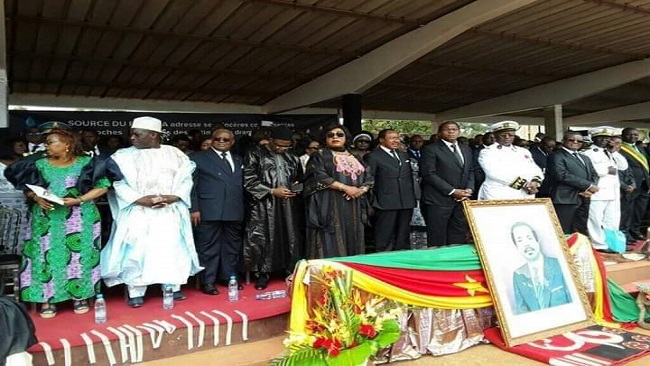
Akere’s petition had sought to rescue Cameroon and restore sanity to a nation drowning in absurdity and international ridicule – a nation where fawning sycophants pledge their support to a picture running for president! Akere spoke truth to power with courage. And for that, he stands not alone, but with every patriotic Cameroonian who dares to still dream of a country worthy of its name. Of course, such patriotic Cameroonians will not include Dr. Theodore Ashu Nyenty, aka “Teddy Boy” who saw in Akere’s petition, an opportunity to showcase his obsequious boot-licking credentials and endear himself to the corridors of power. In a rambling critique of Akere’s petition, Ashu Nyenty was contortionist, twisting law and logic until they collapse beneath the weight of their own contradictions. He begins with a semblance of intellectual honesty and rigor – he admits Akere has locus standi, and concedes the Constitutional Council has jurisdiction. Yet, he dismisses Akere’s argument of “shadow governance” as “specious.” He argues that no statute limits presidential travel, and scoffs at Biya’s prolonged absences. He contends that delegation of powers is constitutional, and sneers at Akere’s appeal to the mischief rule as “hocus pocus,” as though interpretation were not the lifeblood of jurisprudence. His rhetoric is not that of a jurist but that of a griot, skilled not in law but in the art of gilding decay with pedanticism.
Dr. Ashu Nyenty – The Scholar as Griot
Ashu Nyenty’s analysis reads less like a serious juristic dissection and more like the rhythmic panegyric of a palace griot, dutifully plucking the strings of sophistry to serenade a crumbling autocratic regime on life support. Cloaked in the verbosity of academia and the pretensions of legal rigor, his jibberage is nothing more than an obtuse and dim-witted justification for the continued desecration of Cameroon’s democratic conscience by a 93-year-old incumbent whose advanced age, health comorbidities and failing faculties, now stand as a national embarrassment and international disgrace. This incantation at the altar of power is self-centered pedestrianism. Consider Ashu Nyenty’s core arguments:
Come to Equity with Clean Hands: Ashu Nyenty argues that Akere lacks “clean hands” because he accepted to run in an election convened by the same “ghost president” whose incapacity he denounces. This is sophistry in extremis. Akere’s participation is strategic engagement, not complacence. The act of running under a phantom decree is not a ringing endorsement of its legitimacy but a courageous defiance of a broken system. One cannot on one hand acknowledge that Paul Biya has been an absentee president; that Ferdinand Ngoh Ngoh effectively runs the country by proxy, and then on the other hand insist that this is constitutionally pristine. That is not law – it is griotic gymnastics, the kind of intellectual prestidigitation one expects from court jesters, not legal scholars or public intellectuals.
On Biya’s Prolonged Absences: Ashu Nyenty insists no law restricts presidential travel. True, but constitutional logic must consider ratio legis. While no law prescribes travel limit, the constitution presupposes presence, vigilance, and personal exercise of executive power. Data from the Organized Crime and Corruption Reporting Project reveal Biya spent at least 5.5 years abroad between 1982- 2018. To claim this comports with constitutional fidelity is to reduce the presidency to an absentee landlordship – an absurdity reductio ad absurdum exposes as untenable. Law is not blind to reason; cessante ratione legis, cessat et ipsa lex—when the reason for the law ceases, the law itself collapses. This is a literalist refuge that offends both logic and justice because Summum jus, summa injuria – strict law applied rigidly may become the greatest injustice. To aver the contrary is to mock the very essence of democratic accountability.
On Governance by Proxy: Ashu Nyenty conflates limited statutory delegation with permanent abdication. He appeals to Article 10(2) of the 1996 Constitution, arguing delegation of presidential authority is permissible. But delegation, by nature, presumes temporary necessity, not permanent abdication. Delegata potestas non potest delegari – delegated authority cannot be re-delegated ad infinitum. Delegation of authority assumes the principal retains ultimate agency. Biya does not. His “high instructions” are scripted whispers, his decrees the product of proxies who wield his signature like a ventriloquist’s dummy. Delegation cannot substitute leadership itself; it was conceived as an occasional necessity, not as the architecture of a phantom presidency. The framers of the constitution never intended delegation of authority to ossify into governance by unelected proxies. To defend this perversion and normalize this absurdity is to legitimize the grotesque.
On the Mischief Rule: Ashu Nyenty sneers at Akere’s invocation of the mischief rule as “hocus pocus.” Yet if ever there was mischief crying out for judicial remedy, the mischief here is glaring: a president too enfeebled to govern has reduced national sovereignty to the whims of unelected groveling courtiers. Ubi jus ibi remedium-where there is a right, there must be a remedy. If interpretation cannot address this absurdity, then law itself becomes an accomplice to tyranny and dictatorship. To dismiss Akere’s interpretation of Mischief rule as “hocus pocus” is to strip law of its teleological essence and its very purpose. For Ashu Nyenty to pretend otherwise is not ignorance – it is intellectual self-masturbation.
On Hierarchy of Norms: Ashu Nyenty retreats to the hierarchy of norms to shield Biya, claiming the Constitution trumps the electoral code. But the electoral code is not peripheral – it operationalizes constitutional norms. And this is precisely the point Akere’s petition presses: when the spirit of the Constitution is violated by a president who has effectively abdicated his duties to unelected proxies, the electoral code must be invoked to rescue the nation from becoming a geriatric monarchy. The principle lex non cogit ad impossibilia (the law does not compel the impossible) invites purposive interpretation: candidacy implicitly requires functional capacity. Cameroonians cannot be compelled to accept governance by a phantom. A system that tolerates a nonagenarian absentee candidate seeking an eighth term is not law – it is organized national suicide.
The Griot’s Betrayal
There is, in truth, nothing new in Ashu Nyenty’s performance. Cameroon has always had its chorus of intellectual boot-lickers willing to play the griot for the palace. At bottom, Ashu Nyenty performs the ancient role of griot – singing praises before the palace gate, perfuming decay with pseudo-juristic incense, and rationalizing the tyranny of an aging monarch he dares not name unfit. Let’s be very clear: Biya is no longer fit to govern. His age has hollowed his body. His prolonged absences, government by remote control, his visible mental and physical decline betray his incapacity. His governance by proxy, through the perpetual “high instructions” of Ferdinand Ngoh Ngoh, have transformed the highest office in the land into a grotesque parody of leadership. A nation cannot be ruled by a ghost president. This is not governance; it is political necromancy – governance of the living by an absentee mummified despot. All Cameroonian, except those blinded by self-interests, will agree that Biya is showing more wear and tear in the form of his creeping baldness, his wrinkled carbuncular face; the declining swagger of his gait; the deterioration in his husky voice, the diapers, uncontrollable flatulence, and protracted anal blasts. At 93, Biya cuts the figure of a frail, distracted relic, more object of pity than leader. And yet Ashu Nyenty dares to call this normal, lawful, even constitutional. Cameroon deserves better.
Akere’s petition was not only legally sound; it was morally urgent – salus populi suprema lex esto: the welfare of the people shall be the supreme law. The petition is not “legal brigandage” (to borrow Ashu Nyenty’s clumsy expression); it is a necessary moral intervention against the ongoing abuse of an inebriated nonagenarian held captive by a cabal of unelected political jobbers. Ashu Nyenty’s analysis is a sycophantic prostitution of law; the choreography of a man who has exchanged his critical faculties for the baubles of proximity to power. He seems a man too enamored with servitude. He calls Akere’s arguments “legal masturbation.” Yet it is he who engages in intellectual self-masturbation. The pitiful spectacle of Dr. Ashu Nyenty, parading his academic credentials like a griot’s kora, plucking sophistries in defense of a decrepit system is shameful, pathetic, disgraceful and devoid of any perfunctory exaggeration. Cameroon does not need spineless charlatans and court jesters serenading a ghost president. It needs men of character with the courage of their convictions. The tragedy is not merely Biya’s refusal to relinquish office, but the complicity of intellectual griots and sycophants, who, in the twilight of his reign, chose to sing lullabies to tyranny, instead of sounding the alarm for liberty. Ashu Nyenty’s commentary is law in service of power rather than justice. Jurists should uphold fiat justitia ruat caelum – justice even if the heavens fall.
By Ekinneh Agbaw-Ebai