14, May 2018
Algeria dismisses Morocco’s new claims of backing Polisario 0
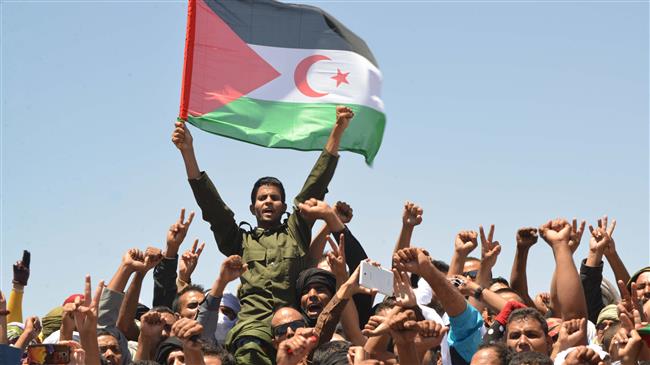
Algeria has roundly rejected and denounced fresh claims by the Moroccan foreign minister that it played an “operational” role in alleged Iranian support for a pro-independence Western Sahara movement.
Nasser Bourita, Morocco’s top diplomat, had told the French-language Jeune Afrique weekly news magazine that Algiers offered more than a meeting venue for members of the separatist Polisario Front and Lebanon’s Hezbollah resistance movement.
He had claimed that “Algeria has given more than its blessing. It has given an opening, backing and operational support.”
Rabat has accused Iran of using Hezbollah to support Polisario, a claim Tehran has sharply dismissed.
“Algeria strongly condemns and deplores the statements made by the Moroccan foreign minister in an interview, released yesterday in a Paris magazine,” the Foreign Ministry in Algiers said in a statement late on Sunday.
Algiers has criticized Rabat for not providing any evidence to support its claims, adding it continuously makes up “stories.”
Earlier this month, Morocco severed its diplomatic relations with Iran, with Bourita accusing Tehran and Hezbollah of training and arming Polisario members via the Iranian Embassy in Algeria.
Iranian Foreign Ministry spokesman Bahram Qassemi said there was no cooperation between Tehran’s diplomatic mission in Algiers and the Algeria-backed movement.
Hezbollah also blamed the US, Israel and Saudi Arabia for the diplomatic tensions, saying Rabat cut ties with Tehran under pressure from the trio.
In turn, Algeria summoned Morocco’s ambassador to protest the “unfounded” claims.
Rabat annexed Western Sahara, a former Spanish colony, in 1975, and has since then been in conflict with Polisario, which demands a referendum on self-determination and independence.
The movement, which aims to end Morocco’s presence in the Saharan region, recently said they sought to set up a “capital” in the region, prompting Rabat to caution it would respond with force.
Source: Presstv

























16, May 2018
Scottish parliament decisively rejects May’s EU withdrawal bill 0
The Scottish parliament has decisively voted against the United Kingdom’s legislation on departure from the European Union (EU), placing London on course for a major constitutional dispute with Edinburgh and the further postponement of Brexit.
The Scottish lawmakers rejected British Prime Minister Theresa May’s EU Withdrawal Bill by 93 votes to 30 on Tuesday.
Labour, the Liberal Democrats and Scottish Greens backed First Minister Nicola Sturgeon’s party members in rejecting the divorce bill, arguing that it would restrict Holyrood’s powers.
The vote is not legally binding but it will force London to make a high-risk decision and assert power over Edinburgh or make further concessions to the Scottish government to avoid a crisis.
May’s disregard for the vote could fuel Sturgeon’s demands for a second referendum on Scottish independence and provide her Scottish National Party (SNP) with a further justification for staging one.
Britain has been at loggerheads with the devolved nations – Scotland, Northern Ireland and Wales – on how power would be shared after the Britain’s separation from the 28-member bloc.
Speaking after the Tuesday vote, Scotland’s Brexit secretary Mike Russell, called on the UK government to respect the will of the Scottish parliament and find an acceptable solution.
“The Scottish Parliament has now said overwhelmingly that this attempt to undermine devolution is unacceptable,” he said. “The UK government cannot ignore the reality of devolution or try to drown out what this parliament says. They cannot pretend that no motion has been passed.”
A day earlier, Sturgeon warned London against ignoring the Holyrood’s views and said May needed to secure a deal with Edinburgh fast.
“They [UK government] have a decision to make as to whether they are going to ignore the views of the Scottish Parliament or listen to those views and try very hard to get a deal and to close the gap that remains between us,” she said.
In the United Kingdom’s 2016 referendum, 52 percent, or 17.4 million people, voted to leave the EU while 48 percent, or 16 million, voted to stay.
The British government has faced fierce criticism both at home and by the EU for its lack of clarity on its Brexit strategy.
The uncertainty has raised fears that Britain could crash out of the bloc without a trade deal, incurring heavy costs on its domestic economy.
London and Brussels are due to move on to the next stage of Brexit negotiations this year, after reaching agreement in December on exit terms.
Source: Presstv