
17, December 2017
“Southern Cameroons war can’t be won” 0
On Saturday the 16th of December 2017 in Yaoundé, Cameroon army spokesman Colonel Didier Badjeck did what all Francophone political elites do when faced with the crisis in Southern Cameroons: he said the army is winning the war against Ambazonian armed militants. He however offered no details of military casualties and timeline for withdrawal of all troops from Manyu Division.
“Conditions in the South West and North West, not arbitrary timetables, will guide our strategy from now on,” he told state radio and television, CRTV.
There are currently more than 3000 troops fighting in Mamfe Central, Akwaya and Eyumojock. We don’t know how many Biya secretly withdrew this week. We don’t know how long they’ll be there. And we don’t know what victory even means to the regime in Yaoundé and its UN acolyte Francoise Lounceny Fall.
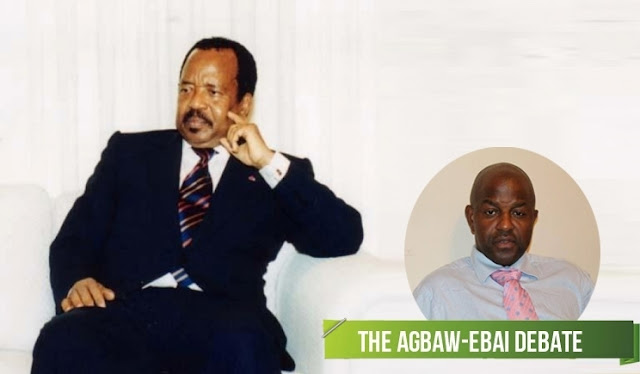
To get a sense of where we are in Manyu Division, our senior political man, Soter Tarh Agbaw-Ebai reached out to a retired Manyu citizen who served with the Cameroon armed forces during the Bakassi conflict and the Boko Haram war in the Far North region.
He asked him straightforwardly if there’s a path to victory in the Southern Cameroons war and, if not, why Cameroon government forces are still fighting and dying in Manyu. Soter Agbaw-Ebai also asked him how he thinks this conflict will end. The retired soldier whose name we do not want to mention was unsure about the latter question but his answer to the first one was crystal clear. “Military victory is not plausible in any foreseeable time frame and what President Biya is doing now isn’t sustainable. The situation will become even more intractable when the Ambazonia Interim Government comes into the armed section of this crisis.”
He pointed out that President Biya is hiding behind innocent French Cameroun political elites and he is not taking ownership of the war. “There are three basic options in terms of the military campaign in Manyu and other Anglophone regions. One is to demilitarize West Cameroon. This is what Fru Ndi, Munzu and Agbor Balla requested. Second, there’s the stay-the-course option, which could include sending thousands more troops to the border areas. Third, there’s the troop withdrawal option which I hinted you started two days ago.
“Whether President Biya is considering a complete withdrawal, I can’t say. I wouldn’t assume that’s off the table because of French government support. We’re now three weeks into this war in Manyu. I still cannot understand what’s the mission?
A Cameroon government counterterrorism mission that is conducted in partnership with the Manyu traditional rulers and with the support of the Ekpe sacred society would have been efficient. But we have a commander-in-chief who does not listen and thinks he is a small god.
By Chi Prudence Asong in London













17, December 2017
Brexit: Britons now back Remain over Leave by 10 points 0
More than half of the British people now want to stay in the European Union, according to a new poll that shows “Remainers” outnumbering “Leavers” by ten percentage points.
While 51 percent of Britons prefer to keep European Union membership, 41 percent want to leave the bloc, according to the BMG Research poll of 1,400 people conducted for The Independent.
According to The Independent, the lead for “Remain” over “Leave” was the biggest in any poll so far since the Brexit referendum in June 2016.
However, BMG Research head of polling cited a shift in opinion among those who chose not to vote last year as the reason for the change.
“The last time Leave polled ahead of Remain was in February 2017, and since then there has been a slow shift in top-line public opinion in favor of remaining in the EU,” said Michael Turner.
“However, readers should note that digging deeper into the data reveals that this shift has come predominantly from those who did not actually vote in the 2016 referendum, with around nine in ten Leave and Remain voters still unchanged in their view,” Turner added.
This comes as EU President Donald Tusk said EU leaders approved the opening of the next stage of Brexit talks Friday after reaching a deal on divorce terms with Britain.
At a meeting in Brussels, members of the bloc said there has been enough progress on key issues. The next phase will involve discussions over future relations and trade ties between the UK and the EU.
Negotiations on the transition period will resume in January.
But talks on trade will not begin until March as EU members need more clarity on the UK’s post-Brexit plans.
British Prime Minister Theresa May signed the divorce deal with European Commission President Jean-Claude Juncker on December 8 after months of negotiations. The deal covers Britain’s exit bill, the future of the Irish border and the rights of EU expatriates in the UK.
Source: Presstv