
3, April 2017
South Africa: Zuma may face another no-confidence vote 0
South African President Jacob Zuma may face another impeachment as the country’s parliament speaker says she would consider requests from opposition parties to hold a new no-confidence vote against the embattled leader. Parliament Speaker Baleka Mbete said Sunday after cutting short a trip abroad that an impeachment may be held against Zuma following his decision last week to sack South Africa’s popular finance minister.
Mbete said in televised remarks that the request for the no-confidence vote was submitted to her by the centrist Democratic Alliance (DA) and the ultra-left Economic Freedom Fighters Party (EFF). The two parties have asked the speaker to reconvene the parliament and hold an urgent sitting on the issue. Mbete is also the national chairperson of the ruling African National Congress (ANC). Her new announcement shows how she and senior members of the ANC disagree with Zuma’s removal of Pravin Gordhan.
Gordhan attended a memorial for an anti-apartheid activist on Saturday and called on the ANC supporters to mobilize against Zuma. Previous no-confidence votes against Zuma have failed as his ANC party, which has ruled South Africa since the end of apartheid in the 1990s, dominates the parliament.
However, Gordhan’s removal, which badly affected the markets, seems to have clearly undermined Zuma’s leadership in the ANC. More elements within the party are joining the opposition in calling for Zuma’s removal from power.
Even Zuma’s deputy, Cyril Ramaphosa, has said that he disagreed with the decision to sack Gordhan, arguing that the move could downgrade South Africa’s credit ratings. The Communist Party, a key ally of ANC, also said Friday that “Zuma must now resign.” Zuma has lost a great deal of his popularity over the past years over a string of missteps and scandals.
Presstv













4, April 2017
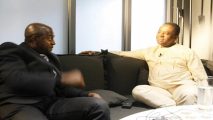
Prof. Maurice Kamto says the Anglophone Crisis needs quick solutions for a “soothed united Cameroon” 0
Prof. Maurice Kamto, leader of the MRC party has said that the peaceful resolution of the Southern Cameroons problem is a political test for living together in Cameroon. The former cabinet minister added that the Anglophone problem is one of the urgent political problems demanding quick solutions for a soothed united Cameroon.
Speaking on Monday in Yaoundé, the much respected Francophone political elite revealed that there was the existence of a “black cabinet” created by the Yaoundé regime to neutralize him. “Since my departure from the cabinet and my accession, for the first time in my life, to a political party, the MRC, there is at the heart of power a Black Cabinet that works with determination for my exclusion from political competition by all means. I say by all means! “.
Maurice Kamto continued “This black cabinet has long searched, but in vain, in my management of public affairs and embarked on a scandalous affair on my scientific reputation and has mounted and maintained in public opinion a smoky public procurement case worth 14 billion CFA francs.”
During the Monday press conference, Maurice Kamto strongly criticized the international community, which, according to him, “does not care of the fate of the Anglophone Cameroonians being many of whom have been raped and killed and hundreds abducted and detained in Francophone jails.”
“Cameroonians no longer trust the international community with its electoral observers who have never helped the establishment of the electoral truth in Cameroon and whose conclusions are known in advance, because they are always the same: the elections were generally satisfactory, we are told each time, “says Kamto.
The MRC leader pointed out that the method applied by the Biya Francophone Beti Ewondo government in the management of the Anglophone crisis – made up of repression, mass arrests and arbitrary detention, militarization of disputed areas, the use of unbridled anti-terrorist law against unarmed citizens – is a “break-in” and a general rehearsal of what will be implemented in 2018 presidential elections.
By Soter Tarh Agbaw-Ebai