26, September 2025
Biya: absent candidate in election 0
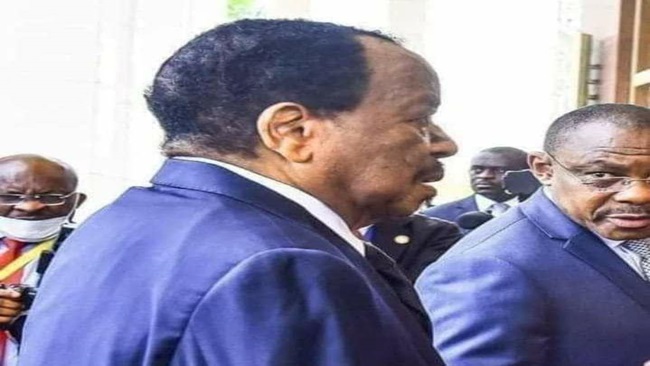
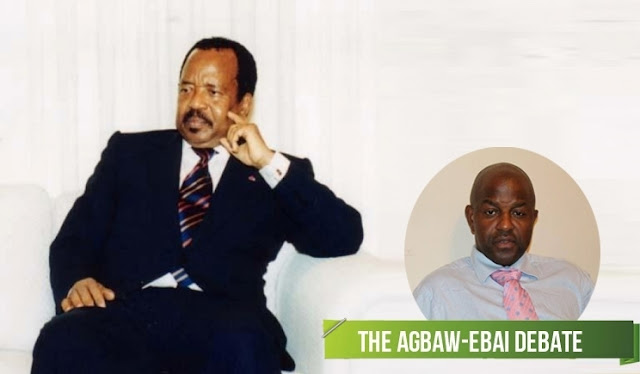
As campaigning starts on Saturday for Cameroon’s presidential election, the nation is puzzling over the whereabouts of the lead candidate: its 92-year-old leader, Paul Biya, the world’s oldest head of state.
In power since 1982 and seeking an eighth term in office in the October 12 polls, Biya left the central African country on Sunday for a “private trip to Europe”, his office said, without elaborating.
Diplomatic sources said the leader, who is rarely seen in public, was in Geneva, his favourite destination for personal visits, with protesters camping outside the United Nations headquarters in the Swiss city on Friday to voice their anger at Biya.
The trip comes a week after his daughter Brenda called on Cameroonians not to vote for him, in a TikTok video that she later retracted.
A weeks-long trip to Switzerland by Biya last September had fuelled rumours of his death, forcing the government to issue a statement reassuring the public about his health.
This time, Biya appeared in good health in a video of his departure released by the presidency, showing him accompanied by his wife Chantal and three advisers.
But the president was absent on Thursday from his scheduled appearance at the United Nations General Assembly in New York, instead represented by his foreign minister.
‘Illusion’ of health
Biya is set to contend for another seven-year term against 11 other candidates.
His RDPC party is rumoured to have scheduled a rally on Sunday in the northern city of Maroua.
The party has not confirmed how many events it will organise and whether Biya will participate.
He announced his candidacy on July 13 on X but has not directly addressed his fellow citizens since.
“Initially, there were rumours that the president himself was not very motivated to run again,” and that his aides pushed him to do so, said Arrey Elvis Ntui, senior analyst for the International Crisis Group.
David Kiwuwa, head of the School of International Studies at the University of Nottingham’s China campus, pointed to Biya’s age and health.
“The more he stays out of the public eye, the more he maintains the illusion that he is mentally and physically suited for the office,” Kiwuwa said.
The opposition, meanwhile, had failed to name a consensus candidate, Maurice Kamto, Biya’s top opponent and runner up in the 2018 election, said on Friday.
“Many Cameroonians are frustrated that the opposition, which has been trying for nearly 30 years to replace President Biya, is still unable at this stage to agree,” said Ntui.
Criticised by daughter
With the opposition divided, Biya is favourite to win the election — despite the recent embarrassment involving his daughter.
Late on September 17, Brenda Biya, a regular at the luxury InterContinental hotel in Geneva, published her shock video on TikTok, calling on voters to abandon her father.
It circulated widely before being deleted from her account, sparking a wave of reactions that prompted her to post an apology days later.
“I know nothing about politics. Don’t follow my advice,” she said in the follow-up video on September 21.
Brenda Biya has also faced legal troubles, having been convicted of defaming a Cameroonian-Nigerian artist who accused her of insults and lies on social media.
The judgement noted that her family “frequently stays at the InterContinental Hotel in Geneva, where rooms are rented year-round”.
A 2018 investigation of economic crime by a consortium of journalists found Paul Biya had spent some 4.5 years of his presidency abroad, largely in Switzerland, at an estimated cost of $65 million.
‘Re-elected by default’
Protesters against Biya’s latest stay in Switzerland heeded a call by an association of Cameroonians in Europe Friday to rally in front of the UN headquarters in Geneva, chanting “Biya murderer” in the pouring rain.
The demonstration was initially organised to denounce opposition leader Kamto’s barring from the presidential ballot, but took on a new dimension.
Laurent, who came from Frankfurt in Germany to attend the protest, told AFP he was angry at Kamto’s rejection and Biya’s absence from the campaign trail.
“We’re getting the impression that the election is already stitched-up and that Paul Biya will be re-elected by default,” he said.
Diosky Moresmo, spokesperson for a Cameroonian diaspora association in Belgium, told AFP the protest wanted “to chase Paul Biya out of Europe”, criticising the president for spending the “the money of the Cameroonian people”, who have “no water, no electricity, no hospitals”, on the visits.
Nearly a quarter of Cameroon’s population lives under the poverty line, according to the World Bank.
“Every day, Cameroonians die,” the protest group said.
“How can he rest peacefully in Geneva, at taxpayers’ expense, while his people suffer?”
Culled from AFP
















27, September 2025
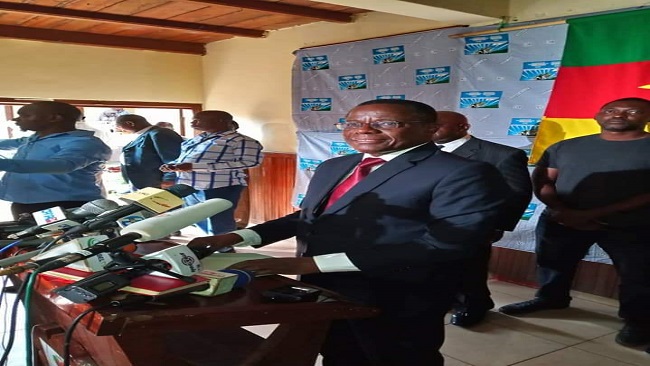
Race for Etoudi: Maurice Kamto’s neutrality, statesmanship or self interest 0
As Cameroonians brace for the high stakes presidential election on October 12, 2025, the political terrain is as fractured as ever.
Calls for a united opposition have intensified, especially among the growing number of citizens desperate for political change after decades of entrenched incumbency.
At one time, all eyes turned to Professor Maurice Kamto, the man many believed could play a pivotal king-making role. Yet in a puzzling twist, Kamto has chosen to sit on the sidelines, refusing to endorse any of the opposition candidates despite the expectations placed on him.
His neutrality is deafening and dangerous.
Kamto, the leader of the Cameroon Renaissance Movement (CRM) and arguably the most prominent opposition figure in the country since the 2018 election, has long been hailed as a beacon of hope by many Cameroonians.
His intellectual rigor, legal expertise and previous political defiance, have earned him respect and admiration. However, his recent refusal to guide voters or rally behind a consensus candidate is forcing even his most ardent supporters to ask if he truly wants change?
After being rejected from the presidential race, a controversial move that itself warrants scrutiny, Kamto found himself in a unique position. He may not be on the ballot but he still hold moral and political capital. In moments like these, true leadership reveals itself not in the pursuit of power but in how one uses influence for the common good.
Unfortunately, Kamto has refused to endorse any of the remaining opposition candidates. This decision has baffled many who saw in him a potential architect of opposition unity.
Ironically, while he criticized the two northern candidates for not consolidating their bids, he himself failed to make any unifying move. Instead of stepping up to foster dialogue, rally the fragmented opposition or point his supporters in the right direction, Kamto has opted for neutrality, a stance that now reeks of political convenience.
This raises many questions. Can a man who has refused to support any opposition candidate still claim to champion democratic change in the country?
There is a risk of fragmentation which implies a dispersion of votes, making the ruling party a winner.
The Cameroonian opposition has long been its own worse enemy. Chronic disunity, ego problems and lack of strategic coherence have repeatedly handed victory to the ruling party. In the face of growing public discontent, Prof. Kamto’s refusal to act as a unifier at such a crucial juncture only reinforces this damaging pattern.
There is no shortage of capable candidates in the current race. However, if votes will be shared among multiple opposition parties, the dying regime will once again find itself in a favorable position, not necessarily because it is strong but because the opposition is weak, divided and without the right mindset.
Kamto’s refusal to back even one of these candidates or to initiate a dialogue that could lead to a united front is not just disappointing. It is politically irresponsible.
For someone whose political brand is built on justice and national renewal, Kamto’s action sends a conflicting message. It is hard to decry the dysfunction of the opposition while refusing to take steps to fix it. It is hard to fight for the people while leaving them without guidance in their hour of need.
Supporters often cite Kamto’s legal background, his statesmanship and his vision as reasons to trust his judgment. But history judges leaders not just by what they say but what they do, especially when the stakes are high.
In months and years to come, Kamto will be forced to deal with the possibility that his legacy may be defined not by the battles he fought but by the one he chose to avoid.
This is not to say Kamto had an easy task. Endorsing a candidate in a competitive and ideologically diverse opposition carries risks. But leadership is about risk. It is about humility. It is about being able to demonstrate that even if he is not the one leading the charge against a crumbling goverment, the movement must go on.
Instead, Kamto has chosen to demonstrate a strange indifference the people’s wish while casting blame on others for failing to unite. This paints a picture of a man more interested in being the face of change than in actually triggering it.
Cameroon stands at the crossroads. This election could be a defining moment in the country’s democratic evolution. But progress will not come through rhetoric alone. It requires action, compromise and, above all, unity.
In refusing to endorse a candidate, Kamto has not just missed an opportunity to occupy a strategic position in the country’s political history, but has also proven to the people that their political interest is paramount.
He has actively undermined the opposition’s best shot at unseating a decades-old regime. His neutrality has sown confusion among voters and emboldened the very regime he claims to oppose.
Ultimately, the burden of responsibility falls on all opposition leaders but disproportionately on those with the stature to influence outcomes. Kamto had and still has a chance to help shape the future but that requires setting egos aside, abandoning the illusion of being the sole savior and stepping into the role history is offering him not necessarily as president but as a true patriot and unifier.
In a political climate where neutrality speaks louder than words, Kamto’s refusal to act is being interpreted rightly or wrongly as a betrayal of the movement he helped build. Whether this is a tactical pause or a permanent abdication of responsibility, only time will tell. As the country marches toward October 12, one truth becomes increasingly clear.
In the face of injustice neutrality is not neutrality it is complicity.
For a man of Kamto’s standing, there is a high price to pay for neutrality.
By Ntam Charles Ngeh