25, September 2020
Mali: Designated interim president makes first public appearance 0
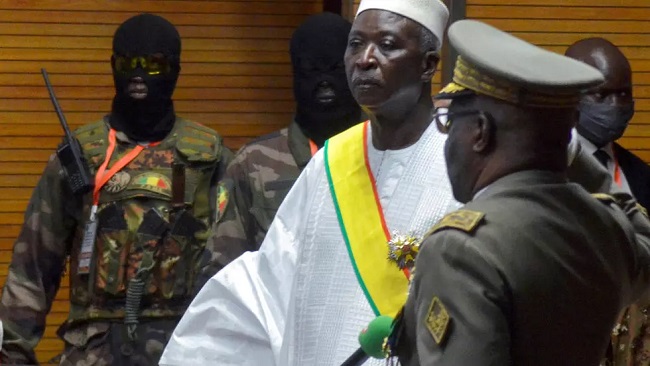
Bah Ndaw, a retired colonel who has been designated Mali’s interim president following last month’s coup, made his first public appearance on Thursday, meeting a regional mediator, AFP reporters saw.
Ndaw, 70, met former Nigerian president Goodluck Jonathan, in Bamako on a mission for the 15-nation bloc ECOWAS, on the eve of his swearing-in.
Ndaw’s appointment was announced on Monday by Colonel Assimi Goita, who heads a junta of young military officers who seized power on August 18, ousting elected president Ibrahim Boubacar Keita.
Goita himself will serve as vice president, under the announcement.
The interim president will rule for a maximum of 18 months before staging nationwide elections.
ECOWAS — the Economic Community of West African States — slapped sanctions on Mali on August 20 to push for swift restoration of civilian government, including the appointment of civilians as interim president and prime minister.
The bloc may announce on Friday whether the plan meets criteria for easing sanctions, Jonathan said on Thursday.
An official close to the sanctions discussion, who declined to be named, said that “there are still consultations going on”.
Jonathan was due to meet other Malian officials on Thursday, besides Ndaw, including prominent figures whom the military detained after last month’s coup.
ECOWAS has demanded the release of all detainees. Keita was released, but former prime minister Boubou Cisse, among other officials, remains in detention.
Mali’s neighbours have taken a hard line with the junta, fearful that the fragile nation of some 19 million people could spiral into chaos.
Swathes of the vast country already lie outside of government control, due to a lethal jihadist insurgency that first emerged in 2012. It has also inflamed ethnic tensions.
Current restrictions include border closures and a ban on commercial trade and financial flows but not on basic necessities, drugs, equipment to fight coronavirus, fuel or electricity.
Source: AFP


25, September 2020
US: Top Republicans promise peaceful transition after Trump sows election doubts 0
U.S. Senate Majority Leader Mitch McConnell and other top Republicans on Thursday repudiated President Donald Trump’s refusal to commit to a peaceful transfer of power, assuring American voters the lawmakers would accept the outcome of November’s election.
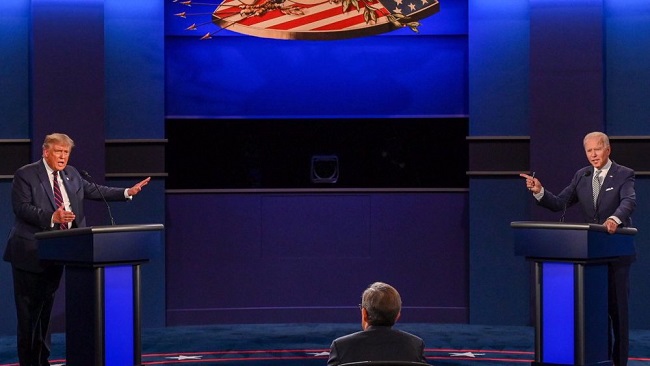
Trump declined on Wednesday to embrace a peaceful transfer in response to a reporter’s question and said he expected his election battle with Democrat Joe Biden to be settled by the Supreme Court.
Speaking to reporters on Thursday, Trump said he did not know that an “honest” election could be held on Nov. 3 “with this whole situation, unsolicited ballots.”
The Republican president’s rhetoric on Wednesday, which largely referred to voting by mail, set off a fury that prompted several Republicans in Congress to distance themselves from Trump.
Despite four years of incendiary statements by Trump, members of his own party have been loath to criticise him, as many feared political retribution.
“The winner of the November 3rd election will be inaugurated on January 20th. There will be an orderly transition just as there has been every four years since 1792,” McConnell wrote in a morning tweet.
Like other Republicans, McConnell did not directly criticize Trump.
By midday, with the controversy raging, White House Press Secretary Kayleigh McEnany told a news briefing: “The president will accept the results of a free and fair election.”
But for months, Trump has cast November’s election as being rigged and repeatedly attacked Democrats for promoting widespread use of mail-in ballots for voters who do not want to risk contracting the deadly COVID-19 virus by casting their ballots at potentially crowded polling centers.
In an interview on Fox News Radio, Trump called mail-in ballots “a horror show,” despite studies showing no significant problems with that method of voting over the years.
Michael Waldman, president of New York University’s Brennan Center for Justice, said voting arrangements were steadily advancing. In an interview with Reuters Television, he added: “The system is not broken. States are actually improving their voting rules day by day.”
Democrats accused Trump of threatening American democracy and further politicising his upcoming choice to replace the late Supreme Court Justice Ruth Bader Ginsburg by suggesting the yet-to-be named nominee would have a role in the election’s outcome.
Some of McConnell’s fellow Republicans joined the effort to quell election fears, including Senators Marco Rubio and Mitt Romney and House Republican leader Kevin McCarthy, who told reporters: “It will be a smooth transition regardless of the outcome.”
Trump, who trails Biden in national opinion polls, has long sought to cast doubt on the legitimacy of the election, asserting without evidence that mail-in voting would be rife with fraud.
“President Trump, you are not a dictator and America will not permit you to be one,” said Senate Democratic leader Chuck Schumer, calling him “the gravest threat” to U.S. democracy.
Senator Bernie Sanders, who lost to Biden in the Democratic Party’s presidential nominating race, called for an independent commission to oversee the upcoming election.
Democratic House of Representative Speaker Nancy Pelosi cautioned against panicking over the remarks of a president who she said admires autocratic leaders. At a news conference, she urged Americans to cast their ballots and admonished Trump: “You are not in North Korea, you are not in Turkey, you are not in Russia.”
Court challenges
If November’s election is close, Trump could contest the results in federal courts in hopes of being awarded enough Electoral College votes to retain the White House, according to political analysts.
Only one U.S. presidential election, the 2000 contest between Republican George W. Bush and Democrat Al Gore, has had its outcome determined by the Supreme Court.
Senate Judiciary Committee Chairman Lindsey Graham, a Trump ally who will play a significant role in whether Trump’s upcoming Supreme Court nominee will be confirmed, said there could be litigation over the presidential election. “The (Supreme) Court will decide and if the Republicans lose, we will accept that result,” Graham told Fox News. “But we need a full court.”
If Trump nominates a conservative to serve on the Supreme Court, as expected, and the Republican-controlled Senate confirms the nominee, it will have six justices considered to be conservative and three viewed as liberals.
(REUTERS)