4, August 2018
World Council of Churches warns of growing risk of atrocities in Cameroon 0
Escalating violence in Cameroon, including graphic violence against women and children, has drawn condemnation from the World Council of Churches (WCC).
“The World Council of Churches condemns all forms of violence in Cameroon and calls on the government to stop using any force to punish its people in the English-speaking region of Cameroon,” said Prof. Dr Isabel Apawo Phiri, WCC acting general secretary, commenting on the current cycle of violence in the Central African country.
“Cameroon authorities must immediately cease the use of disproportionate and deadly force against civilians and protect the human rights of all,” she added.
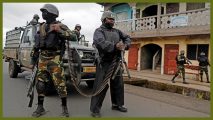
The incidents are part of increasing violence against civilians in Cameroon, where, in the last three years, the Cameroonian military has been waging a multifront war against Anglophone separatists, especially in the western part of the country, and against Boko Haram in the north.
Phiri also called for prayers for peace in Cameroon and reaffirmed the WCC’s solidarity with the estimated 160,000 civilians who have been displaced by the fighting.
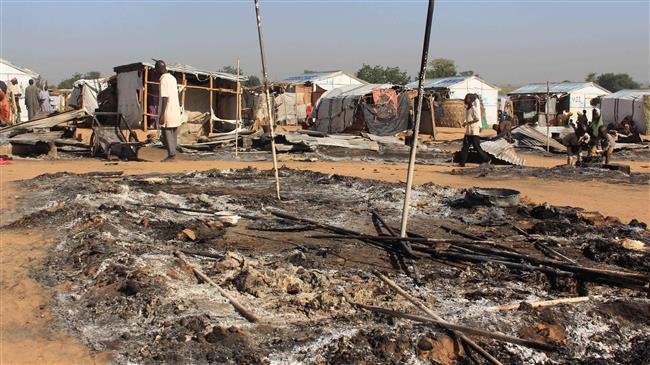
In recent weeks, a video that appears to show Cameroonian soldiers in the Mayo-Tsanaga region executing two women, a young girl and a baby was widely circulated on social media, bringing to light one of the atrocious aspects of the conflict. Another video was broadcast in June showing soldiers wearing Cameroonian uniforms setting fire to two houses in a village located in the English-speaking region of the country.
The government of Cameroon initially denounced the Mayo-Tsanaga video as “fake news” but has since announced a formal investigation and arrested four soldiers.
Phiri also noted the severe gender injustice going on in Cameroon. “As in most conflict situations worldwide, violence disproportionally affects women, who become especially vulnerable when law and order break down,” she said.
The Presbyterian Church in Cameroon in July organized a “Week of Prayer for Cameroon in Times of Crisis,” calling for repentance, a cease fire and a peace plan. The World Communion of Reformed Churches (WCRC) is planning a solidarity visit to Cameroon.
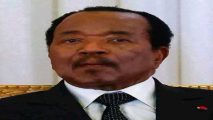
There is growing concern that upcoming presidential elections, scheduled for 7 October, will lead to further intensification and militarization of the conflict in Cameroon’s Anglophone regions. President Paul Biya has been in power since 1982 and announced on 13 July that he will be running for a seventh term.
Source: WCC


Father Sob and Father Constant
Father Sob and Father Constant(Douala airport)


5, August 2018
Cameroon cardinal helping organize conference to tackle Anglophone Crisis 0
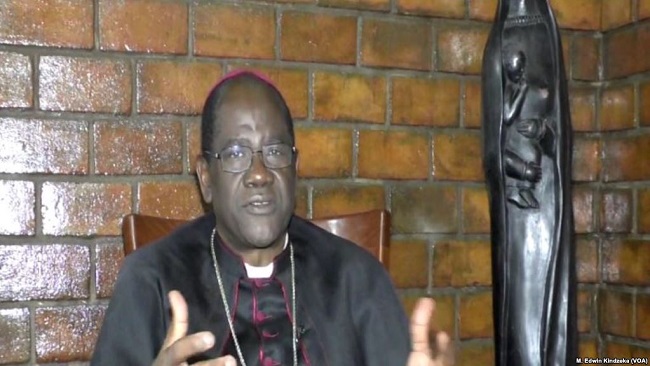
Cameroon religious leaders are coming together to help seek a solution with the country’s ongoing Anglophone Crisis, with Cardinal Christian Tumi leading efforts to ease tensions between the country’s French-speaking majority and an English-speaking minority that says it is being persecuted.
Tumi, the Archbishop emeritus of Douala, joined with Christian and Muslim leaders to call for an Anglophone General Conference to take place Aug. 29-30 in the town of Buea.
The cardinal told Crux the leaders hope to offer a unique “pastoral approach” to tackle the crisis.
The Northwest and Southwest regions of Cameroon are majority English-speaking, a legacy of the colonial history of the country: Cameroon was originally German, but after World War I the defeated country transferred it to the allies, and it was divided between France and Britain.
At independence, the two parts were reunited, and currently about 20 percent of the country’s nearly 25 million people is anglophone. The Catholic Church is the largest religious group in the country, representing about 40 percent of all Cameroonians.
In October 2016, strikes by lawyers and teachers over perceived attempts by the Francophone administration to assimilate the legal and educational systems practiced in the two English-speaking regions turned violent, and morphed into rising demands by Anglophone Cameroonians for independence.
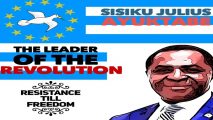
The government has been accused of razing entire villages and extrajudicial killings in their hunt against separatists, who are calling on the English-speaking areas to form a new country, called ‘Ambazonia.’
Separatists have also been accused of atrocities, and have attacked Cameroonian security forces, and kidnapped opponents for ransom.
“We believe that the moment has come to put an end to the conflict through a frank, inclusive and comprehensive national dialogue on the Anglophone Problem,” the religious leaders said in a statement.
“We recognize that absolute necessity for the people of the Southwest and Northwest Regions to hold a preparatory general conference in order to agree on the issues to be examined at the national dialogue on the Anglophone Problem and to freely designate their representatives at that dialogue,” the statement continued.
“Accepting our moral responsibility to promote peace and harmony among all God’s children, we hereby freely take the initiative to constitute ourselves into a college of conveners for the purpose of summoning the required General Conference of the people of the Southwest and Northwest Regions.”
Those whose ancestral origins are within the territory that today constitutes the Northwest and Southwest Regions of Cameroon; or those whose parents or grandparents, not having their ancestral origins in the Southwest and Northwest Regions, settled permanently in this territory as of Oct. 1, 1961, when the former ‘British Cameroons’ formally joined Cameroon.
Tumi told Crux that because there were already several currents of thought among Anglophones themselves as to what the problem is and how it should be handled; the conference becomes much more necessary.
“There are some calling for secession; others for federalism and others for decentralization. All that we are saying is that anybody who wants to take part in this dialogue should be objective, that is to say – when you come to the dialogue, you must be able to give and take.”
Similar conferences had been held before – one in Buea and the other in Bamenda in the early 1990s, but Tumi believes the one he and other religious authorities in Cameroon want is different.
“We come with a pastoral approach,” the cardinal told Crux.
“We have no arms. We preach love and forgiveness, objectivity and truth. Our insistence will be on those virtues. If intellectually you are convinced that what the other person is saying is true, you are obliged by intellectual honesty to accept,” he said.
The religious leaders said in their statement that such an initiative can only succeed if government releases all those who have been arrested in connection with the crisis, as well as create the conditions necessary for all English speakers to participate, including separatists.
They also called on “the Government of Cameroon and the various armed groups that now operate throughout the territory of the Northwest and Southwest Regions, to declare an immediate end to military hostilities in these two regions and thus create favorable conditions for finding a peaceful and lasting solution to the Anglophone Problem and to ending the Anglophone Crisis in our country through dialogue.”
But the government has raised objections to the proposals, especially the inclusion of separatists in any talks.
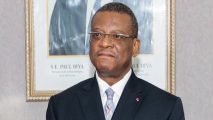
“We can’t place the republican army, which today is deployed to fight for the territorial integrity of our nation on the same footing as armed groups, terrorists who kill, slaughter, behead, burn schools, [and] commit despicable crimes,” said Issa Tchiroma Bakary, Cameroon’s communications minister.
Tchiroma also criticized the religious leaders for asking for the release of all those arrested in connection with the crisis.
“You can’t also ask a state that is ruled by law like ours, to release those who have killed, massacred and who are today awaiting trial,” he said.
However, the call of Cameroon’s religious leaders for an end to the military campaign in the Anglophone areas has gotten the support of the Geneva-based World Council of Churches.
“The World Council of Churches condemns all forms of violence in Cameroon and calls on the government to stop using any force to punish its people in the English-speaking region of Cameroon,” said Isabel Apawo Phiri, the WCC acting general secretary, in an Aug. 2 statement.
“Cameroon authorities must immediately cease the use of disproportionate and deadly force against civilians and protect the human rights of all,” she added.
Meanwhile, 85-year-old President Paul Biya, who has been in power since 1982, announced last month he will seek another term in office when national elections take place in Cameroon in October.
Source: Crux