18, March 2026
Mafia: Morocco awarded Afcon title after CAF overturns result 0
Morocco have been declared the winners of the 2025 Africa Cup of Nations after the Confederation of African Football (Caf) overturned the result of the final following Senegal’s controversial walk-off.
Senegal beat Morocco 1-0 in the final on 18 January in a match which was overshadowed when the Senegalese players refused to play after the hosts were awarded a stoppage-time penalty with the match goalless.
Following a delay of around 17 minutes, the players did eventually return and Brahim Diaz’s penalty was saved before Senegal’s Pape Gueye scored an extra-time winner.
However, that result has now been overturned after a decision by an appeal board at African football’s governing body.
A statement from Caf said that Senegal are “declared to have forfeited the final match” with the “result of the match being recorded as 3-0 in favour” of Morocco.
The Senegalese Football Federation said it would appeal Caf’s decision at the Court of Arbitration for Sport, calling it “unfair, unprecedented and unacceptable”.
The decision follows an appeal by Moroccan FA (FRMF) which Caf said is “declared admissible in form” and was upheld.
Caf added that “through the conduct of its team” Senegal infringed on Article 82 of regulations of the Africa Cup of Nations and as a result Article 84 became applicable.
Article 82 states that if a team refuses to play or leaves the ground before the end of regulation time without the referee’s authorisation, it will be considered the loser and eliminated from the competition.
Article 84 complements this provision, stating that any team that violates Articles 82 will be permanently eliminated and will lose the match 3-0.
A statement from FRMF said that their decision to appeal the final result was “never intended to challenge the sporting performance of the teams” but was a request for the “application of the competition’s regulations”.
“The federation reaffirms its commitment to respecting the rules, ensuring clarity in the competitive framework, and maintaining stability within African competitions,” the FRMF statement added.
“It also wishes to commend all the nations that took part in this edition of the Afcon, which has been a major moment for African football.”
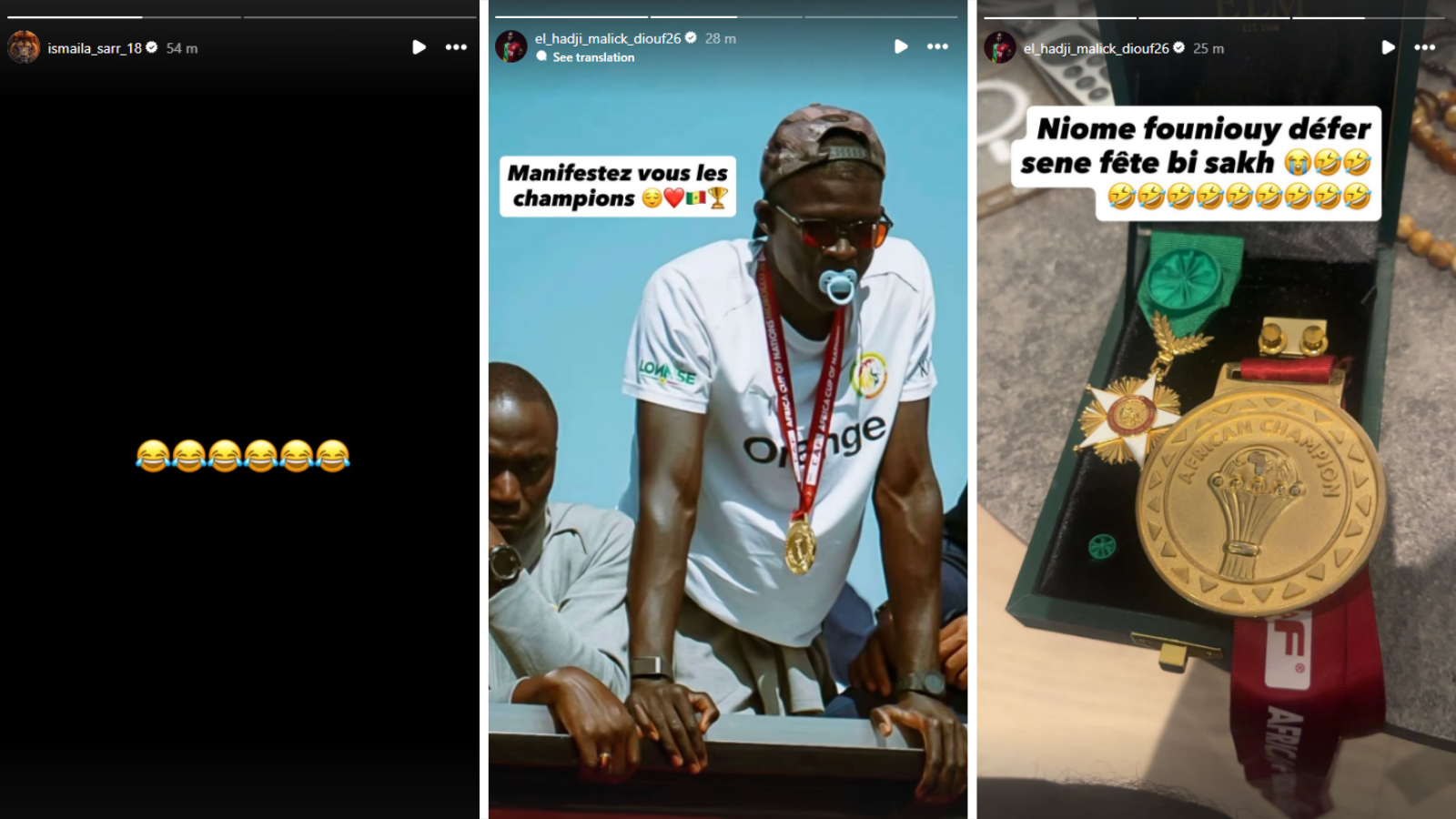
Earlier, a video was posted on the X account of the Senegal men’s national team, external of their players celebrating on a bus parade with the Afcon trophy and an ‘OK’ emoji.
Maher Mezahi, a North African football journalist, told BBC Radio 5 Live that the decision to overturn the result will not change the emotional impact of what unfolded on the pitch for those who witnessed it.
“We cannot erase the final 16 minutes of that match and what we saw,” he said.
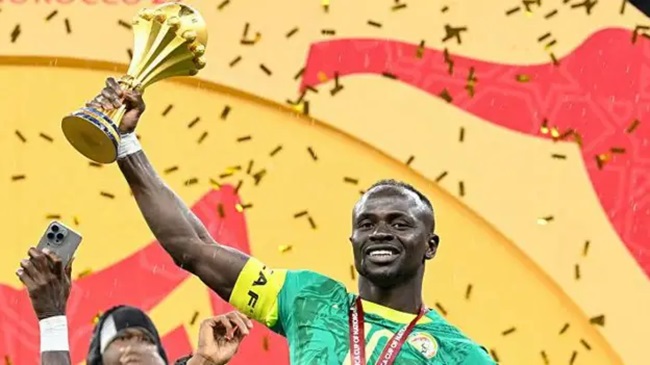
“We cannot erase the feelings of seeing Senegal lift the trophy and the players going home with the medal and them having a parade.”
What happened in the Afcon final?
With the scoreline 0-0, referee Jean Jacques Ndala gave a spot-kick in the eighth minute of added on time.
Ndala was advised by the video assistant referee (VAR) to consult the pitchside monitor and review defender El Hadji Malick Diouf’s challenge on Diaz.
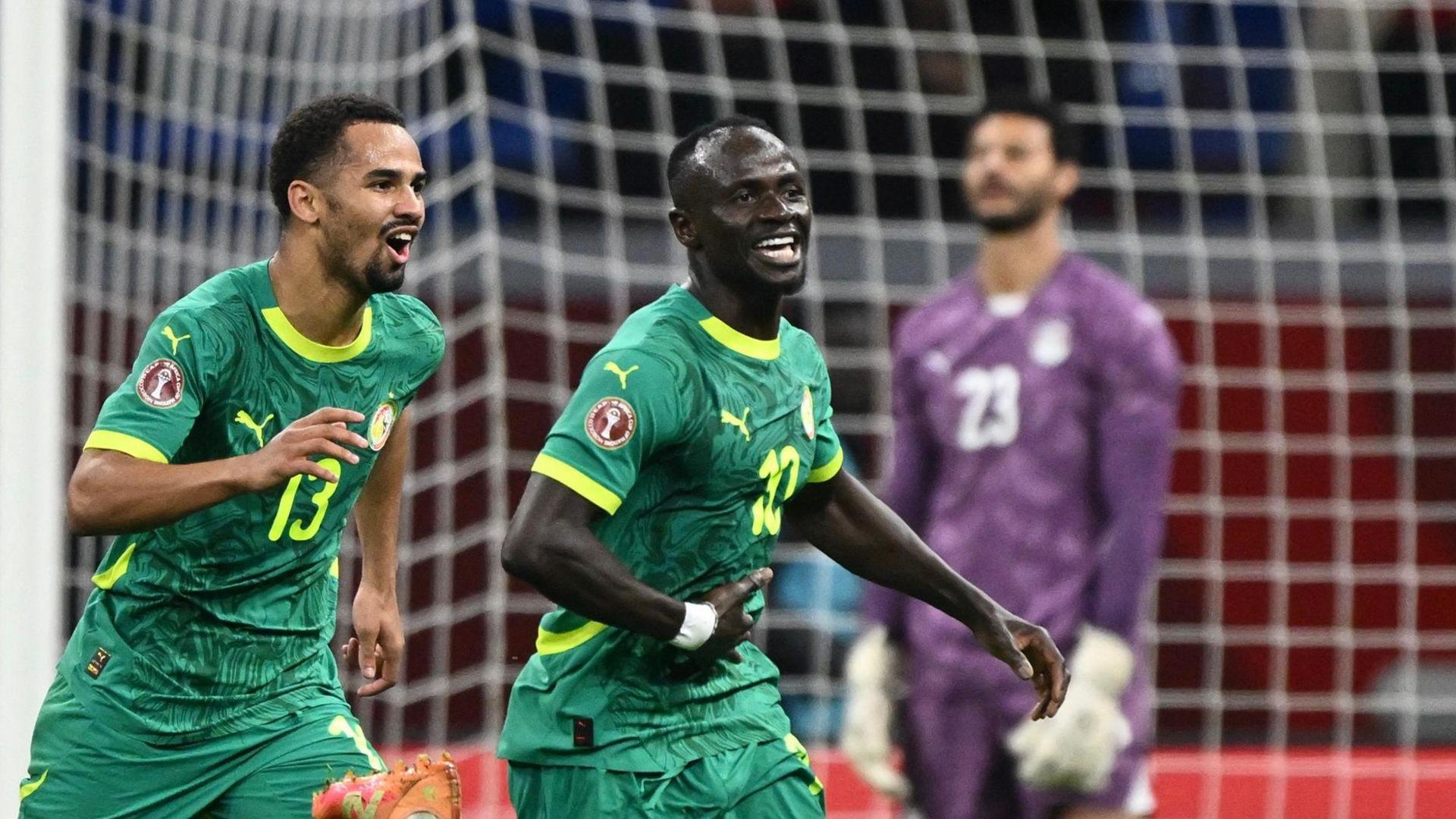
Senegal head coach Pape Thiaw, still incensed by Ndala’s decision a few moments earlier to disallow a Senegal goal from Ismaila Sarr, ushered his team off the field.
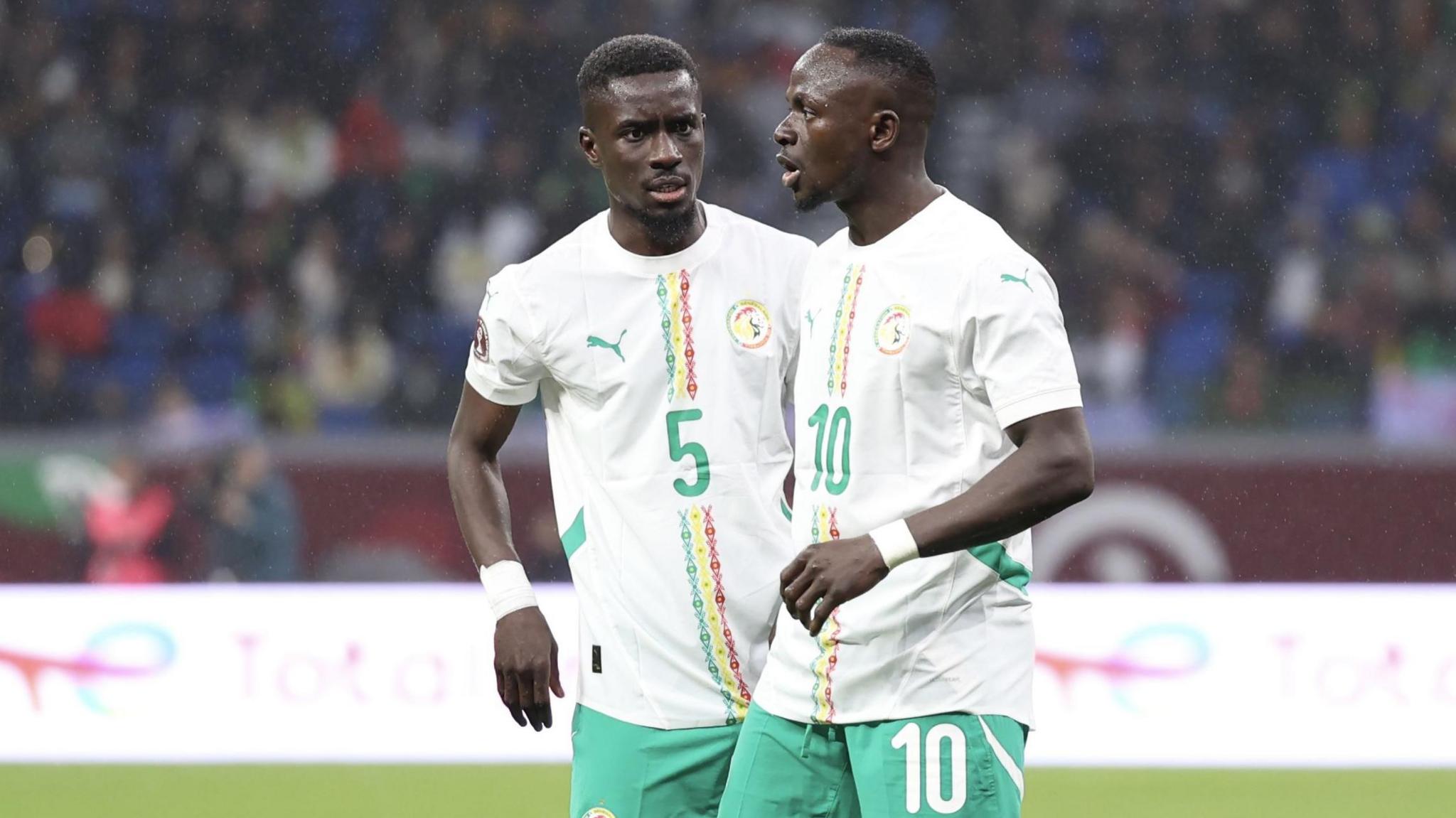
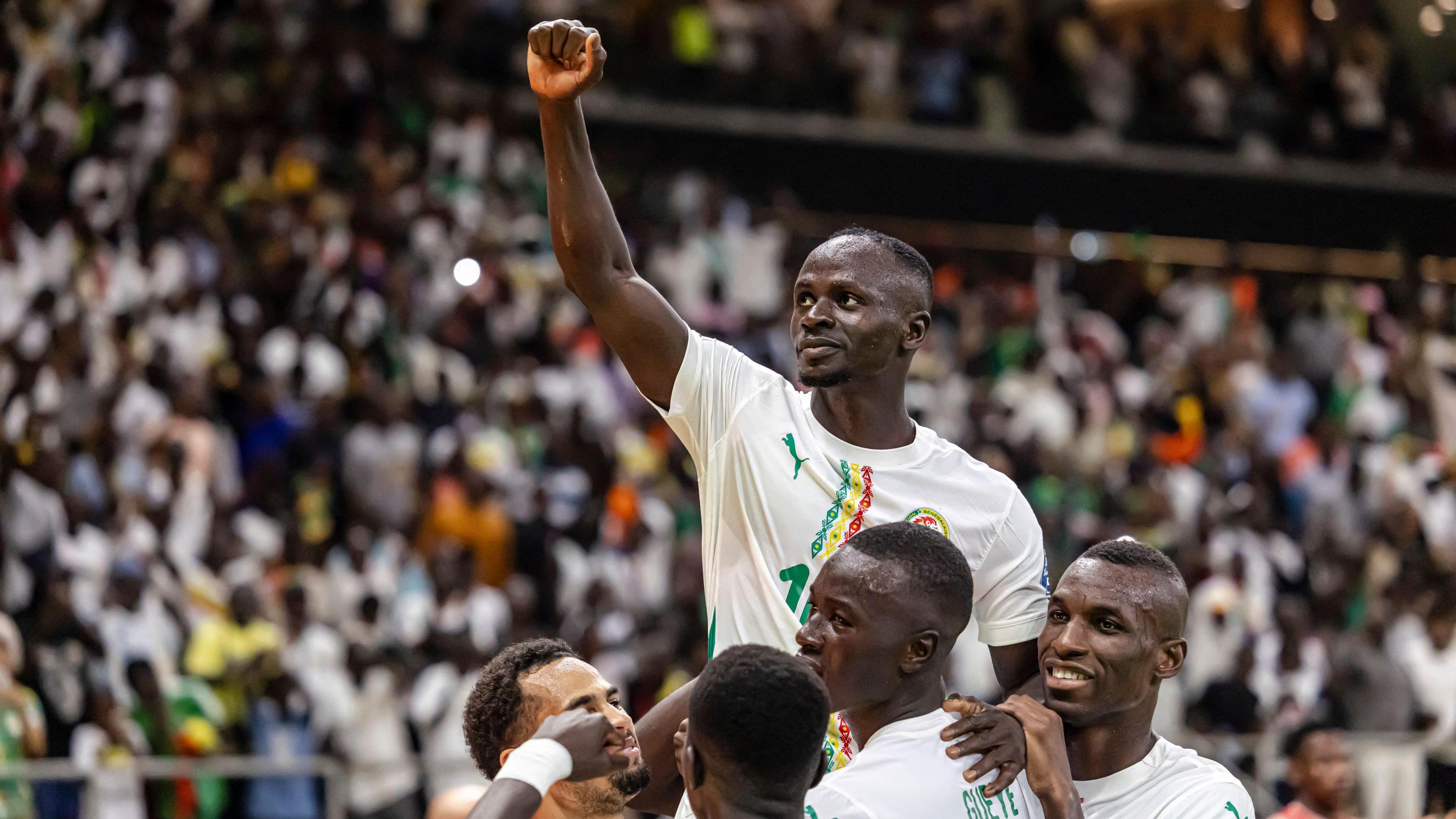
Former Liverpool striker Sadio Mane stayed on the pitch and tried to encourage his Senegal team-mates to finish the game.
After a 17-minute delay, Senegal’s players did eventually return.
Real Madrid forward Diaz was trusted with the penalty, but his tame ‘Panenka’ effort was caught by Senegal keeper Edouard Mendy who barely had to move, and Ndala immediately blew his whistle for full-time.
Villarreal midfielder Gueye then scored the winning goal in the fourth minute of extra time to seal a second triumph in five years for Senegal.
In his post-match news conference, Morocco coach Walid Regragui said Senegal’s actions were “shameful” and do not “honour Africa”.
Fifa president Gianni Infantino strongly condemned the “ugly scenes” in a post on Instagram.
Thiaw, meanwhile, had his media briefing cancelled after a ruckus broke out in the press room.
But in a later post-match interview he accepted that he should not have ordered his team off the field and he had reacted “in the heat of the moment”.
Morocco subsequently parted company with head coach Walid Regragui on 5 March – four months before the World Cup finals.
Source: BBC















19, March 2026
2025 Africa Cup of Nations: Patrice Motsepe should go and go now! 0
Corruption in all walks of life across Africa is well documented. But even by African standards, the decision by the Confederation of African Football (CAF) to retroactively award the 2025 AFCON title to Morocco, more than 60 days after Senegal won the final 1:0 is not merely controversial, it is absurd. CAF’s statement, invoking Articles 82 and 84, declared Senegal to have forfeited the final, converting a completed match into a 3: 0 victory for Morocco. What makes the decision indefensible is that the match was played to completion, overseen by match officials, and accepted at full-time with CAF and FIFA official presenting the medals and trophy to the players and teams. One cannot have it both ways; a game cannot be fully played and retrospectively forfeited.
AFCON 2025, hosted in Morocco was clouded with controversy. Throughout the competition, particularly in matches involving the host nation, there were persistent complaints about questionable refereeing and inconsistent VAR interventions. Supporters of Cameroon and Nigeria pointed to ignored penalty appeals and un-reviewed fouls by VAR during their games against Morocco in the quarter and semi-finals respectively. Cameroon and Nigeria fans were aggrieved, but accepted the oldest principle in football, that when the referee blows the final whistle, the result stands.
Had Articles 82 and 84 been applied on that day and Morocco declared winner there and then, there would have been outrage, certainly in many parts of the football world, but also closure. Instead, CAF failed to act in real time, only to resurrect its rulebook in a dark committee room weeks later in a move that is incoherent and institutionally damaging. The result is not justice, but confusion and accusations of corruption. This decision has the potential to break CAF up as an organization. There are many in sub-Saharan Africa who already believe that Morocco and the North African nations are using their financial resources to create their own rules in CAF and this is unacceptable.
As explained by Osasu Obayiuwana on Talksport Radio in the UK, rules must be applied prospectively, not retrospectively. If an authority fails to enforce a rule at the relevant moment, it cannot later invoke it to alter an outcome, unless fraud or fundamental illegality is proven. No such finding has been established here. This is not the correction of injustice; it is the creation of it by denying Senegal their victory. If matches completed under a referee’s authority can be rewritten in backrooms, then the referee ceases to be an arbiter. He becomes a temporary facilitator whose decisions are provisional and negotiable.
If Senegal forfeited the match, why was it allowed to continue after the seventeen minutes delay? Even within football circles, the reaction has been scathing. A member of the Cameroon Football Federation (FECAFOOT) described the decision as “unacceptable and disgraceful to African football.” There are the whispers that officials empowered to influence outcomes may have taken their rewards but failed to deliver. This has led to awkward conversations between the parties involved in the scheme. Many say this ruling is less about law and more about settling accounts by the parties. Whether true or not, CAF has once again created the conditions in which such suspicions of corruption thrive.
Senegal’s government has called the ruling as “unprecedented and exceptionally serious,” and called for an independent international investigation into suspected corruption within CAF. They have rightly signaled their intention to appeal to the Court of Arbitration for Sport. There is hope within lovers of African football and justice that the original result will be restored. But even if it is, the damage has already been done. Because in football, the final whistle is supposed to end the argument. In African football, it has just started one.
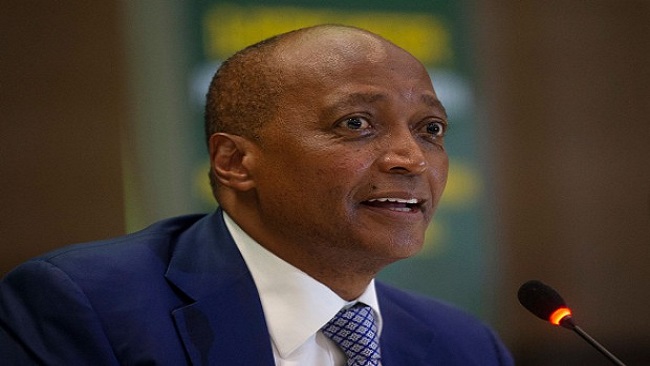
African football has never lacked brilliance. From George Weah to Didier Drogba, from Roger Milla to Samuel Eto’o, the continent has produced generations of extraordinary talent. What it has too often lacked is institutional credibility. Decisions like this erode the very foundations of trust upon which the beautiful game in Africa depends. For the credibility of the game, many now argue that Patrice Motsepe must take responsibility for this mess and resign immediately.
By Isong Asu
Cameroon Concord London Bureau Chief