Featured
 Unity Palace needs a new idea and a new head of state
  Martinez Zogo Affair: Biya must clean house and make way for a new generation
  Ambazonia People’s Liberation Authority explains motives for the new transition
  A year after Biya’s disputed re-election, CPDM remains without a timetable for next year’s polls.
 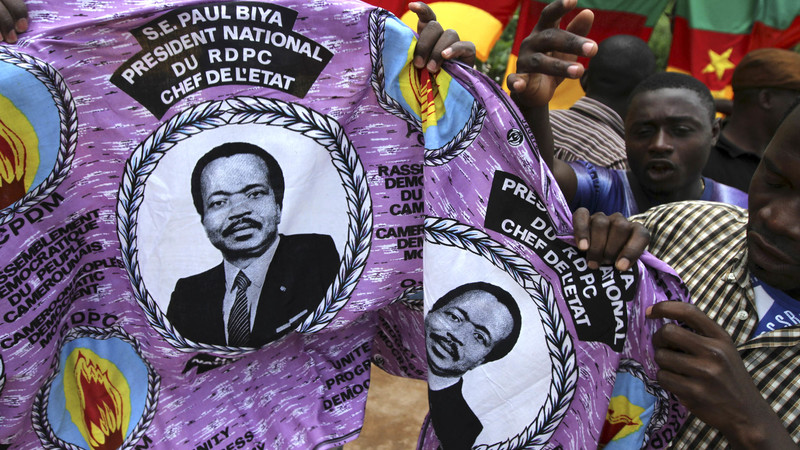 Ruling CPDM Party: When a political message runs out of the road
Most Commented Posts
 4 Anglophone detainees killed in Yaounde
18 comments Chantal Biya says she will return to Cameroon if General Ivo Yenwo, Martin Belinga Eboutou and Ferdinand Ngoh Ngoh are sacked
13 comments The Anglophone Problem – When Facts don’t Lie
12 comments Anglophone Nationalism: Barrister Eyambe says “hidden plans are at work”
12 comments Largest wave of arrest by BIR in Bamenda
10 comments
Featured
-

Unity Palace needs a new idea and a new head of state
-

Trump says US may launch ‘another little Epic Fury’ attack on Iran
-

Formula 1: Hamilton sets sights on racing in African grand prix
-

Yaoundé: anti-corruption agency calls for stronger powers after 20 years of limited progress
-

Martinez Zogo Affair: Biya must clean house and make way for a new generation
-

Biya’s health crisis is starting to alarm investors
-

Cameroon’s Eurobond yields hit record high after Fitch downgrade
8, September 2026
Douala spends CFA7 billion on waste but 900 tons still go uncollected each day 0
Douala has budgeted CFA7 billion for waste management in 2026, yet an estimated 900 tons of household garbage still go uncollected each day, underscoring the limits of a new appeal for residents to package their waste in sealed bags.
The Douala City Council (CUD) urged residents on September 2 to place household waste in properly sealed garbage bags before taking it to designated disposal points. The city says the practice makes collection easier, prevents garbage from spreading through streets and helps protect the urban environment.
The recommendation is simple, but it comes with a direct cost for households: garbage bags have to be purchased. For families that generate waste every day, regular use represents another recurring household expense. The burden can vary considerably depending on household size, the volume of waste produced and the type of bags purchased.
Some households still use repurposed packaging, buckets or other containers to store waste before disposal, reflecting the different financial circumstances of residents across the city.
The larger challenge, however, extends well beyond the price of a garbage bag.
Douala generates about 2,700 tons of household waste every day, according to figures from the city council. Waste management company Hysacam says it collects about 1,800 tons daily, or close to 70% of the estimated total. That leaves roughly 900 tons outside the collection system each day.
Accessibility problems in some neighborhoods, along with constraints in pre-collection and transportation, further complicate waste management.
Properly sealed bags can make a difference. They prevent some garbage from scattering, reduce certain nuisances and make waste easier for collection workers to handle. They can also help keep garbage out of drainage channels, an important concern in a city that regularly faces flooding.
But packaging is only one step. It works only if an effective collection system takes over afterward.
Household Costs Meet Collection Constraints
For residents, regular use of dedicated garbage bags means an additional expense whose size depends on the household and the amount of waste it generates. The issue is not whether bags are useful: properly packaged garbage is clearly easier to handle than waste dumped directly onto the ground.
The challenge is to make the practice accessible to as many households as possible without imposing a disproportionate burden on lower-income residents.
Garbage bags also cannot substitute for collection. A sealed bag left on a sidewalk, vacant lot or beside a drain remains improperly managed waste. Packaging only works when households have appropriate disposal points and the waste is subsequently collected.
Douala’s waste management chain involves several stages, from household storage to pre-collection, collection, transportation, transfer and treatment. A breakdown at any stage can weaken the entire system.
In hard-to-reach neighborhoods, pre-collection helps move garbage toward the main collection network. Elsewhere, the frequency of garbage truck services and the availability of suitable disposal points largely determine whether the system works effectively.
That means urban sanitation cannot depend solely on residents’ behavior. Households have a role to play by avoiding illegal dumping, following designated disposal locations and schedules, properly packaging waste and keeping garbage out of public spaces.
But individual efforts also depend on a functioning public service. Suitable bins, accessible collection points, organized pre-collection services and regular waste removal remain essential.
CFA7 Billion for Waste Management in 2026
Waste management also represents a substantial expense for the city. Douala has allocated CFA7 billion to garbage management in its 2026 budget.
The city government has also announced CFA100 million for district councils. The funding is intended in part to help associations and small and medium-sized businesses acquire garbage bins and bags for pre-collection services that move household waste to collection points.
Those figures put the household garbage bag into a broader financial context. The bag itself represents only a small part of a system that requires spending on equipment, workers, fuel, vehicles, maintenance, transportation and treatment.
Poorly managed waste also carries indirect costs through clogged drains, unsanitary neighborhoods, disruption for residents and additional cleanup operations.
The CUD’s appeal therefore highlights the role households can play in keeping Douala clean, but garbage bags alone cannot address the scale of the city’s waste challenge. Their usefulness ultimately depends on what happens before and after households use them: residents’ practices, pre-collection services, accessible disposal points, regular collection and the resources available to remove and process the waste.
The question for Douala is therefore not simply whether residents can put their garbage in bags, but whether the city’s waste system can ensure those bags ultimately reach their proper destination.
Source: Sbbc