Featured
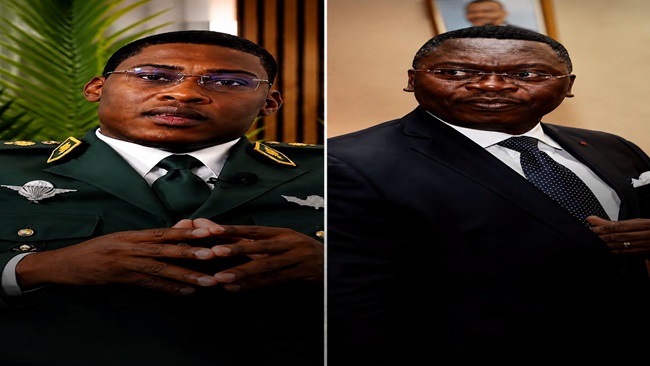 Martinez Zogo Affair: Biya must clean house and make way for a new generation
 Ambazonia People’s Liberation Authority explains motives for the new transition
 A year after Biya’s disputed re-election, CPDM remains without a timetable for next year’s polls.
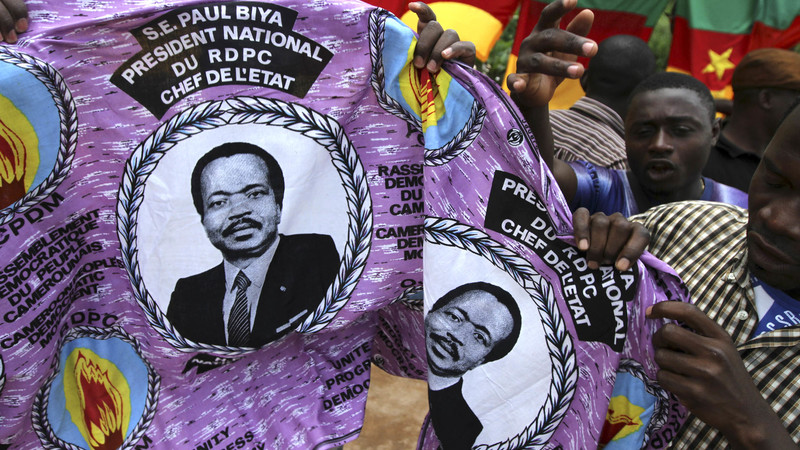 Ruling CPDM Party: When a political message runs out of the road
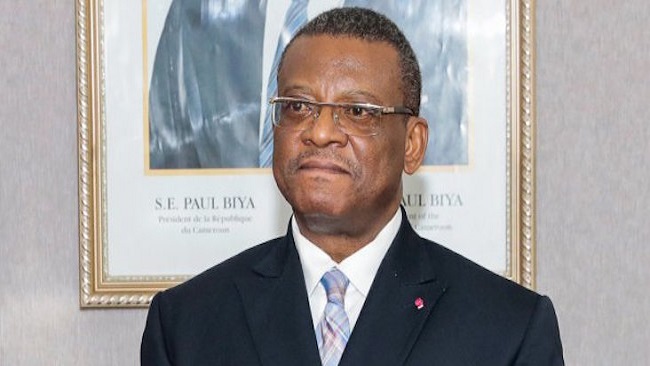 Dion Ngute in Buea: Peace cannot be a slogan; Prime Minister must go beyond dialogue
Most Commented Posts
 4 Anglophone detainees killed in Yaounde
18 comments Chantal Biya says she will return to Cameroon if General Ivo Yenwo, Martin Belinga Eboutou and Ferdinand Ngoh Ngoh are sacked
13 comments The Anglophone Problem – When Facts don’t Lie
12 comments Anglophone Nationalism: Barrister Eyambe says “hidden plans are at work”
12 comments Largest wave of arrest by BIR in Bamenda
10 comments
Featured
-

Martinez Zogo Affair: Biya must clean house and make way for a new generation
-

Biya’s health crisis is starting to alarm investors
-

Cameroon’s Eurobond yields hit record high after Fitch downgrade
-

World Bank Group launches first digital strategy to expand access and create jobs
-

Biya regime raises stake in Sonara to 98%, diluting TotalEnergies to 0.42%
-
Manyu from MECA to MECDA: a call for unity, continuity and respect for legacy
-

Yaoundé: MRC elects its first female president, Tiriane Noah
21, October 2026
Martinez Zogo Affair: Biya must clean house and make way for a new generation 0
by soter • Breaking News, Cameroon, Editorial, Headline News, Politics
Cameroon cannot move forward while the shadows of the Martinez Zogo affair continue to hang over the corridors of power.
The bitter rivalry between former intelligence chief Léopold Maxime Eko Eko and presidency heavyweight Ferdinand Ngoh Ngoh, as reflected in allegations surrounding the case, raises fundamental questions about accountability, the use of state power and the credibility of the institutions entrusted with protecting Cameroonians.
At the heart of this tragedy is the brutal murder of journalist Martinez Zogo—a case that has shaken public confidence and placed the conduct of powerful figures under intense scrutiny. Beyond the courtroom battles, competing accusations and alleged political intrigues lies a question that President Paul Biya can no longer afford to ignore: How can a nation restore public trust when a case of such gravity casts a shadow over people associated with the highest levels of government? The answer must begin with accountability, institutional integrity and the political courage to act.
Biya has a responsibility to ensure that the Martinez Zogo affair is not reduced to a contest between rival factions within the state apparatus. This is not merely a struggle between powerful personalities. It is a test of whether Cameroon’s institutions can establish the truth, protect the rule of law and ensure that no individual is beyond accountability.
The allegations made in connection with this affair must be investigated impartially. Accusations are not convictions, and no one should be declared guilty outside a fair judicial process. But neither should political office become a shield against scrutiny. Anyone whose conduct is credibly implicated in wrongdoing must face the full force of the law, regardless of rank, influence or proximity to the presidency.
If Biya’s aides are found to have abused their positions, obstructed justice or participated in criminal conduct, they must be held accountable. Where credible concerns arise about an official’s ability to exercise public responsibilities while under investigation, the government should consider appropriate administrative measures consistent with the law and the presumption of innocence. Cameroonians deserve nothing less.
For decades, Cameroon’s political system has revolved around Mister Biya and a circle of long-serving CPDM officials. Whatever their individual contributions, the country must now confront a difficult question: has the concentration of influence among established power brokers become an obstacle to renewal, transparency and effective governance? The Martinez Zogo affair makes that question impossible to ignore.
Biya should initiate a comprehensive review of the responsibilities held by officials whose conduct is credibly called into question by the Zogo affair. Those directly implicated by reliable evidence should not continue to enjoy the privileges of office as though nothing has happened. Where necessary and legally justified, they should be relieved of their duties pending the appropriate processes. This is not a call for political revenge, nor should it become a pretext for one faction to eliminate another. It is a call to put the credibility of the state above the interests of individuals.
No CPDM official should be indispensable to the Republic. No political alliance should be more important than justice. And no office should be powerful enough to intimidate those seeking the truth. The objective must be a transparent government in which responsibility comes with accountability and public service is treated as a duty rather than a private entitlement.
Beyond the immediate demands of the Martinez Zogo case lies a broader national challenge: the nation is badly in need of a political renewal. Correspondingly, a cabinet reshuffle that simply moves familiar faces from one ministry to another will not address the deeper problems facing the country. Cameroon needs fresh thinking, new energy and a generation of leaders prepared to confront the realities of the twenty-first century.
Biya should use this moment to open the doors of government to competent young Cameroonians—women and men with professional experience, integrity, innovative ideas and a demonstrable commitment to the public interest.
Young people should not be appointed merely because of their age, nor should experienced officials be excluded simply because they are older. The guiding principles must be competence, integrity, accountability and measurable results. But a country with Cameroon’s youthful population cannot indefinitely treat young people as spectators in decisions that determine their future.
A renewed cabinet should prioritize employment, education, healthcare, affordable living, infrastructure, digital innovation, industrial development and support for entrepreneurs. It should also strengthen public financial oversight, improve service delivery and establish clear performance targets for ministers. Cameroon does not lack talent. It lacks sufficient opportunities to translate that talent into national progress.
From the universities to the private sector, from local communities to the diaspora, the country has young professionals and innovators capable of contributing to a more productive economy. They deserve a meaningful place in national leadership and not token appointments designed to give an appearance of change while leaving the old structures untouched.
The greatest danger is that public attention in the Martinez Zogo case will eventually fade, political alliances will shift and the Zogo affair will disappear beneath the weight of other national controversies. That must not happen.
Martinez Zogo was a journalist. His murder raises profound questions about the safety of media professionals, the protection of freedom of expression and the ability of citizens to scrutinize those who exercise public power.
A credible response requires an independent and fair judicial process, the protection of witnesses, respect for due process and the publication of reliable information wherever legally permissible. It requires investigators and judicial authorities to follow the evidence wherever it leads, without political interference.
It also requires the government to demonstrate that the protection of journalists is not a slogan reserved for international audiences but a commitment that applies within Cameroon itself. The pursuit of justice must not depend on who is accused, who is protected or which faction holds the advantage in the corridors of power.
If the evidence establishes individual responsibility, the courts must determine it. If institutional failures enabled wrongdoing, those failures must be exposed and corrected. And if public officials failed in their duties, their conduct must be examined through lawful and transparent procedures. Anything less would deepen public mistrust.
Biya faces a choice about how his government responds to this affair and the broader demand for political renewal. Biya as usual can allow the controversy to remain another chapter in the long history of rivalries within the state, or he can use it as an opportunity to reinforce the institutions of the Republic, demand accountability and open government to a new generation.
A meaningful response would include reviewing the positions of officials such as Ferdinand Ngoh Ngoh and Laurent Esso credibly implicated in the Zogo affair, ensuring that investigations proceed without interference, strengthening safeguards against abuses of power and appointing ministers on the basis of merit and integrity. It would also mean setting a clear timetable for reforms and requiring every ministry to demonstrate tangible results for the population.
Biya now understand that the measure of leadership is not the number of loyalists surrounding a president. It is the strength of the institutions that remain when personalities change.
Cameroon needs a state that serves its citizens rather than one perceived to serve competing networks of influence. It needs institutions that command respect because they are impartial, not because they are feared. And it needs a government capable of turning the energy of its youthful population into jobs, opportunity and national prosperity.
The Martinez Zogo affair must never become a convenient weapon in a political war between powerful individuals. Nor should it be allowed to fade without a credible determination of the truth. Biya should demand accountability from every official whose conduct warrants scrutiny, ensure that the justice system is free to do its work and pursue a genuine generational renewal of the cabinet.
Those found responsible for wrongdoing must face the law. Those who have lost the confidence necessary to discharge their responsibilities should be assessed through fair and appropriate procedures. And those appointed to lead the next chapter of Cameroon’s development must be selected for their integrity, competence and ability to deliver results. This is not simply about removing individuals. It is about changing the standards by which public office is exercised.
Cameroon is bigger than any president, minister, intelligence chief or presidential adviser. Its future cannot be held hostage to the rivalries of powerful men. Its institutions must be stronger than the personalities who temporarily occupy them. Biya must put the Republic first: accountability for the Martinez Zogo affair, integrity in public office and a new generation of capable leaders ready to move Cameroon forward.
History will not be defined by how long a government remains in place, but by whether it leaves behind institutions that citizens can trust and a country in which the next generation can believe.
Cameroon deserves justice. Cameroon deserves renewal. And Cameroon deserves a future beyond the rivalries of its political establishment.
To this I put my name
Soter Tarh Agbaw-Ebai