22, September 2018
Tanzania president orders arrests over ferry disaster as death toll rises 0
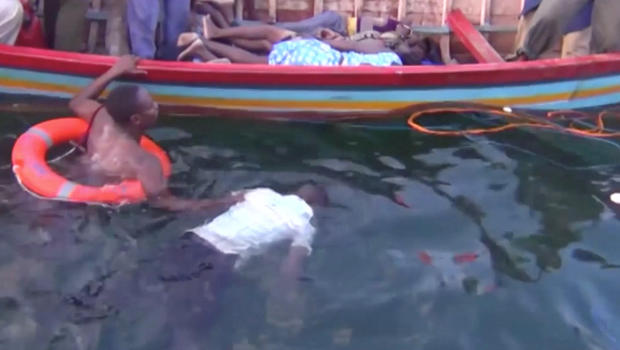
Tanzanian President John Magufuli on Friday ordered the arrest of the management of a ferry that capsized in Lake Victoria, killing 151 passengers.
The death toll from the sinking has risen to 151, state-run TV station TBC said Saturday as rescue workers pressed on with the search to find more people feared drowned.
In a speech broadcast on TBC 1 public television, Magufuli said “it appears clear that the ferry was overloaded”, adding that “negligence has cost us so many lives… children, mothers, students, old people”.
“I ordered the arrest of all those involved in the management of the ferry. The arrests have already begun,” he added. President Magufuli declared four days of national mourning on Friday and said that the government would pay funerary costs for the victims.
Authorities have begun a criminal investigation into the MV Nyerere, which sank with an unknown number of passengers aboard on Thursday afternoon near Ukara, the lake’s biggest island, which is part of Tanzania.
Initial estimates indicated that the MV Nyerere was carrying more than 200 people onboard, when the ship’s capacity is just 101. It went down just a few metres from the dock in Ukerewe district, according to national ferry services operator TEMESA, but it is likely that most on board did not know how to swim.
But it was hard to establish the precise number of passengers on board since the person dispensing tickets had also drowned with the machine recording the data lost. “There were more than a hundred passengers on board when the ferry sank, it is feared that a significant number have lost their lives,” said George Nyamaha, the head of Ukerewe district council.
The ferry was also carrying cargo including sacks of maize and cement when it capsized close to the dock.
Reporting for FRANCE 24 from Tanzania, Emmanuel Makundi noted that while the cause of the accident was not immediately clear, he had interviewed a witness who was on the lake shore at the time of the accident: “He said that as the ferry was approaching the shore, many people tried to reach the gate and that led a car that was onboard the ferry to topple over. That led the ferry to list on one side, causing the accident.”
In 1996, a ferry disaster on Lake Victoria in the same region killed at least 500 people. In 2012, at least 145 people died in a ferry disaster in Tanzania’s semi-autonomous archipelago of Zanzibar in the Indian Ocean, on a vessel that was overcrowded.
(FRANCE 24 with REUTERS, AFP)













22, September 2018
Why Cho Ayaba’s intended treachery MUST be condemned 0
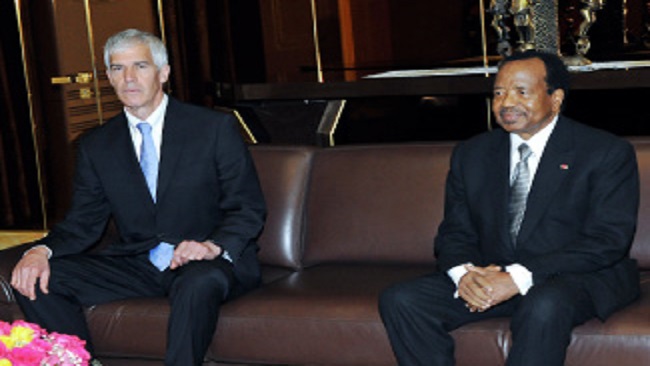
When Paul Biya of French Cameroun rushed his Secretary-General Ferdinand Ngoh Ngoh to London a few months ago to sign an oil deal over the oil resources of Ambazonia, Cameroon Concord News and Cameroon Intelligence Report in an editorial called on the Serious Fraud Unit of the British Police, the FBI and the Ambazonia Federal Criminal Investigation Department to initiate criminal investigations and the prosecution of all the persons and entities involved in this criminal oil deal. Cameroon Concord News Group cautioned that the deal was intended to generate money to buy weapons to prosecute the genocide against Ambazonia. A majority of Ambazonians condemned the criminal deal. They overwhelmingly supported the call for the investigation and the prosecution of the culprits.
The Interim Government of the Federal Republic of Ambazonia promptly harkened to the people’s call and initiated complaints against the bloodletting criminal and commenced diplomatic efforts to stop the criminal deal. Thousands of Ambazonians world-wide threw their overwhelming support for the measures taken by the Interim Government to preserve our oil resources and the territorial integrity of the Federal Republic of Ambazonia.
The Government of the Federal Republic of Ambazonia and individual citizens of Ambazonia in Britain and other parts of the world, mounted diplomatic efforts in Britain for this blood oil deal to be nullified. The diplomatic efforts began paying off with British members of the House of Commons bringing up the crimes committed against Ambazonians for debate during parliamentary sessions and with other arms of government.
The momentum and pressure were on when Cho Ayaba devised a means of delegitimizing the criminal complaints of Ambazonia over this criminal blood oil deal. He hoped to sign a contract legitimizing this fraudulent and criminal deal on behalf of Ambazonia for his self-interest. It could not have been intended to be a separate contract over the oil fields which a British Government department had welcomed and celebrated and which were under legal and diplomatic challenge by the Interim Government and the people of Ambazonia. No reasonable person would have expected that a British oil firm would get into an oil deal which was already recorded in official records and publicly celebrated by a member of government, Dr. Liam Fox.
The supposed plank was played on Ayaba by persons he knows so well and who have previously worked with him. The actions of these individuals within Ayaba’s organizational network might have its motives. And more will be known so long as Ayaba and his surrogates continue to attack them in the social media. Falsely accusing every person else but Ayaba and his organization and their greedy motives which Cameroon Concord News Group had long warned against is childish.
If these persons who allegedly set him up were not well known and trusted by him, how come a whole Commander-in-Chief who wants people to trust him for operational command decisions fall so easily to the prank? How does he expect the international community and Ambazonians to trust a Commander –in- Chief and supposed political leader who lacks a sense of discernment, is gullible, greedy and vulnerable? How can he be trusted with diplomatic and security confidences? How can he be trusted with the lives of more than eight million Ambazonians? If he is a committed warlord that he wants everyone to submit to his authority and command, why can he not learn from the Niger Delta Avengers how they are treating oil cartels illegally exploiting oil in their territory and devastating their environment? Did they struggle to sign oil deals with predatory murderers knowing that the oil firms although on the surface are independent of each other but operate as a cartel against the interest of the masses in the exploited territories?
The actions of Ayaba show that he still does not know the motivation against the annexation, colonization and genocide of the Federal Republic of Ambazonia. The war and genocide against the Federal Republic of Ambazonia are indeed about the appropriation of the oil fields and natural resources that Ayaba went to London to sell off for his personal gain. Without the oil, France will never have connived with Britain to steal the natural resources of Ambazonia and slaughter millions of Ambazonians over these 67 years. It is for this oil that many Ambazonians are dying for the fatherland, many slaughtered, and many more driven to refugee camps. It is about this oil that His Excellency Sisiku Ayuk Tabe, members of the Interim Government, Mancho Bibixy and thousands Ambazonians have sacrificed their liberty and lives. It is about this oil that the independence of Ambazonia was stolen.
Cameroon Concord News Group is surprised by the fact that a few opportunists are struggling to justify the actions of Cho Ayaba and blaming the majority of Ambazonians who have and are sacrificing their lives to defend and protect the fatherland. Ayaba and his surrogates go so low and equated what happened to him to the abduction of His Excellency Sisiku Ayuk Tabe and members of the Interim Government in Nigeria. That is an insult to the people of the Federal Republic of Ambazonia. The criminal operation against President Ayuk Tabe was carried out by three countries, with the support of the oil cartel. Cho Ayaba went to London hoping to sign a contract selling off Ambazonia for personal gain. The countries are Nigeria, France and French Cameroun. The Cho Ayaba’s scandal was an operation launched within his inner operational cycle by persons he has worked with, whom he knew and for reasons which will be known with time exposed him for what he is. The tough guy whom his surrogates are projecting in him pales in the face of the prank he fell into. No tough guy is that cheap to get. Not one claiming to be an army commander.
The conduct of Ayaba must be strongly condemned by all reasonable people. Ayaba needs to respect the call by a majority of Ambazonians to shelve his greedy warlord ambition and work with the Interim Government of the Federal Republic of Ambazonia to genuinely defend the restoration of independence which was declared by His Excellency Sisiku Ayuka Tabe on the 1st of October 2017. The overwhelming mandate which the people of the Federal Republic of Ambazonia gave the Interim Government under His Excellency President Sisiku Ayuk Tabe on 22 September 2017 to declare the actualization of independence on 1stOoctober 2017 now devolves on the Interim President His Excellency Samuel Sako. Cho Ayaba cannot sincerely say he is fighting to defend the actualization of the independence declared by the Interim Government while fighting to destroy the Interim Government. His conduct in wanting to legitimize the sale of Ambazonia oilfields in a criminal oil deal is a serious crime against the Federal Republic of Ambazonia. His conduct in attacking and kidnapping or killing other self defense forces within the national territory of Ambazonia must be opposed and denounced. He should be apologizing like the prodigal son seeking to be allowed back into the fold, instead to attacking the sovereign will of the people of Ambazonia.
By Soter Tarh Agbaw-Ebai with files from Asu Vera Eyere