
19, September 2018
Southern Cameroonian writers must remain engaged! 0
Silence in the face of injustice and massacre is tantamount to acquiescence. The world needs to know what is happening in Southern Cameroons, and bringing this information to the world is the work of journalists and writers.
For many weeks now, Southern Cameroonian activists, writers and journalists have been very quiet about what is happening in the two English-speaking regions of the country.
This is no good news for those who have been trapped in those parts of the country. As the fighting between government forces and separatists rages on, the world needs to be aware of the atrocities committed by both camps.
This is the job of people who have made it a duty to deliver information to the less informed. But over the last weeks, not much information is filtering out of the region and this is concerning.
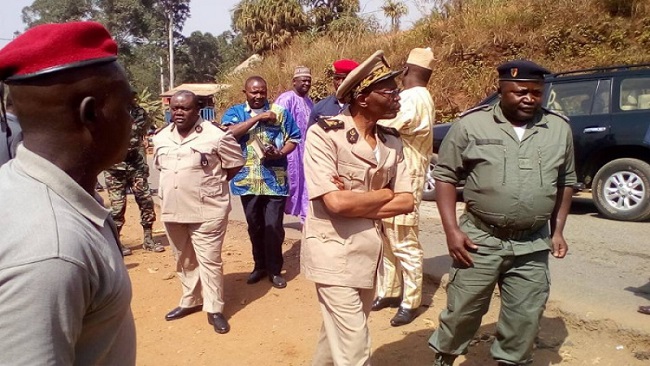
With many people fleeing in different directions, it is clear that the level of atrocities could be very high. Now that the field is empty, it is clear only soldiers are walking the streets and there will be nobody to question their actions.
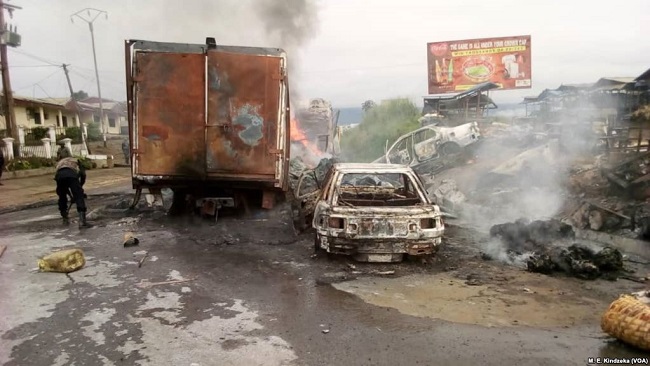
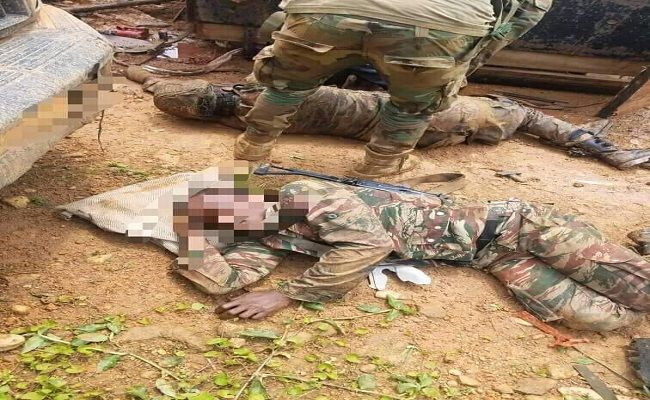
These soldiers have been known to burn homes and even roast occupants of many homes to death. Children have been killed and grandmothers have been left to feign for themselves. The world needs to know all of these stories.
Regarding separatist fighters, they too have been accused, time without number, of committing gruesome atrocities. Many people suspected of working with the government have been shot point blank by these fighters. Many people have been kidnapped and huge ransoms have been demanded.
Rights groups like the International Crisis Groups and Amnesty International have documented some of these atrocities unfolding in cities, but what is happening in the villages and small towns of Southern Cameroons will remain unknown to the outside world as there are no journalists and writers to bring the gory images to the world.
With millions out of their homes in Southern Cameroons, thieves will be having a field day. Even soldiers will use the occasion offered to them by the upcoming elections to ransack homes and make away with valuables such television sets, musical sets and mattresses.
The private media and freelance journalists have to make their presence on the ground heard. They need to investigate those atrocities that are taking place behind the cameras.
Yesterday, soldiers carried out a house-to-house search in Nnoko Street in Kumba and there are no reports about this. Even government officials have not been able to inform the public of what is happening. The few people still living in the city are all in fear of the worst.
The world is concerned. And it is on this basis that the Chairman of Cameroon Concord News Group, Soter Tarh Agbaw-Ebai, is looking for investigative journalists to head to those towns to find out what is happening after most of the people have left.
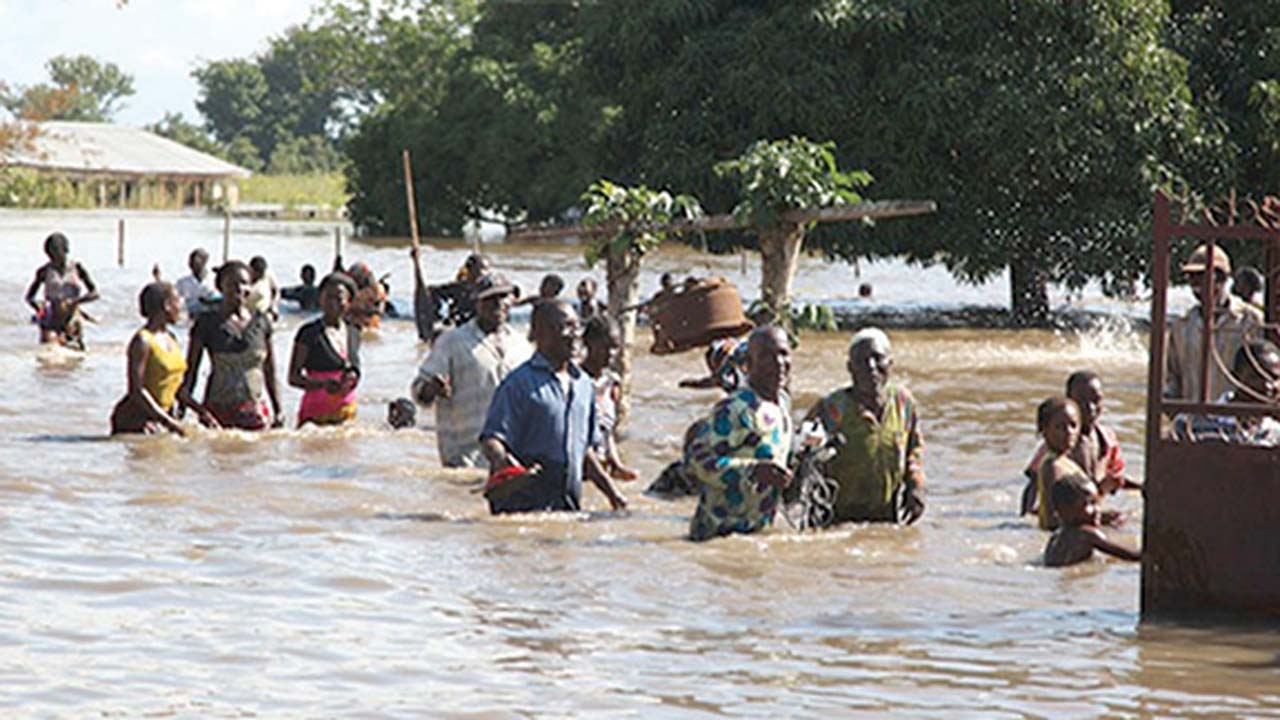
Many residents of Mamfe, Kembong, Agborkem German, Ewelle, Dadi and other towns have simply crossed the border to Nigeria, while those living in Buea, Kumba, Limbe, Muyuka, Ekona and other cities have escaped the violence to Douala, Dschang, Bafoussam and Yaounde. Most East Cameroonian cities have become congested as a result of this mass movement.
I personally hail this initiative by the Cameroon Concord News Group. I am even happier to know that the salaries for those journalists who will undertake such missions will be close to USD 2,000 a month. Good job Cameroon Concord News Group. Your lead and role in the crisis that is ruining Cameroon is being appreciated by all. With limited resources, you are delivering the truth to the world.
I was wondering why these stories have been left unreported. With your initiative, the world will be able to have a balanced perspective of what is going on in the northwest and southwest regions after the people fled their homeland.
I know a lot is happening there. I know the government is not saying anything. I know the fighters are spitting fire. But I think once the world gets a good picture of the reality, there will be some international efforts to end the genocide that is playing out in the region. I am just thinking aloud again!

















19, September 2018
Cameroon bride and Chinese husband find fame online in China 0
Sandra Made and Zou Qianshun are, in many ways, like millions of newly married couples around the world. Made, 27, is a housewife who looks after their 10-month-old baby, while Zou, 43, is a fishing captain and the family breadwinner. But in China, they have become an online sensation.
Weddings and engagements
The couple began live-streaming funny skits of their home life on Chinese social media platform, Kuaishou, in February. They now have 120,000 followers. Made says their videos are popular because people are not used to seeing an African woman with a Chinese man.
“Everyone loves Sandra and thinks she’s outgoing,” says Zou. The couple makes about 5,000 yuan ($727) a month through virtual gifts donated by fans on the site, which can be exchanged for money, he adds.
They met three years ago when Zou was working in Cameroon, where Made ran a hair salon. A year later, Zou proposed and the couple married in March 2017. Soon after, they relocated to Zou’s hometown near Dandong, Liaoning province, in northeast China.
In 2016, there were just 1,700 mixed marriages in Liaoning, which is home to 43.7 million people, according to China’s National Bureau of Statistics. But Zou says there are five other Chinese men in his town with African wives. “They all met in Africa,” he adds.
A love affair
Earlier this month, Chinese president Xi Jinping pledged to invest $60 billion in Africa over the next three years at the triennial Forum on China-Africa Cooperation in Beijing. It was symbolic of how China’s ties with the continent have deepened over the past two decades.
About 10,000 Chinese-owned firms operate in Africa today, according to American research firm McKinsey, and a significant number of Africans have moved to China. Their main base is the southern manufacturing city of Guangzhou, where about 20,000 African migrants live, according to Gordon Matthews, a professor of anthropology at the Chinese University of Hong Kong and author of “The World in Guangzhou: Africans and Other Foreigners in South China.”
In Guangzhou, romances between Africans and Chinese people are not uncommon. But they mostly involve a Chinese woman and an African man, according to Matthews. That’s partly because there are more male African traders in Guangzhou than female, he says.
“But Chinese women are also more socially adept, socially skilled and speak better English (than Chinese men),” he adds. “So they are more likely to marry foreigners than Chinese men.”
Racism in China
The most-viewed video on Made’s feed is a comedy sketch of her pretending to feed her baby, Daniel, but instead putting all the food into her mouth.
Reactions on Kuaishou to the couple’s humorous skits include “666,” which means cool, and “Sandra! You’re so beautiful,” “Pretty eyes,” and “You speak good Dandong dialect!” Made says she improves her Putonghua by talking with fans online.
But not everyone’s reaction has been so positive. Initially, Zou’s mother, Zhao Fu Qing, was against their union. “How can a Chinese marry a black woman? She can leave at any time. That’s why at the beginning, both my husband and I said NO to this marriage,” she told Al Jazeera. The couple say Zhao has since become fond of her daughter-in-law.
Chinese racism towards Africans, however, is a sensitive issue. Last year, a skit on China’s biggest Lunar New Year TV show sparked outrage when an Asian actress appeared with blackface and enlarged bottom. Meanwhile, earlier this month a Chinese man was deported from Kenya for posting a video making racist remarks about Kenyans online.
“We haven’t encountered any racist prejudices yet, apart from people’s concerns about cultural differences,” says Qianshun. “But I always tell those people that love has no boundaries.” Matthews says that while racism in China “undoubtedly exists,” extreme cases such as people rubbing Africans’ skin to see if their color will come off are no longer an “everyday thing.”
As the China-Africa economic relationship yields more unions like that of Made and Zou, Matthews hopes the public will gain a better understanding of race. “The more international marriages we have the quicker we can end racism,” he says.
Source: Action News Now