7, July 2018
The Holy Father calls for solidarity, mercy to be shown towards migrants 0
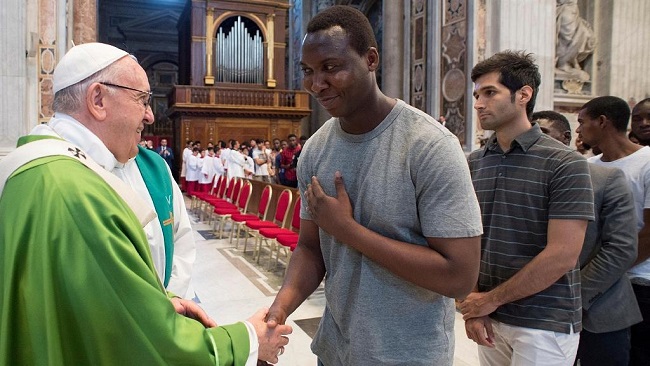
Pope Francis on Friday called for a greater ‘solidarity and mercy’ to be shown towards migrants. The pope was speaking at a special mass at the Vatican called to commemorate the fifth anniversary of his trip to the Italian island of Lampedusa, one of the main entry points into Europe for migrants.
Pope Francis called for countries to treat migrants in a humane manner adding that a just policy is one at the service of the person, of every person involved; a policy that provides for solutions that can ensure security, respect for the rights and dignity of all.
‘‘Before the challenges of contemporary movements of migration, the only reasonable response is one of solidarity and mercy. A response less concerned with calculations, than with the need for an equitable distribution of responsibilities, an honest and sincere assessment of the alternatives and a prudent management. A just policy is one at the service of the person, of every person involved; a policy that provides for solutions that can ensure security, respect for the rights and dignity of all; a policy concerned for the good of one’s own country, while taking into account that of others in an ever more interconnected world’‘, the Pope said.
At the end of the mass Pope Francis shook hands with some 200 migrants that attended the service.
Reuters
















7, July 2018
Southern Cameroons Crisis: Ambazonian leader says independence is only remaining option 0
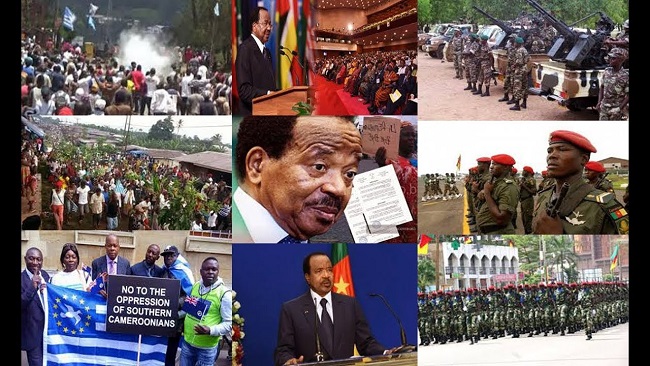
A senior representative of the Interim Government of the Federal Republic of Ambazonia has warned the Biya regime that its decision to declare a war against the people of Southern Cameroons has left Ambazonians with no other choice but to fight for the creation of a sovereign Southern Cameroons state, increasing speculation that a real arm struggle could begin anytime from now.
The Ambazonian leader who is currently in Taraba in Nigeria and whose name we are withholding for security reasons said the Yaoundé government’s insistence on using military force has empowered the hands of Southern Cameroonians who want to break away from French Cameroun.
He told our senior correspondent Kingsley Betek that the Macron government in France was deceiving President Biya and that every Southern Cameroonian was working towards building a separate nation because they understand that there is a United Nations mandate to establish such a state for all English speaking Cameroonians.
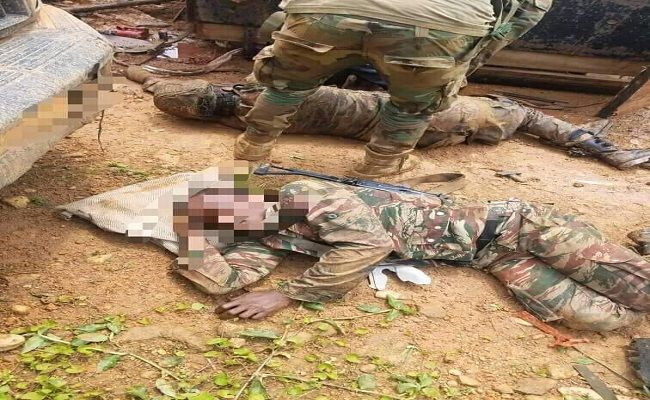
He added that the recent French Cameroun army onslaught in Ossing village in the Manyu County is a justification that the Francophone government in Yaoundé is giving Ambazonians no other option than to defend their homeland using the best tools that the Interim Government institutions have.
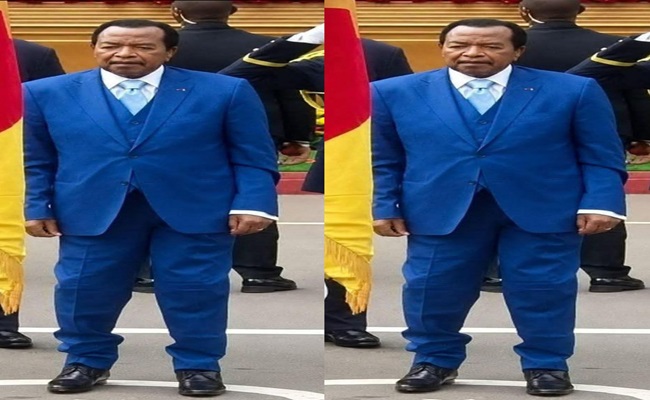
His remarks came hours after we got intelligence that the 85 year old Cameroonian dictator was preparing to announce a truce including the release of President Sisiku Ayuk Tabe and hundreds of Southern Cameroonians arrested ever since the crisis in Southern Cameroons started.
Reports on Friday suggested that some members of the ruling Biya Francophone Beti Ewondo government were urging Biya to end the senseless war in Southern Cameroons by calling for national dialogue, while others particularly those of the North and Far North were pressing him to step aside – a move he has so far resisted.
Tensions between the government in Yaoundé and the Ambazonian Interim Government headed by Dr. Samuel Sako Ikome have risen to new heights following the CDC and oil and gas contract with the New Age Global Energy Company. Biya and his gang have refused to engage in dialogue with the Southern Cameroons leadership and the Francophone Cameroun leader has said that there can be no international mediation on a domestic, constitutional issue.
Cameroon Concord News Group recently called on Interpol, The Serious Crimes Unit of the British Police, The FBI, The Criminal Investigations Department of the Federal Republic of Ambazonia and all Police and Intelligence Agencies worldwide to urgently step in and investigate the oil and gas contract between New Age Global Energy Company and French Cameroun that was signed recently in Britain. There are many reasons for an urgent criminal investigation of this international crime masked as a business contract.
The contract is a front for money laundering conceived for criminal purposes. The oil and gas fields which are subject of the contract are in the territory of the Federal Republic of Ambazonia over which a war and genocide declared by Paul Biya the head of the crime syndicate in French Cameroun are ongoing. The contract is directly linked to the subject of this in who the perpetration of international crimes of genocide, crimes against humanity and war crimes by one of the contracting parties, French Cameroun is ongoing. These crimes have led to a humanitarian crisis of unimaginable proportions. The contract will directly contribute to the war efforts of French Cameroun in which international crimes are being perpetrated by French Cameroun. Control over the mineral resources of the Federal Republic of Ambazonia is among the reasons for the declaration of war by French Cameroun against Ambazonia. This contract therefore will substantially contribute to the crimes and the humanitarian calamity.
The contract is a front for the laundering of money and resources for criminal purposes. These criminal purposes include the bankrolling of the elections of Paul Biya and members of his criminal gang in power. These elections have all elements of fraud and criminality.
The contract is illegal, null and void in every respect. This will be the first contract where French Cameroun will be signing with a company which has no incorporation within the territory in which the oil and gas fields are located. Pursuant to the foreign imposed laws of the colonial annexationist criminal government of French Cameroun in the territory of the Federal Republic of Ambazonia, the foreign firm needed to comply with several OHADA treaty requirements. It has neither complied with Southern Cameroons laws nor that of the occupier.
The choice of a British firm in a French occupied economic annexed territory is intended to buy through this corrupt slave economic deal, the continuing support of Britain of the colonial occupation and criminal war and genocide. The fact that the Secretary-General in the Presidency of French Cameroun’s crime syndicate went to England to sign the contract far away from the battlefields of Ambazonia where the intended loot is located, and far away from its own centre of French Cameroun’s criminal operations, Yaoundé, evinces an intention to shield the fine elements of criminality contained in the criminal deal from the scrutiny of the Southern Cameroons-Ambazonia victims. French Cameroun has a record of signing bilateral agreements in Yaoundé and at the official locations of its partners. This criminal contract is not a bilateral agreement but a business contract.
By Soter Tarh Agbaw-Ebai in Brussels