25, February 2018
Southern Cameroons Crisis: Another senior gov’t official abducted, female gendarme killed 0
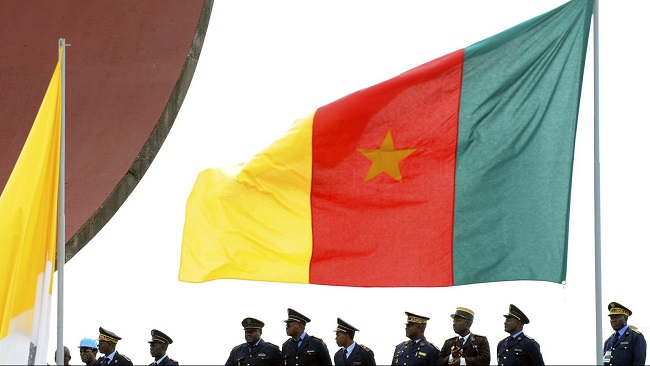
Animbom Aron Yong, the Regional Delegate for Social Affairs for the North West was reportedly abducted on Saturday by unidentified individuals presented by the Biya regime as Ambazonia secessionist fighters.
The kidnapping occurred while the administrative cadre had gone to Nyen, a village in the North West constituency in the Federal Republic of Ambazonia. The Francophone governor of the region, Adolphe Lele Lafrique confirmed the disappearance of the regional delegate, whose abduction occurred some 13 days after that of the sub-prefect of Batibo.
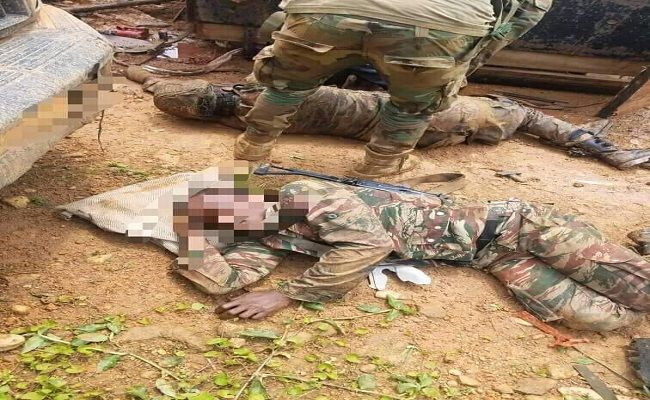
Our senior correspondent in Yaounde has also confirmed the death of a gendarme, Larrissa Souzock Mvondo during violent clashes between suspected Ambazonian militants and the Biya regime security forces. Concordant community sources have also indicated that violent clashes between Southern Cameroons defense groups and French Cameroun military troops occurred on Saturday.
We understand that several Southern Cameroons civilians have been killed and three soldiers were also wounded during the fighting. This new drama brings to 27 (Issa Tchiroma stats) the number of soldiers killed in attacks attributed to the crisis in Southern Cameroons.
By Rita Akana and Kingsley Betek




















25, February 2018
Southern Cameroons Crisis: President Buhari confronting the moral compass 0
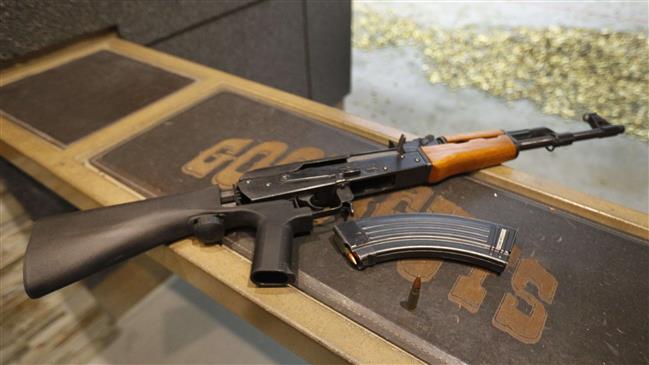
Cameroon Concord News Group condemns the abduction of the 110 innocent school girls in the town of Dapchi in Yobe state, North East Nigeria by Boko Haram. Cameroon Concord News stands firmly in solidarity with the families of the abductees in asking for an urgent search and rescue of the abductees. Like the yet unresolved abduction of the Chibok school girls and the leaders of the Federal Republic of Ambazonia, this latest abduction, blamed yet again on Boko Haram is an assault on the soul of the Federal Republic of Nigeria and the conscience of humanity.
Coming at a time the government of President Buhari has still not found and freed all the Chibok school girls who were abducted over four years ago, this abduction is a humiliating defeat for the government of President Buhari who promised to defeat Boko Haram within the first hundred days of ascending to power. It is now obvious that only the gullible believed in his ability to deliver his many failed electoral promises considering the cobweb of political entanglements that tied him to the criminal cartels he promised to combat, let alone defeat in his first hundred days in power.
The anger arising from the inability of former President Good Luck Jonathan to find and rescue the Chibok girls was politically exploited by President Buhari along with what was depicted as a weak response to the war against Boko Haram. These factors helped Buhari to rise to power. Shortly after he attained power, the so-called “bring back our girls” political scam that masqueraded as humanitarian action to raise universal awareness for the search and secure the girls fizzled out to its political base. Nothing has been heard about them ever since.
The abduction of the innocent Dapchi school girls is occurring shortly after the abduction of HE President Julius Ayuk Tabe the President of the Federal Republic of Ambazonia and members of his interim government who were legally within the territory of Nigeria under the protection of international law. The government of President Buhari that carried out the abduction has since not shown proof of their existence or of their whereabouts. Cameroon Concord News warned after the abduction by Nigeria intelligence units on the instructions of President of Buhari and his deputy President Professor Yemi Osinbajo, that the abduction could embolden criminal elements in Nigeria to escalate the abductions of persons protected by law for political, religious or pecuniary purposes. Cameroon Concord News cautioned that the abductions that were master-minded by Babagana Mohammed Monganu, a national security adviser to President Buhari bypassing constitutionally empowered law enforcement agencies violated the rule of law, constitutional governance and Nigeria’s international multilateral treaty obligations. The United Nations High Commissioner for Refugees condemned the abductions. The violation of Nigeria’s international treaty obligations was condemned by significant human rights organizations such as amnesty international. The criminal act is an indelible stain on the image of Nigeria.
The wide condemnations have not caused Nigeria to produce and release the Ambazonia abductees to the United Nations High Commissioner for Refugees or to their families. Cameroon Concord News believes that the disregard of the rule of law by the Government of Nigeria which opted for impunity, tyranny, and arrogance of criminal abuse of power is the criminal tonic that has emboldened Boko Haram to escalate the abduction of innocent school girls whom President Buhari on behalf of the Federal Government of Nigerian has admitted failed to provide protection against abduction in time of need. Cameroon Concord News believes that had Babagana Mohammed Monganu advised the President to deployed the intelligence resources at his disposal to combat the crime of abduction and provided protection and security to Nigerians and persons legally within the territory of Nigeria rather than deployed them to committing this same crime which President Buhari pledged to combat on his ascension to power, the very painful abduction of these innocent school girls would not have occurred on his watch and that of the President. The security failures by the Buhari administration amongst countless others that include the invasion of the territorial integrity of Nigeria by French Cameroun Gendarmes and Armed forces is humiliating and portrays Nigeria to the world as a supposed giant with feet of clay, incapable of providing protection to its people and its territorial integrity.
The persistent pattern of conduct in the abduction of the Chibok girls, the abduction of Ambazonia leaders and the Dapchi school girls is troubling. The widely condemned abduction of Ambazonia leaders deprives President Buhari the moral authority to condemn abductions in Nigeria generally and specifically that of the Dapchi school girls. The abduction of the Ambazonia leaders make a mockery of President Buhari’s condemnation of the abduction of Dapchi school girls that has occurred slightly a month after that of the Ambazonia leaders by the Buhari administration. In effect it calls into questions Buhari’s moral authority to condemn this despicable abduction. It portrays his government’s failure to protect the girls as intended since his government legitimized abduction by conducting one itself from the seat of power in Abuja, the capital of the Federation.
Cameroon Concord News regrets that the moral compass pins President Buhari’s admitted responsibility of his government due to its failure to protect the school girls to be more direct than he has admitted. President Buhari needs to explain why he risked the image of Nigeria, its constitutional governance, the rule of law and its international treaty obligations to legitimize abductions for political and pecuniary motives by abducting Ambazonia leaders who were legally within the territory of Nigeria. In so doing, President Buhari provided a fig leaf of criminality to Boko Haram and other criminal gangs to consider armless civilians as legitimate targets of war for political, pecuniary, religious and other criminal motives. Cameroon Concord News strongly believes that until President Buhari produces and releases or cause to be released Ambazonia leaders, his condemnation of the abduction of armless civilians within the territory of the Federal Republic of Nigeria will be hypocritical, disdainful and contemptuous.
By Soter Tarh Agbaw-Ebai
Chairman, Editor-in-Chief
Cameroon Concord News Group