19, November 2017
Southern Cameroons: Statement on nominations into the cabinet 0
London, 19th November 2017
Fellow Compatriots,
There comes a time when a people have to take their destiny into their own hands or let the opportunity slip past them forever. We have taken the leap of faith and cannot let doubt hold us back. Our people have been holding their breath and even getting impatient as they await the nomination of the Cabinet of the Ambazonia Interim Government. Thank you for your patience. It is not easy selecting fourteen individuals out of a population of eight million. It is even harder when one is working with a wonderful and experienced group of people scattered all over the world and has to select a few to help steer our restoration train to its final destination.
Over the past weeks I have consulted far and wide, and listened to the wisdom of some of our best minds. At the end of the process, the responsibility and accountability of the decisions I take remain entirely mine. I must emphasize that these decisions are taken with the best interest of our people and our nation at heart with RESOLVE, UNITY and DISCIPLINE being the guideposts.
When we attended the first Conclave in February this year, extra effort was made to ensure that all our frontline leaders participate in the founding of a United Front. With the Successes of the first Conclave, the second Conclave went an extra mile to ensure that this unity was cemented and saw the participation of all our frontline movements including: –
- Southern Cameroons National Council (SCNC),
- Southern Cameroons People’s Organization (SCAPO),
- The Consortium,
- Republic of Ambazonia (RoA),
- Southern Cameroons Youth League (SCYL),
- Ambazonia Governing Council (AGC),
- Movement for the Restoration of the Independence of Southern Cameroons (MoRISC).
At the end of the second conclave, a new leadership was born. Ever since, our movement and the struggle for the restoration of our Independence has seen several positive changes which culminated in the establishment of an Interim Government at the 4th Conclave earlier this month.
The United Front has not been without its problems. Over time, some movements have lost their membership. Today, we have passed the point where we should be working as separate factions and groupings. The time for politicking will come. For now, we need to close ranks and operate as one people with a single ambition which is to liberate our country. When we all get to Buea, we shall give the chance for those who want to play politics. But not NOW!
Immediately after my election as Chairman of the Governing Council, I reached out to all the known leaders of our movements in a bid to find common ground. During our Meet the People Tour, we made every effort to meet every of our leaders and to build the much-needed cohesion. In the build-up to the fourth Conclave, I made sure to invite our frontline leaders with the hope of finding common ground and work as one unit. Unfortunately, all these efforts have not always met with great success. In spite of these shortcomings and disappointments, I am still convinced that we are stronger together. Therefore, I have decided that in the constitution of the cabinet for our Interim Government, I will make one last effort to ensure that our compatriots and leaders of frontline movements should be part of our United leadership. We must also recognize that a significant ratio of the 8 million Southern Cameroonians are not members of any of the frontline movements. Many of our people have joined the struggle as patriots, as concerned citizens and as members of a community without ties to any movement. Many people play key roles in advancing this struggle to the point where it is today. The bulk of support, both financial and material, that we are getting as an Interim Government is coming through the leadership of Country Coordinators and Heads of Departments. Most of them hold no movement allegiance. We must also recognize and respect them for their work. For that reason, the leadership that we seek to build must be inclusive in accordance with the role played by all involved. It is for that reason that we took the decision at the 4th Conclave to dissolve SCACUF. This is because we believe that we now need a different kind of entity to take our revolution to its logical end. That entity can only be one which allows us, while maintaining our personal and group affiliations, to embrace a common platform that belongs to all of us together.
I must caution that revolutions do not succeed in the midst of disunity and indiscipline, where every individual and group does as they please. This revolution is no exception. We must have unity of purpose, unity in our actions and be disciplined in whatever we do. It is therefore my hope that everyone will see the importance of working together. We must put aside our personal egos and ambitions, for the common good of the eight million people that we are privilege to lead. Should we encounter any further resistance in this quest for unity, I want to signal very strongly that we have to accept that the train does not have to wait for every traveler before it leaves the station. We are in the process of building a Coalition of the Willing and only those who are willing will be admitted on board. While I do my very best to be inclusive, if obligated, I would not hesitate to exclude any individual or group that seeks self-aggrandizement over our common interest. This will be my last attempt at bringing our leaders together to work under one banner. We must make this clear, we will not allow for anarchy and chaos which, in some countries, has allowed individuals, groups or tribal affiliations to put selfish priorities before the common good of all our people.
We have heard some talk of whoever takes us to Buea will decide. Be rest assured that such selfish ambitions will not be tolerated and will be nipped in the bud. We shall not limit our condemnation to those who espouse such philosophy but their supporters and sponsors as well. I therefore ask all our citizens to be vigilant and to report any such activities geared at hampering our God-ordained struggle. In a while we shall publish the names of those who have been selected to serve our people. I will ask everyone to serve with humility in whatever role they will be assigned. I am sending letters inviting various leaders to join me in serving and leading our people. I hope to hear from each person within 48 hours of dispatch of my letter. We have a list of great individuals in the struggle ready to serve. Should any of the leaders turn down the invitation to serve as part of the UNITY PLATFORM, he/she will be replaced. Your interim government will be made public as soon as I hear from the leaders.
All of us as leaders must either choose to work together for the good of our people and our country or accept being rejected by our people. We have gone past the activism stage of our struggle. We are now at the nation-building stage. The real business of Unity starts now and I invite all to be part of this Coalition of the Willing!
Sisiku AyukTabe
President, Interim Government
Federal Republic of Ambazonia













20, November 2017
Kenya: Opposition leader Odinga calls for international intervention 0
Kenya’s opposition leader Raila Odinga has urged international community to intervene in what he has called his country’s “election crisis” as sporadic clashes between police and protesters keeps claiming more lives.
Odinga said Sunday that at least 31 people had been killed since he returned from overseas trip on Friday, adding that the situation needed an urgent “international intervention” to stop government from trampling on rights of opposition members.
“This is state-sponsored thuggery,” Odinga said, adding that his country was being pushed to the precipice”.
The opposition leader, who protested his loss in the August presidential election and then boycotted a rerun last month, said people who had lined up the roads Friday to welcome him home from engagements in the US and Britain were confronted by police and 18 were shot dead.
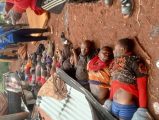
His remarks also came after residents of a Nairobi slum protested the killing of at least 13 people in an overnight attack by unknown gunmen. Police has put the death toll of the clashes at four, but people attending the mortuary said 13 bodies bearing bullet wounds had been brought in. police said that five people had been killed in the Friday stampede before Odinga’s arrival. But mortuary records corroborated 18 people were dead.
Tensions remain high in Kenya, a major ally of the West and a an economic powerhouse in the Horn of Africa region, since a Supreme Court ruling in September which nullified President Uhuru Kenyatta victory in original votes. Civil society activists and a politician are again challenging Kenyatta’s win in October repeat of the election. A decision by the court is expected on Monday as Odinga insists that irregularities that led to the nullification of the first round remained the rerun.
Culled from Presstv