30, June 2020
US virus death toll passes 126,000 as Trump comes under fire 0
The US Centers for Disease Control and Prevention (CDC) has reported 2,545,250 cases of new coronavirus and said that the number of deaths had risen to 126,369 as of Monday night.
The United States recorded at least 42,000 coronavirus infections in the 24 hours to Monday as the country confronts a rapid surge in the respiratory disease known as COVID-19.
Several state governors have reimposed lockdowns on businesses such as restaurants and bars as the White House claimed the rise in cases is due to record levels on “expanded testing” and not community spread.
In California, Los Angeles, which has become a new epicenter in the pandemic as coronavirus cases and hospitalizations surge, reported an “alarming” one-day surge in America’s second-largest city that put it over 100,000 cases.
Los Angeles county closed all beaches for the Independence Day holiday weekend due to the startling rise in coronavirus rates in the county, while state of Arizona closes bars, gyms and movie theaters for at least 30 days.
Nearly 20 states paused or rolled back reopening of businesses due to rapid rise in coronavirus cases.
California counties are dialing back plans to reopen some businesses after observing an increase in hospitalizations and a decrease in compliance with social distancing guidelines.
“We will take action to close bars wineries and breweries that do not serve food beginning midnight Wednesday morning,” San Diego County’s Public Health Officer Wilma Wooten said Monday. “Now more than ever, it is vital that we all take precaution to guide our personal, as well as our collective health.”
Nevada Governor Steve Sisolak paused the state’s reopening, with his office saying the governor “will sign an emergency directive extending the length of Phase 2 through the end of July, due to the trends in COVID-19 infection rates, the time needed for expanded contact tracing to identify trends, and to see the impacts of the Governor’s new face covering directive.”
Nearly half of US virus deaths recorded in care facilities
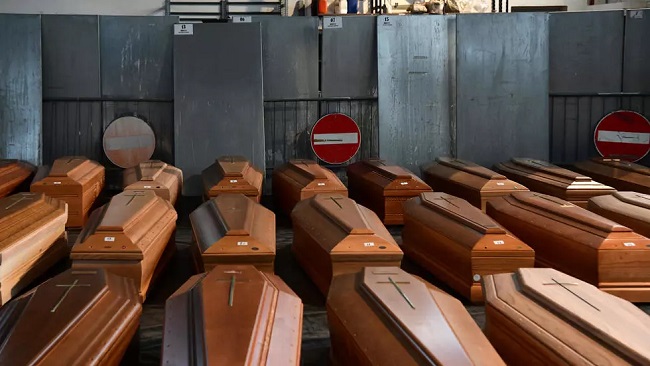
According to the latest count from the Kaiser Family Foundation, long-term care facilities and similar institutions account for 45% of coronavirus deaths in the United States.
The survey found more than 52,000 deaths occurred in nursing facilities, assisted living facilities, memory care facilities, adult care centers, or other long-term care facilities in 40 states, plus Washington, DC.
KFF’s survey finds more than 10,000 facilities in 43 states plus Washington, DC, have confirmed cases of Covid-19.
According to the data, the states with the highest number of deaths in nursing homes were New York, New Jersey, Massachusetts and Pennsylvania.
Trump’s reopening plan ‘backfired’
New York Governor Andrew Cuomo criticized President Donald Trump’s administration’s handling of the coronavirus pandemic, saying the White House has been “in denial” from the start of the public health crisis.
Cuomo said the Trump administration was not doing enough to tackle a surge of in COVID-19 cases in several US states that has emerged over the past few weeks.
The New York governor said that Trump’s focus on reopening the economy was misguided and that it had backfired.
“Yes, we have to get the economy going but reopening fast was not good for the economy. What has been happening is, when that virus spikes, the market goes down, not up,” Cuomo said.
Trump is facing mounting criticism from both Republicans and Democrats over his handling of the coronavirus pandemic.
In a rare break with mask-averse president, fellow Republican leaders are advocating for mask as COVID-19 cases surge in some Republican-leaning states, Reuters said.
US Senate Majority Leader Mitch McConnell said, “Wearing simple face coverings is not about protecting ourselves, it is about protecting everyone we encounter.”
Source: Presstv
























30, June 2020
Covid-19 Pandemic: African Cup of Nations postponed until 2022 0
The Confederation of African Football has made the decision to move the African Cup of Nations to January 2022.
The tournament was supposed to take place in January 2021, but the coronavirus pandemic has caused the postponement of plans.
All African footballers including Liverpool stars such as Mo Salah, Sadio Mane, and Naby Keita will therefore not miss any part of the next season due to international duty.
This will come as good news for Liverpool fans – the African Cup of Nations has been officially postponed until January 2022.
In a meeting today, the Confederation of African Football made the decision to postpone AFCON by a year due to the ongoing coronavirus pandemic.
The tournament was originally planned to take place in January 2021 but has now been pushed back a year.
Source: Tribuna.com