
17, July 2019
Internet a distant dream for many in oil-rich Equatorial Guinea 0
Equatorial Guinea is awash in oil, although little of the wealth has trickled down to the poor.
Yet one of the most glaring inequalities here is access to the internet.
Other parts of the world are pushing ahead with plans for fast, free — or at least low-cost — universal online access. Equatorial Guinea, a small reclusive state on the coast of central-western Africa, seems stuck in a timewarp.
With rare exceptions, sluggish speeds and stratospheric bills are the daily lot of people who want to search for information on the web, use social media, email, messaging and the myriad of other internet activities that are routine elsewhere.
“The internet in Equatorial Guinea is still a big-money business, reserved for those who can afford it,” said Mboro Mba, 35, seated on the ground behind a hotel as he tried to hook into a free wi-fi service with his smartphone.
Equatorial Guinea has the most expensive internet in the world after Zimbabwe, according to a list published this year by Ecobank, a pan-African bank.
One gigabyte of mobile data — roughly equivalent to watching an hour of television on Netflix — costs an eye-watering $35 dollars (31 euros).
By comparison, the average monthly pay of a manual worker or restaurant waiter in Equatorial Guinea is between 100,000-150,000 CFA francs ($170-260, 150-230 euros).
“For 2,000 CFA francs (3.40 euros), I can’t even download an 80-second video,” a local journalist told colleagues from central Africa who had come to Malabo to cover a regional meeting and found themselves caught out by internet problems.
“You really have to be patient to work with the internet in this country,” said a visitor from the Republic of Congo, unsuccessfully trying to send files to his editor.
The barriers to internet access here are so high that the International Telecommunication Union (ITU), a UN agency, estimates that just a quarter — 26 percent — of Equatorial Guineans go online.
The authorities have set up a “free, public internet network” along the Paseo Maritimo, a seafront six kilometres (3.5 miles) long in Malabo that is also used for sporting activities and leisurely strolls.
“I come here almost every evening to talk on WhatsApp to my mother who is in Spain,” says Filomena, 32, a clothes vendor.
“I don’t have the money to have an internet connection, so I come here often with my friends to use the wi-fi,” schoolboy Jorge Obiang says, leaning against a tree with several young companions, all glued to their screens.
A former Spanish colony, Equatorial Guinea is nominally one of the richest states in Africa thanks to oil income.
By next month, its president, Teodoro Obiang Nguema, will have ruled with an iron fist for 40 years — the longest tenure of any African leader alive today.
He has long been criticised for corruption within the regime and lack of openness to the rest of the world.
The slow service is especially paradoxical since “the country is situated in the Gulf of Guinea and so has access to a number of seabed cables”, said Julie Owono of Internet Sans Frontieres (Internet Without Borders), an NGO.
Equatorial Guinea — consisting of an island where Malabo lies and a forested territory on the African mainland that hosts trading capital Bata — is connected to three undersea fibre optic cables supplying internet service.
In neighbouring Gabon, internet access is five times less expensive on the scale drawn up by Ecobank.
– No competition –
The sky-high price of the internet “is explained by the very strong presence of the state (telecom) company on the market and lack of competition,” Owono said.
“Everything here is centralised, political decisions depend on one person, or a family, and it is difficult to establish a competitive market.”
The state telecoms agency GITGE, which sets tariffs, declined to respond to AFP’s questions.
Another disincentive for competition is internet blackouts ordered by those in power, she said.
In November 2017, on the eve of parliamentary elections, access to WhatsApp was blocked and social media became unavailable for five months.
“We’re living in the information era — the government is applying an enormous brake,” said Owono.
AFP



















17, July 2019
Ambazonia Restoration Force says it killed 13 French Cameroun soldiers in Agborkem attack 0
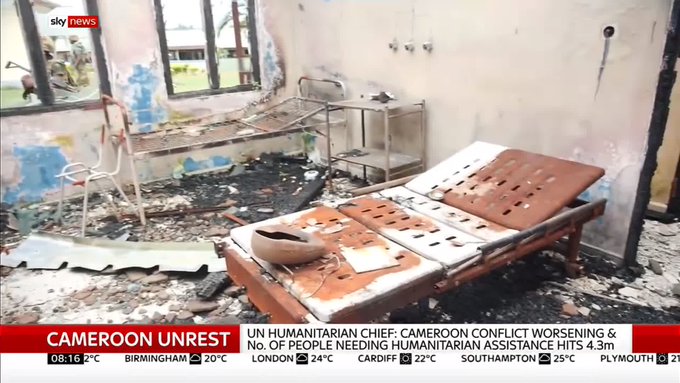
Ambazonia Restoration Forces in the Manyu County said on Monday its Akwaya branch carried out an attack on an army boat in Agborkem and that its fighters killed 13 Cameroon government army soldiers.
A Cameroon military source who spoke to our Mamfe correspondent on Tuesday put the toll higher, saying up to 7 soldiers were still missing after Southern Cameroons fighters attacked the troops on patrol. He said fighting lasted for about five hours. A Roman Catholic priest said he saw the bodies of eight dead Cameroon soldiers at the banks of the Agborkem River.
The attack in the historic Southern Cameroons village of Agborkem, in which the Manyu Defense Council said the army post also came under attack, followed a similar assault on French Cameroun soldiers in Batibo. The attacks raise questions about Biya regime assertions to have almost defeated the Ambazonia Self Defense fighters.
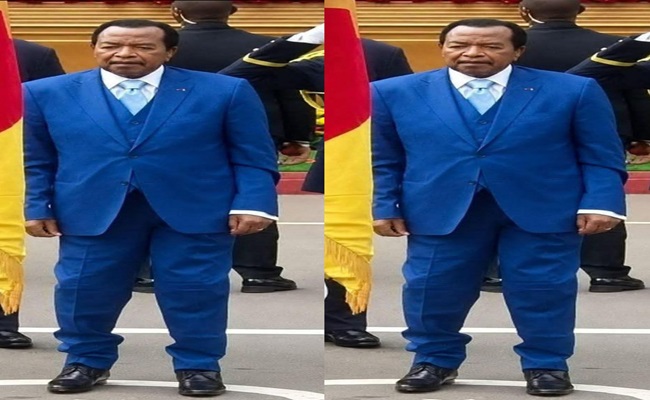
Yaounde did not immediately respond to a request for comment. The war in Southern Cameroons has killed more than 3000 Ambazonians and displaced about half a million since 2017. President Biya won a 7th term after a counterfeit elections condemned by the international community.
By Rita Akana in Mamfe