
9, July 2019
Francophone Crisis: Central African Refugees Reluctant to Return Home 0
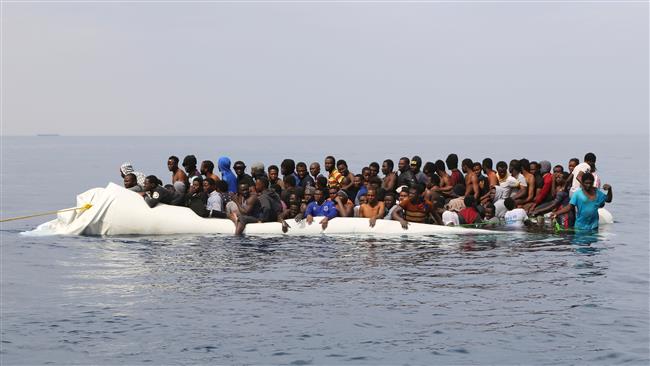
Cameroon says only a tiny fraction of the 285,000 Central African Republic refugees in the country have agreed to return to the CAR. Despite a February peace deal and months of negotiations with Cameroon and the United Nations refugee agency, refugees say they do not feel safe enough to return home.
Forty-nine-year-old Florence Yaomby’s husband was killed in crossfire between rebels and government troops in the Central African Republic town of Mingala four years ago.
She fled to Cameroon for safety, where she has lived as a refugee ever since.
She says she spent her last three years studying in Yaounde to become an accountant. Yaomby says if she returned to the CAR, she is not sure she would find a decent job. She prefers to sell bottled water and soft drinks to university students in Yaounde, where there is peace, and take care of her three kids. They are certain not to get a good education in her country, says Yaomby, because it is devastated by war.
The CAR has been rocked by violence since 2013 when mainly Muslim Seleka rebels ousted then-President Francois Bozize, prompting reprisals from mostly Christian militias.

In February, authorities reached a peace deal with 14 armed groups following United Nations-sponsored talks in Khartoum. It was expected to usher in a period of stability and led to an agreement between Bangui, Yaounde, and the United Nations refugee agency for the CAR refugees in Cameroon to return home.
But only 6,000 refugees have so far agreed to leave. Most like Yaomby refuse to return to the CAR, citing fears of violence in some areas and a country devastated by war.
Viviane Baikoua is the CAR’s minister for humanitarian action and reconciliation. She says her country needs its citizens to return and help develop their communities and the nation.
She says she is reiterating to her compatriots who agree to voluntarily return that they will be treated with dignity and that the CAR will protect them and respect all conventions it has signed to uphold their rights back home.
The UNHCR representative in the CAR, Buti Kale, says violence has declined since the peace deal, especially in the country’s western and southwestern areas.

“One would not say everything is perfect, but one would say for all those who are willing to go back, there are chances that they would be well reinserted into their areas of origin,” Kali said.
But several armed groups have rejected President Faustin-Archange Touadéra’s cabinet because only six of the 14 armed groups that signed the peace are included.
Skeptics of the CAR peace deal point to similar agreements in 2014, 2015 and 2017, which quickly fell apart.
The U.N. says over 600,000 Central Africans remain as refugees in neighboring countries while over 650,000 are internally displaced.
Source: VOA

















9, July 2019
Indomitable Lions: Seedorf unsure of Cameroon future after Africa Cup of Nations exit 0
Having failed to guide the Indomitable Lions to a successful title defense in Egypt, the Dutch tactician is uncertain if he will remain in his post
Coach Clarence Seedorf was coy about his Cameroon future after the Indomitable Lions crashed out of the Africa Cup of Nations in the Round of 16.
The reigning African kings were silenced 3-2 by Nigeria in a devastating result which saw Seedorf’s men surrender a one goal lead in Alexandria.
The result has led to speculation the Dutch legend could be shown the door after his Afcon failure. However, Seedorf himself is uncertain of what the future holds.
“Maybe you want to give us a few days,” he told the media.
“The first thing is I’m very sorry for the boys. They have worked really hard and played well but this is football and only one can win in the end.
“It’s not so important in my future. The important thing is what we have built until now; we’ve improved in many aspects on and off the pitch.
“It’s a group that is very united. I hope the people at home can be proud of the fighting spirit we’ve shown.
“Obviously, the disappointment is really big but this is sport. This is the moment where everyone must say we are united and continue to work for the future.”
Source: Goal.com