
10, July 2019
Migrants From Cameroon Protest Immigration Process In Tijuana 0
Over a hundred asylum-seekers from Cameroon blocked the path of Mexican immigration vans Tuesday morning in Tijuana, in protest of what they believe to be corruption by Mexican immigration officials.
The complaints of the Cameroonians stem from the Mexican authorities refusal to accept migrants from Africa for transport to the U.S. side of the border, where they can officially declare asylum. The Africans claim that days have gone by without Mexican officials calling any numbers from an unofficial “waiting list,” and yet Central American asylum seekers have been granted entry to the U.S. on those days.
“It’s corruption plain and simple,” said an asylum-seeker named Beatriz, who asked that her last name not be published. She said Central Americans have been paying bribes to the immigration officers. Beatriz has been waiting two months to cross into the United States and saw her number recently skipped over. “I can’t wait another two months.”
Asylum-seekers from Cameroon are, for the most part, members of the English-speaking minority in the country, and they have faced intense persecution since 2016. Many have traveled through South America, the jungles of Panama and Central America, only to run out of time and money south of the U.S. border.
Mexican National Guard troops monitor a group of asylum-seekers from Cameroon and Eritrea protesting Mexican immigration authorities in Tijuana, July 9, 2019. “We’ve been suffering for two months. We have nothing to eat. We’re sick. Everything is finished,” said Stanley, an asylum seeker.
He also asked that his last name be withheld.
Stanley was part of a group of eight African asylum-seekers that were asked to meet with Mexican officials in the hopes of ending the protest, which had drawn the attention of the newly-formed Mexican National Guard.
After an hour-long meeting, the asylum-seekers and Mexican officials emerged with a “deal” that the African asylum-seekers would be able to verify the unofficial list each morning, to make sure the correct numbers were being called. The group dispersed and let the immigration vans proceed, but not without a promise by many to hold the Mexicans to their word in the final stage of what has been a very long journey for them.
Source: Kpbs


















11, July 2019
The U.S. Should Bid Biya Goodbye 0
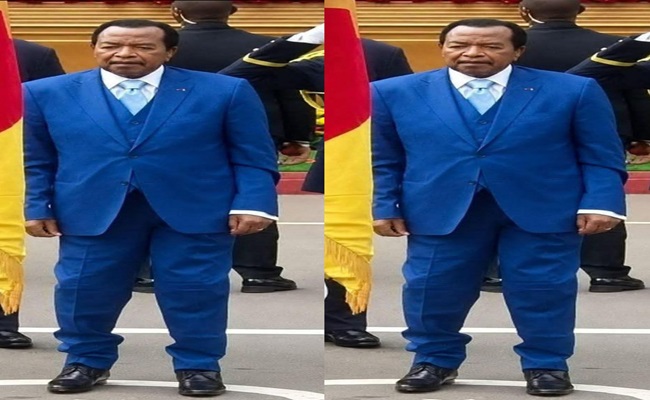
It is not hard to find fault with Cameroonian President Paul Biya and his government. The overall stability of the country he has led since 1982, often from the luxury of the Intercontinental Hotel in Geneva, has crumbled over the past three years. After last year’s deeply flawed election—the norm in Cameroon—Biya has done little to resolve increasingly violent demands for secession from armed groups fighting to carve out a new Anglophone state called Ambazonia from the country’s Northwest and Southwest regions. He has failed to give any indication that his regime will scale back its efforts to crush dissent, and there have been no signs that his family will rein in their lavish spending beyond the country’s borders.
Cameroon deserves better—from its 86-year-old leader, and from every foreign power that enables his enduring misrule. Increasingly, Cameroonians at home and abroad are demanding that outside powers examine their ties to the long-ruling Biya regime. On June 29, hundreds of protesters in Geneva endured tear gas from Swiss authorities to do just that. It is well overdue for the United States to fundamentally recalibrate U.S.-Cameroon relations.
The rise of violent Anglophone secessionist militias in Cameroon’s west and of Boko Haram in the Far North region has left 4.3 million people—roughly one-fifth of the country’s population—in need of humanitarian assistance. In addition, at least 1,800 people have been killed and 500,000 more displaced due to these conflicts, with regular reports emerging of war crimes committed by the government, including torture and the burning of villages.
Cameroon deserves better—from its 86-year-old leader, and from every foreign power that enables his enduring misrule.
Biya has exacerbated Cameroon’s multiple, cascading crises by further cracking down on political dissent and opposition voices. Beyond not taking credible steps toward resolving conflict in the country’s Anglophone regions, the Francophone government of Cameroon is actively constricting opposition to Biya’s policies and efforts to challenge his authoritarian grip on power. On June 1, an estimated 350 supporters of the country’s main opposition party, the Cameroon Renaissance Movement, were arrested during demonstrations in which protesters demanded the release of party leader Maurice Kamto.
In October 2018, Kamto declared victory after the country’s presidential election, which resulted in Cameroonian authorities charging him with treason and a host of other major crimes, including “inciting violence” and “disrupting public peace.” Kamto has been in detention since Jan. 26 of this year, and if he is convicted in Cameroon’s notoriously biased courts, he could potentially face the death penalty. Kamto has already been denied access to legal counsel, a violation of both Cameroonian law and international legal norms.
Despite Biya’s recent clampdown on political dissent and his detachment from Cameroon’s multiple conflicts, the response from the United States and other foreign powers has been tepid up to this point.
Much more needs to be done to confront a regime that has routinely and unabashedly violated the rights of its own citizens.
The U.S. government has taken some incremental steps to reset the terms of its relationship with Biya’s government. In February of this year, the Trump administration suspended $17 million of military aid to Cameroon due to ongoing human rights abuses. And last week, Rep. Karen Bass, the top Democrat on a key subcommittee that focuses on Africa and the current chair of the Congressional Black Caucus, led a visiting U.S. congressional delegation to the country to assess the situation and call for peace talks between the government and separatists. However, much more needs to be done to confront a regime that has routinely and unabashedly violated the rights of its own citizens—one that relies on international disinterest and a steady stream of foreign lobbyists to clean up its image.
There are a number of concrete steps that the United States in particular should immediately consider.
Culled from Foreign Policy