25, June 2019
Placating International Community: Biya regime to prosecute 7 soldiers over ‘atrocity’ video 0
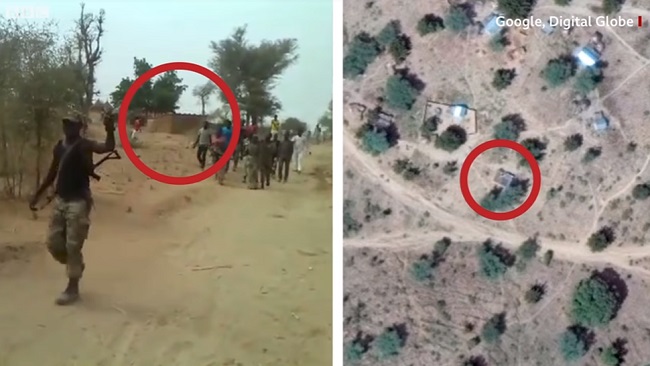
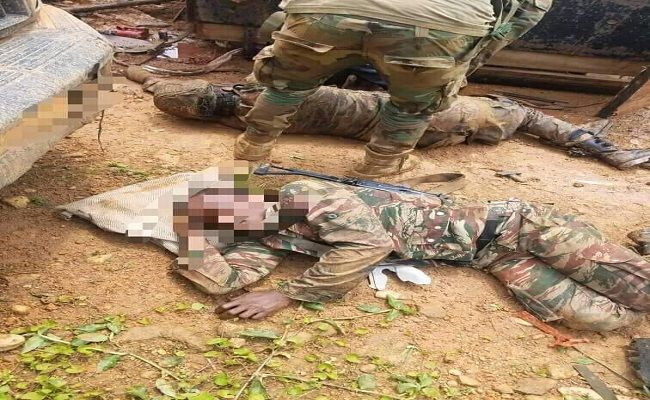
Cameroon’s defence ministry said Monday it would prosecute seven soldiers suspected of summarily killing two women and their two children, a video of which was distributed on the internet to widespread outrage.
“Seven soldiers arrested on suspicion of extrajudicial executions in the Far North region will be brought before a military court in Yaounde… where they will be tried in line with the law,” communications official Cyrille Serge Atonfack Guemo told AFP.
The charges are for joint participation in murder, breach of regulations and conspiracy to commit these crimes, he said.
The date of the trial has yet to be set.
“Cameroon does not compromise over behaviour that is incompatible with law relating to war, human law and the protection of people and their belongings,” he said
The killings occurred last July in a region plagued by cross-border raids by Boko Haram fighters from neighbouring Nigeria.
The assailants in the video accuse the four of being members of the jihadist group.
The Cameroonian government initially branded the video “fake news” and a “horrible montage” but said it would investigate. It made seven arrests the following month.
Amnesty International for its part said it had “credible evidence” that the men in the video were Cameroonian soldiers.
The United States and Britain were among those which called for a probe and to hold those responsible to account.
Cameroon’s armed forces have also been accused of abuses in two western regions where anglophone separatists have launched an armed campaign against the predominantly French-speaking state.
Acts of violence there have been committed by both sides, say monitors.
According to the International Crisis Group think tank, 1,850 people have been killed, while more than 530,000 people have been forced from their homes, according to UN figures.
Source: AFP

















25, June 2019
Nigerian widow opens her doors to Southern Cameroonian refugees 0
When the insecurity in Cameroon’s restive western region forced Susan Agbo to leave her home, she did not know what lay ahead. All she knew was that she needed to get her eight grandchildren to a safer place. She found that safer place in Nigeria.
“When I came to Nigeria, I had no place to stay,” says Susan, who fled Cameroon nearly two years ago.
She struggled with homelessness for months, relying on the goodwill of the local Nigerian community for shelter.
“I was staying with people for a few weeks here and there and then I would leave and stay somewhere else for a month,” explains Susan, who is in her 60s.
Escalating violence in Cameroon has displaced hundreds of thousands of people within the country’s borders and forced about 37,000 more like Susan to seek safety in Nigeria.
The constant movement from one place to another, with her grandchildren in tow, was exhausting for the sickly grandmother who longed for a lasting solution to her situation.
Lucia Ikuru, who lives near Agbokim Waterfalls on the border with Cameroon, sympathized with Susan’s predicament and offered her shelter without a second thought.
“I saw she had run away and had no place to stay,” says the 77-year-old Nigerian widow. “I gave her a house and told her to stay there.”
Lucia’s large compound has several rooms that she has turned into shelters for other Cameroonian refugees including Susan.
“I try to help them, and whatever little I have, I give them,” adds Lucia.
Susan is grateful for the shelter, solace and friendship that she has found here and is especially grateful for the food that Lucia provides her grandchildren.
Susan Agbo, a 60-year-old Anglophone refugee from Cameroon sits outside her temporary home in Agbokim, Nigeria. © UNHCR/Will Swanson
“When she cooks, she feeds my grandchildren and they eat. I am happy,” says Susan, adding that she has no means of supporting them herself.
She explains that due to the conflict, their parents’ whereabouts is unknown – a constant source of worry for her.
“I don’t know where they are since they ran away so now the children are here with me,” she says.
To keep her worries at bay, she talks to Lucia often, sitting with her in the courtyard and carving wooden sticks into toothbrushes and toothpicks to sell at the local market.
“I’m happy that I have her staying here with me,” says Lucia. “If something happened to her, I wouldn’t feel happy.”
UNHCR, the UN Refugee Agency, has launched an urgent appeal to increase support for displaced Cameroonians who have survived nearly two years of ongoing violence. But of the US$184 million required for UNHCR’s operations in Cameroon and Nigeria – including US$35.4 million needed urgently for critical life-saving assistance to newly displaced Cameroonians – just four per cent has been raised.
The majority of the refugees – over 50 per cent of the population – live in host communities in over 47 villages along the border. The support they receive from kind Nigerians like Lucia is crucial and reflective of the sense of solidarity that most refugees experience from their Nigerian hosts
Susan hopes that the situation back home will improve so that she can return. But for now, she continues to adjust to life here and is grateful for Lucia’s kindness and that of the Nigerian people.
“I don’t know where I would have been,” she says. “I am happy because we are like friends.”
UNHCR continues to seek funding to provide basic assistance to refugees and carry out projects that empower the host communities, also in need.
Source: UNHCR