Featured
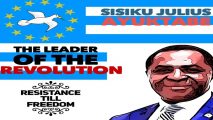
 Ambazonia Crisis: latest on Sisiku Ayuk Tabe’s arrest, trial and conviction
  2025 Africa Cup of Nations: Patrice Motsepe should go and go now!
  Changes in the Senate and National Assembly: who becomes next head of state?
  Yaoundé: Hon. Theodore Datoua is new Speaker of the National Assembly
  Ambazonia Interim Gov’t reacts to Pope Leo’s visit
Most Commented Posts
 4 Anglophone detainees killed in Yaounde
18 comments Chantal Biya says she will return to Cameroon if General Ivo Yenwo, Martin Belinga Eboutou and Ferdinand Ngoh Ngoh are sacked
13 comments The Anglophone Problem – When Facts don’t Lie
12 comments Anglophone Nationalism: Barrister Eyambe says “hidden plans are at work”
12 comments Largest wave of arrest by BIR in Bamenda
10 comments
Featured
-

Iran says 55 enemy targets go up in smoke as it unleashes 70th wave of Op. True Promise 4
-
CPDM Crime Syndicate: regime delays parliamentary elections, lawmakers to stay until end 2026
-

Iran debuts multi-warhead ‘Nasrallah’ missile to strike Israel’s oil refineries
-

Smarter Water Use Could Feed 10 Billion and Create Nearly 250 Million Jobs
-

Yaoundé: Catholics invited to throng Pope Leo XIV’s procession
-

Indomitable Lions: Pagou unveils squad for 2026 FIFA Series
-
Ambazonia Crisis: latest on Sisiku Ayuk Tabe’s arrest, trial and conviction
21, November 2025
Switzerland tests Cameroon’s openness with post-election mediation offer 0
by soter • Cameroon, Headline News, News
Switzerland positioned itself once again as a potential mediation partner in Cameroon. Swiss President Karin Keller-Sutter sent a congratulatory message to President Paul Biya on 7 November, following his re-election, and released the message publicly on 19 November. She stated Switzerland’s readiness to mobilise its diplomatic and institutional expertise at a time when the post-election climate remains tense and contested. The offer places Yaoundé before a test of its willingness to pursue inclusive political dialogue.
“The Swiss Confederation follows the post-electoral situation in Cameroon closely,” Keller-Sutter wrote, calling on political actors to engage in “constructive dialogue” capable of producing political solutions that reflect the aspirations of the entire population, “notably those of youth and women.” By explicitly targeting these groups, Bern anchored its message in both political stability and social expectations beyond electoral litigation alone.
A Diplomatic Offer Grounded in Longstanding Partnership
Beyond protocol, the Swiss letter carries specific diplomatic weight. It reiterates Bern’s readiness to support Cameroon in designing inclusive political solutions. “As a long-standing partner to Cameroon, Switzerland stands ready to share its expertise in this field,” Keller-Sutter said. Switzerland’s expertise covers mediation, governance, political dialogue and peace processes—areas where Swiss diplomacy enjoys an established international reputation.
The offer aligns with Switzerland’s past involvement in the Anglophone crisis that has affected the North-West and South-West regions since late October 2016. In 2019, the Swiss Federal Department of Foreign Affairs (FDFA) said it had been “mandated” by a majority of stakeholders to facilitate negotiations between the Cameroonian government, political opposition and separatist actors.
This process, conducted with the Geneva-based Centre for Humanitarian Dialogue, produced several preparatory meetings in Switzerland. Despite initial optimism, disagreements among the parties slowed the initiative, which did not result in a formal dialogue. Still, this experience remains a reference for observers who view Switzerland as a credible interlocutor to support crisis resolution and to assess the willingness of actors to commit to negotiation.
Post-Election Tensions Raise Stakes for Dialogue
The 12 October 2025 presidential election also left behind a tense environment marked by disputes, opposition claims and accusations of irregularities. The Constitutional Council declared Paul Biya the winner with 53.66% of the vote, but the political landscape remains polarised. Against this backdrop, Switzerland’s initiative appears as a facilitation offer designed to prevent political escalation and encourage a return to consultation. It also tests the readiness of authorities and political forces to accept a structured mediation framework.
The Swiss message comes as Biya, inaugurated on 6 November, declared that youth and women would lie at the centre of his new seven-year term, emphasising reforms and stronger engagement with citizen expectations. Switzerland, consistent with its neutral mediation posture, now seeks to support institutional stability during Cameroon’s new political phase. How Yaoundé receives this offer will provide a critical indicator of the political system’s openness and its ability to manage medium-term destabilisation risks.
Source: Sbbc