Featured
 Ngarbuh massacre trial short on justice
  John Ashu Agboreyong: a man of God counting years and counting impact @60
  Ethnic armies and the democratization process in Cameroon: an impediment to democratic consolidation
 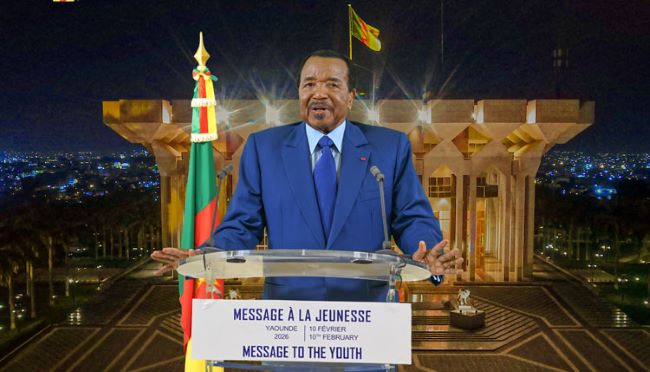 Biya’s message to the Youth on the 60th edition of the National Youth Day
  How Cameroon pays the price for disrespecting contracts
Most Commented Posts
 4 Anglophone detainees killed in Yaounde
18 comments Chantal Biya says she will return to Cameroon if General Ivo Yenwo, Martin Belinga Eboutou and Ferdinand Ngoh Ngoh are sacked
13 comments The Anglophone Problem – When Facts don’t Lie
12 comments Anglophone Nationalism: Barrister Eyambe says “hidden plans are at work”
12 comments Largest wave of arrest by BIR in Bamenda
10 comments
Featured
-

Yaoundé urges citizens in Middle East to exercise caution amid Iran-US war
-

Archbishop Nkea says the Holy Father is coming as a Pastor, not a politician
-

Ambazonia Crisis: Belgium arrests 4 over alleged war crimes
-

Indomitable Lions: Pagou invites 30 home-based players for training camp
-

Southern Cameroons: 2nd edition of South West Cultural Festival held in Buea
-

Unending attack on medics and healthcare professionals in Cameroon’s separatist war; an unacceptable disgrace
-

Iran says Israeli PM’s fate unclear after ‘surprise’ missile attack on his office
12, January 2026
Yaoundé awaits Biya’s new cabinet amid hope and skepticism 0
by soter • Editorial, Headline News
As Yaoundé the capital awaits the imminent announcement of the 2026 Biya cabinet, the nation once again finds itself at a familiar crossroads of expectation and uncertainty. The 92-year old Cameroonian dictator is expected to unveil a new cabinet that many are hoping will respond to the country’s pressing political, economic, and social challenges.
Cabinet shakeups under Biya have often generated intense political discourse, not because they come along with any meaningful change, but because they guarantee Biya’s continued stay in power. For many now living below the UN poverty line, the key question is not when the new men and women will be presented to the public by state run Cameroon Radio and Television but whether it will bring meaningful transformation or simply reinforce the status quo.
The nation is at the mercy of Biya and his appointees and it is facing a convergence of crises that demand urgent and competent leadership. Cameroon’s high cost of living continues to strain households, youth unemployment remains alarmingly high, and insecurity persists in the Far North and the English speaking Cameroon regions. Government departments, from the Ministry of Health to National Education are all struggling with chronic underfunding and inefficiency. Added to this worry is a new development that the old guards of the ruling party are refusing to quit the political stage. Against this backdrop, the formation of the President Biya 2026 cabinet will be closely scrutinized as a measure of the regime’s willingness to confront these realities.
As pointed out by the man widely believed to have won the presidential poll Issa Tchiroma Bakary, there is growing public fatigue with recycled cabinet ministers and long-serving barons of the regime whose records offer little or no evidence of innovation or accountability. Cameroonians, particularly the youth, are calling for new faces—technocrats with proven competence, integrity, and a clear understanding of modern governance. They are seeking a cabinet that can move beyond empty rhetoric and deliver tangible results.
At the same time, several political commentators have reportedly noted that appointments into President Biya’s cabinet often reflect loyalty to the dictator and regional balancing rather than performance. If the upcoming Biya cabinet follows this familiar pattern, public skepticism is likely to deepen. In an era where Cameroonians are more informed and vocal than ever, symbolism without substance may no longer suffice.
The expected reshuffle is also coming at a time when Yaoundé’s international image matters greatly. Cameroon’s economic partners and donors are already pushing for reform. A credible, dynamic young cabinet could help restore confidence and attract foreign investors. Conversely, a new Biya government perceived as stagnant may reinforce doubts about the nation’s governance trajectory.
Many on the streets in major cities such as Douala, Bertoua, Garoua have noted that the announcement of a new cabinet should not be treated as a routine ruling CPDM exercise but an opportunity to reset national priorities, restore public trust, and demonstrate commitment to the nation’s renewal. Whether the 92-year-old Biya seizes this opportunity remains to be seen.
For now, Cameroon is a nation in waiting and citizens are waiting with cautious hope, tempered by undue excitement, that this new cabinet will rise to the demands of the moment and place the national interest above all else.
By Soter Tarh Agbaw-Ebai