Featured
 World Bank Group statement on the conflict in the Middle East
  Anglophone Vice President: a deeply counterproductive idea
  Ambazonia Crisis: latest on Sisiku Ayuk Tabe’s arrest, trial and conviction
  2025 Africa Cup of Nations: Patrice Motsepe should go and go now!
  Changes in the Senate and National Assembly: who becomes next head of state?
Most Commented Posts
 4 Anglophone detainees killed in Yaounde
18 comments Chantal Biya says she will return to Cameroon if General Ivo Yenwo, Martin Belinga Eboutou and Ferdinand Ngoh Ngoh are sacked
13 comments The Anglophone Problem – When Facts don’t Lie
12 comments Anglophone Nationalism: Barrister Eyambe says “hidden plans are at work”
12 comments Largest wave of arrest by BIR in Bamenda
10 comments
Featured
-
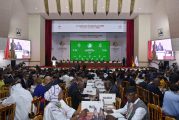
Yaoundé: WTO Ministerial Conference ends without a breakthrough
-

Céline Dion makes her big comeback with concerts in Paris after six-year hiatus
-
Russian Foreign Minister says US, Israel seeking to pit Arab states against Iran
-

CPDM Crime Syndicate: France flags payment delays as risk to investment climate
-
Biya regime looks to Poland to advance transport infrastructure plans
-

Cameroon struggles with chronic blood shortage despite policy efforts
-

Iran hits US-Israeli pilot hideouts, drone hangers
1, April 2026
Yaoundé: WTO Ministerial Conference ends without a breakthrough 0
The World Trade Organization’s 14th Ministerial Conference (MC14) concluded in Yaounde with ministers adopting a set of decisions, while deferring several critical trade issues to further negotiations in Geneva, after four days of intensive talks involving nearly 2,000 officials and more than 90 ministers.
Chaired by Cameroon’s Minister of Trade Luc Magloire Mbarga Atangana, the conference secured agreements on integrating small economies into the global trading system and improving implementation of special and differential treatment provisions under sanitary and phytosanitary (SPS) and technical barriers to trade (TBT) agreements.
However, key negotiations on electronic commerce, fisheries subsidies and intellectual property-related moratoriums remained unresolved due to time constraints. Mbarga Atangana said ministers worked across multiple negotiation tracks to conclude as many issues as possible, describing the process as intensive and time-bound. He confirmed that discussions fell short on several outstanding files, including the WTO’s e-commerce work programme and the renewal of moratoriums on customs duties for electronic transmissions and non-violation complaints under the TRIPS Agreement.
The unresolved issues carry economic significance, particularly the expiring moratorium on customs duties on electronic transmissions, which underpins cross-border digital trade flows, and the TRIPS-related moratorium affecting intellectual property disputes. Both measures are set to expire at the end of March 2026, raising uncertainty for global digital commerce and innovation-driven sectors.
WTO Director-General Ngozi Okonjo-Iweala said members made progress on advancing a reform work programme and discussions on fisheries subsidies, while outlining a pathway to finalise outstanding agreements in Geneva.
“A lot was accomplished. We decided to work differently. I think we have a new WTO way of working to modernize the way we do business, so we can be more nimble, more responsive as we move forward,” Okonjo-Iweala stated.
Ministers agreed to continue negotiations on fisheries subsidies, with the objective of delivering recommendations at the 15th Ministerial Conference in line with commitments under the existing agreement. The talks are aimed at tightening disciplines on harmful subsidies that affect global fish stocks and maritime economies.
The conference also consolidated draft texts forming what has been termed a “Yaounde package”. The package comprises five draft instruments, which includes a proposed ministerial declaration on WTO reform, decisions on electronic commerce, TRIPS-related moratoriums, fisheries subsidies, and a package for least developed countries (LDCs). These texts are expected to form the basis for continued negotiations at the next WTO General Council meeting in Geneva.
“We are very close to a Yaounde package of agreements that would be important for members and the future of the organization. But we are not all the way there yet,” Okonjo-Iweala
The Ministerial Conference, the WTO’s highest decision-making body, is typically held every two years and serves as a platform for setting global trade rules. The Yaoundé meeting marked only the second time the conference has been hosted in Africa, placing regional trade priorities, including development and integration, at the centre of discussions.
Final decisions on the pending agreements, including those affecting digital trade and intellectual property frameworks, are now expected to be pursued in Geneva, where members will seek to convert draft texts into binding outcomes.
Source: Business in Cameroon