
21, November 2025
Switzerland tests Cameroon’s openness with post-election mediation offer 0
Switzerland positioned itself once again as a potential mediation partner in Cameroon. Swiss President Karin Keller-Sutter sent a congratulatory message to President Paul Biya on 7 November, following his re-election, and released the message publicly on 19 November. She stated Switzerland’s readiness to mobilise its diplomatic and institutional expertise at a time when the post-election climate remains tense and contested. The offer places Yaoundé before a test of its willingness to pursue inclusive political dialogue.
“The Swiss Confederation follows the post-electoral situation in Cameroon closely,” Keller-Sutter wrote, calling on political actors to engage in “constructive dialogue” capable of producing political solutions that reflect the aspirations of the entire population, “notably those of youth and women.” By explicitly targeting these groups, Bern anchored its message in both political stability and social expectations beyond electoral litigation alone.
A Diplomatic Offer Grounded in Longstanding Partnership
Beyond protocol, the Swiss letter carries specific diplomatic weight. It reiterates Bern’s readiness to support Cameroon in designing inclusive political solutions. “As a long-standing partner to Cameroon, Switzerland stands ready to share its expertise in this field,” Keller-Sutter said. Switzerland’s expertise covers mediation, governance, political dialogue and peace processes—areas where Swiss diplomacy enjoys an established international reputation.
The offer aligns with Switzerland’s past involvement in the Anglophone crisis that has affected the North-West and South-West regions since late October 2016. In 2019, the Swiss Federal Department of Foreign Affairs (FDFA) said it had been “mandated” by a majority of stakeholders to facilitate negotiations between the Cameroonian government, political opposition and separatist actors.
This process, conducted with the Geneva-based Centre for Humanitarian Dialogue, produced several preparatory meetings in Switzerland. Despite initial optimism, disagreements among the parties slowed the initiative, which did not result in a formal dialogue. Still, this experience remains a reference for observers who view Switzerland as a credible interlocutor to support crisis resolution and to assess the willingness of actors to commit to negotiation.
Post-Election Tensions Raise Stakes for Dialogue
The 12 October 2025 presidential election also left behind a tense environment marked by disputes, opposition claims and accusations of irregularities. The Constitutional Council declared Paul Biya the winner with 53.66% of the vote, but the political landscape remains polarised. Against this backdrop, Switzerland’s initiative appears as a facilitation offer designed to prevent political escalation and encourage a return to consultation. It also tests the readiness of authorities and political forces to accept a structured mediation framework.
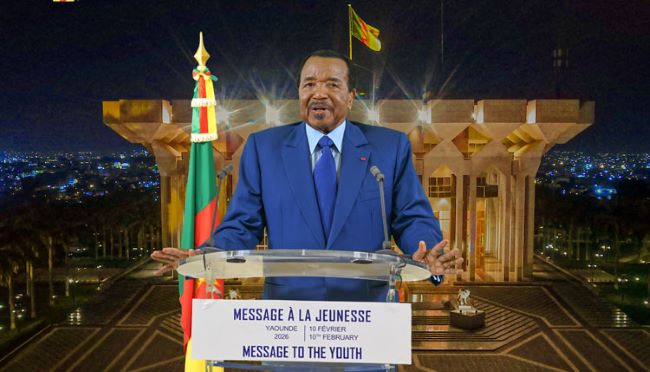
The Swiss message comes as Biya, inaugurated on 6 November, declared that youth and women would lie at the centre of his new seven-year term, emphasising reforms and stronger engagement with citizen expectations. Switzerland, consistent with its neutral mediation posture, now seeks to support institutional stability during Cameroon’s new political phase. How Yaoundé receives this offer will provide a critical indicator of the political system’s openness and its ability to manage medium-term destabilisation risks.
Source: Sbbc



















21, November 2025
Cameroon’s Critical Shortage of Incubators Puts Thousands of Newborns at Risk 0
Cameroon loses nearly 10,000 newborns every year due to a severe lack of incubators and trained paediatric staff. The problem is especially acute in conflict-affected regions like the Northwest, where hospitals such as Bamenda Regional Hospital operate far below required capacity—only six incubators for nearly 20 babies, many of whom are pre-term and vulnerable to infections when forced to share equipment.
Mission hospitals face similar shortages. Mbingo Baptist Hospital, one of the country’s top referral centers, runs on just four incubators, a situation worsened by the Anglophone Crisis and COVID-19, which drastically reduced patient access. Nationally, Cameroon records high child mortality: nearly 90,000 low-birth-weight babies are born annually, and about 10,000 die from preventable causes. The country’s under-five mortality rate remains far above global averages.
Experts say the crisis is driven by chronic underfunding. Cameroon allocates only around 4% of its national budget to health, far below the 15% Abuja Declaration benchmark. Despite incubators being relatively affordable, most hospitals lack them, and paediatric specialists are also in short supply—only about 200 paediatricians serve 15 million children, with many doctors leaving the country for better conditions.
Efforts to improve the situation are emerging. MP Peter Njume has launched a Parliamentary Caucus on Health Financing to push for increased domestic funding. Meanwhile, a coalition led by Professor Pius Tih and the African Children’s Healthcare Fund is working to build Cameroon’s first dedicated paediatric hospital, which would include modern neonatal care equipment and specialist staff.
With children making up nearly half of Cameroon’s population, experts warn that expanding paediatric services is urgent if the country hopes to reach universal health coverage by 2030.
Source: Trendsafrica