6, May 2026
CNN’s pioneering founder Ted Turner dies at 87 0
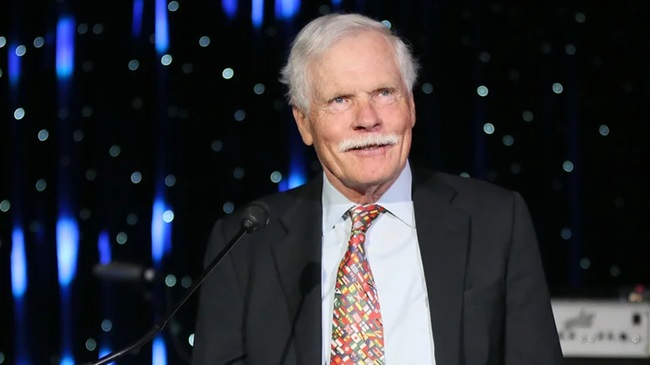
Ted Turner, who transformed television news with the creation of CNN in 1980, has died at the age of 87, the network said Wednesday.
Cable News Network upended established broadcasting with its dedication to around-the-clock breaking news and shot to global recognition with its coverage of the Gulf War in 1990-91.
Ted Turner created CNN in 1980, revolutionizing the way America, and the world, got their news, and then went on to become one of the most prominent business leaders and philanthropists of his era.
A brash risk taker, Turner—whose death aged 87 was announced on Wednesday—helped reshape the television industry in the late 20th century.
He also made a name for himself with spectacular business deals, his ownership of professional sports clubs, a marriage to actress Jane Fonda, his leadership of a competitive yachting team and then a devotion to charitable and environmental causes.
Born in Cincinnati, Ohio in November 1938, Robert Edward “Ted” Turner III went to a military boarding school in Tennessee, and then attended Brown University, but was expelled before graduating.
Turner took over a faltering family advertising business after his father, despondent over financial problems, committed suicide.
After buying a number of radio stations, Turner’s purchase of a struggling Atlanta station in 1970 was his first move into television.
Ten years later, that became the flagship of his nationwide Turner Broadcasting System, the profits from which he parlayed into the launch of CNN.
CNN launched in 1980 as the first 24-hour cable news network, gaining traction in the United States and later internationally.
The launch came as viewers were shifting from broadcast to cable and CNN became a key source of news during the 1990-1991 Gulf War, delivering extensive live coverage using satellite technology.
CNN’s success inspired the creation of other 24-hour news channels including Fox News by longtime Turner rival Rupert Murdoch, MSNBC and countless station worldwide.
Turner’s television empire expanded beyond CNN and included TBS and TNT channels for sports and entertainment, Turner Classic Movies and Cartoon Network, among others.
As his television empire expanded, Turner made a failed bid to acquire CBS in the 1980s and then briefly acquired MGM/UA Entertainment Co. studios.
Turner sold the Hollywood group back months later, while keeping the rights to large portions of its catalog including films from MGM.
Blockbuster deals
His deals got bigger in the 1990s when Turner Broadcasting merged with Time Warner in 1996, making him vice chairman of the media-entertainment powerhouse.
In 2001, AOL (previously America Online) completed its purchase of Time Warner for $165 billion in the biggest merger in corporate history.
But the deal had to be unwound within a decade with the falling fortunes of AOL, which used an inflated share price for the deal. Turner, the biggest shareholder of Time Warner, lost billions from the deal.
Sports figure
Turner bought the Atlanta Braves baseball team in 1976 and the team made several World Series appearances, winning in 1995. He sold his interest as part of the Time Warner deal, but the team continued to play on Turner Field until 2016.
He also owned the Atlanta Hawks NBA team and Atlanta Thrashers NHL team, both of which were transferred to Time Warner as part of the 1996 megadeal.
In other sports endeavors, Turner successfully skippered the US yacht Courageous to win the 1977 America’s Cup.
A yachting incident intensified the rivalry between Turner and Murdoch in 1983 when a Murdoch-sponsored yacht collided with Turner’s in the Sydney-Hobart race, sinking Turner’s schooner.
Afterwards, Turner challenged Murdoch to a fistfight and the two media icons continued to play out their rivalry in the business world.
Turner created the Goodwill Games in the 1980s as part of an effort to ease international tensions during the Cold War, amid Olympic boycotts led by the United States and Soviet Union. The last events were held in 2001.
Attention grabber
Aside from his business and sports deals, Turner gained attention for his personal life and his later ventures focused on philanthropy and the environment.
In 1996, he complained to The New York Times that “all the money is in the hands of these few rich people, and none of them give any away”.
He was Time magazine’s man of the year in 1991, the same year he married, actress Jane Fonda, his third wife. They divorced a decade later, and he blamed their marital woes on her conversion to Christianity.
Her version: “He needs somebody there for him 100 percent of the time … That’s not love, it’s babysitting.”
In 1998, he donated a billion dollars to the United Nations to create the UN Foundation, which has focused on climate change, sustainable development, technology and health initiatives.
Turner announced his departure from his post at Time Warner in 2003 to devote his energy to his other interests.
These include the Turner Foundation, founded in 1990, which supports efforts to fight climate change and improve air and water quality and has given away some $380 million.
His Turner Endangered Species Fund, launched in June 1997, has worked to save gopher tortoises, monarch butterflies and leopard frogs, working mainly with private landowners.
In 2015, he launched the eco-tourism venture Ted Turner Reserves, which enables tourists to visit his four properties in New Mexico and learn about conservation efforts.
Source: AFP


















6, May 2026
Cavayé Yéguié Djibril: both a builder and a barrier 0
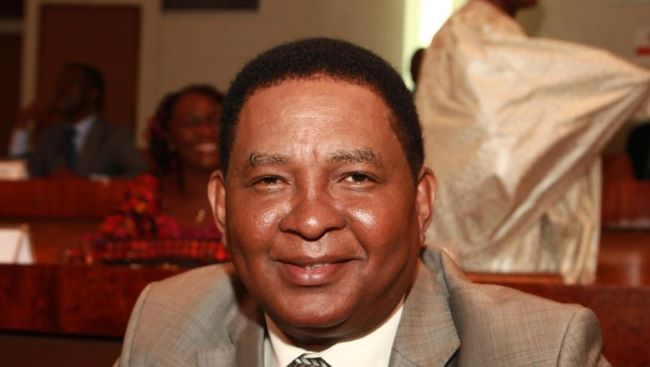
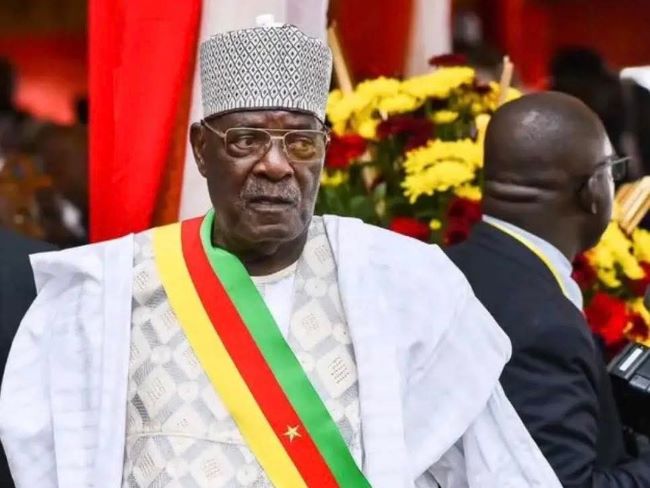
The passing of Cavayé Yéguié Djibril at the age of 86 marks more than the death of a man; it signals the fading of a political era that shaped modern Cameroon for over three decades.
For 34 years, Djibril presided over the National Assembly, a tenure unmatched in the country’s history and rare across the continent. From his election to the speakership in 1992 to his removal in March 2026, his authority became synonymous with institutional continuity—some would say stability, others stagnation.
An editorial assessment of his life must begin with this central fact: Djibril was not merely a parliamentary figure; he was an embodiment of the political order that crystallized under President Paul Biya. Loyal, durable, and unyielding, he represented a system in which longevity was both a credential and a shield. His career stretched from the single-party state into the multiparty era, yet the essence of governance changed little under his watch.
There is, undeniably, a case for respect. Djibril rose from modest beginnings in the Far North to become one of the most powerful figures in the republic. He mastered the mechanics of survival in a demanding political environment and ensured that the National Assembly remained a predictable pillar of state authority. In a region often marked by volatility, such predictability has its defenders.
But respect must not obscure reality. Under Djibril, the legislature seldom fulfilled its potential as a counterweight to executive power. Critics long argued that the Assembly became ceremonial—more a chamber of endorsement than of scrutiny. This perception hardened during moments of national strain, particularly the Anglophone crisis, when parliament failed to emerge as a forum for meaningful national dialogue.
In that sense, Djibril’s legacy is inseparable from the limitations of the institution he led. He did not merely preside over a subdued parliament; he became its defining feature. Stability, in his hands, often meant silence.
The timing of his death adds a poignant, almost symbolic dimension. Removed from office after decades of apparent permanence, he died mere weeks later—a reminder that even the most entrenched political figures are ultimately subject to the same abrupt transitions they often resist.
Cameroon now finds itself at a generational crossroads. Djibril’s passing, alongside the recent departure of other long-serving figures, underscores a slow but unavoidable shift in the country’s political architecture. Whether that shift leads to renewal or merely reconfiguration remains uncertain.
In the end, Djibril leaves behind a paradox. He was both a builder and a barrier: a man who sustained institutions, yet one who, in the eyes of many, prevented them from evolving. His life invites neither simple praise nor outright condemnation, but a sober reckoning.
By Rita Akana
Yaoundé Bureau Chief
Cameroon Concord News Group