
9, May 2026
After losing influence in West Africa, France seeks a regional reset at Kenya summit 0
Shorn of influence in its former colonies in West Africa, France will seek to deepen ties elsewhere on the continent next week at an Africa summit in the Kenyan capital Nairobi, its first to be held in an English-speaking country.
With a year left in his presidency, French President Emmanuel Macron is hoping to showcase a “renewed partnership” with Africa, an aide at the Élysée Palace told reporters.
Monday and Tuesday’s summit, which will be attended by heads of state, business executives and heads of multilateral development banks, follows repeated setbacks for France in former colonies where it has wielded influence for decades.
A series of coups in the Sahel region since 2020 have brought to power military officers who have expelled French troops and invited in Russia-backed mercenaries like the Wagner Group and its successor, Africa Corps, to deal with violence and unrest perpetrated by jihadist militias.
France also handed over control of its last major military facility in Senegal last July after Senegalese President Bassirou Diomaye Faye – who is expected to attend the Kenya summit – said French bases were incompatible with the country’s sovereignty.
“It does feel like a rebranding of how France is positioning itself on the continent,” said Beverly Ochieng, a Senegal-based senior analyst at the Control Risks consultancy.
“It is moving away from some of its former colonial partners, security partners, towards countries where it has more of a cultural – a different footprint.”
French pivot
Macron came to power in 2017 vowing to bring an end to “Francafrique”, the lingering and often murky links between France and its former colonies that at times saw Paris back autocratic regimes, while broadening engagement across the continent.
The pivot has involved attempts to tackle historical tensions with countries like Rwanda and Algeria while more closely engaging African civil society and youth leaders, said Alain Antil, the head of the Sub-Saharan Africa programme at the French Institute for International Relations.
At the same time, Paris has looked to boost trade ties, growing its imports from Africa by a quarter between 2021 and 2024, according to data from the International Trade Centre.
France and Nigeria signed a €300 million investment agreement in 2024 to support critical infrastructure, healthcare, transportation and renewable energy across Africa’s most populous country.
Investment deals, especially in areas like clean energy, artificial intelligence and education, are expected to be at the centre of Macron’s trip to Africa for the summit, during which he will also visit Egypt and Ethiopia.
Macron’s government has also looked to strengthen security cooperation with non-traditional partners, including by signing a defence pact with Kenya last October to boost cooperation in intelligence-sharing, maritime security and peacekeeping.
However, France has faced some high-profile setbacks in countries where foreign investors like China and Gulf states have leveraged deep pockets and longstanding relationships to build influence.
Kenyan President William Ruto’s government terminated a deal with a consortium led by France’s Vinci SA for a $1.5 billion highway expansion project last year and handed it to Chinese firms instead after Kenyan authorities said the contract saddled them with too much risk.
Ruto, who will co-host the summit, plans to focus on advancing talks on making the global financial system fairer to heavily indebted African countries. France has pledged to support this campaign.
Source: Reuters





















10, May 2026
Cameroon’s customary land system exposes rural land to appropriation 0
The Centre for Environment and Development (CED) has warned about the insecure land tenure status of rural communities in Cameroon, saying weaknesses in the country’s customary land system leave large areas vulnerable to appropriation.
In a report published on April 27, 2026, titled To Whom Does This Land Belong?, the organization said rural populations face major obstacles in securing land rights under existing laws and administrative practices.
According to the CED, the process for registering customary land remains difficult and expensive. The organization described the procedure as “opaque, complex and costly,” saying it converts communal land into individually owned plots without adequately reflecting local land-use systems.
The report said land registration in practice applies mainly to areas that are clearly cleared or cultivated. However, much of the land used under customary systems is occupied collectively or through seasonal and shifting patterns of use.
For the CED, this exposes large portions of community land to the risk of allocation or redistribution to concessionaires, private investors or the state.
Unregistered land treated as state domain
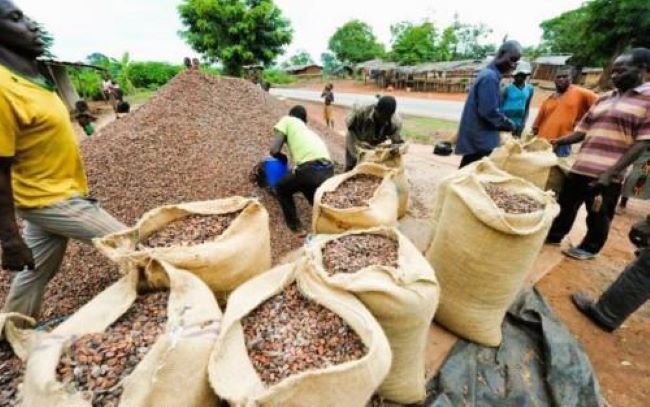
The organization also found that unregistered land is commonly treated as part of the national domain, a situation that disproportionately affects poorer rural populations living in forest regions where pressure linked to logging, mining, conservation and agricultural projects is particularly strong.
The CED noted that Cameroonian law provides limited protection for unregistered farms and plots through compensation payments when land is taken by the state. But the organization said these payments generally cover only crops or infrastructure and do not compensate for the value of the land itself.
According to the report, most of the land concerned can be allocated through various legal arrangements — including ownership titles, leases or exclusive occupation licenses — to logging companies, mining operators, livestock farmers, agricultural investors or the state, particularly within classified forest areas.
The CED attributed the situation mainly to two factors: the broad definition of “public purposes” under Cameroonian law and the lack of full legal recognition of customary land ownership as a property right.
As a result, the organization argued, holders of customary land rights do not benefit from the same protections as formal landowners, particularly regarding compensation at market value in cases of expropriation.
Source: Business in Cameroon