Featured
 The Cameroonian army must put its conscience to the test
  Who really pushed for the return of the Vice President of the Republic?
  When politics fails a nation, football and the Church become the battleground
  Biya has had his era; Cameroon must now be allowed to enter its next one
 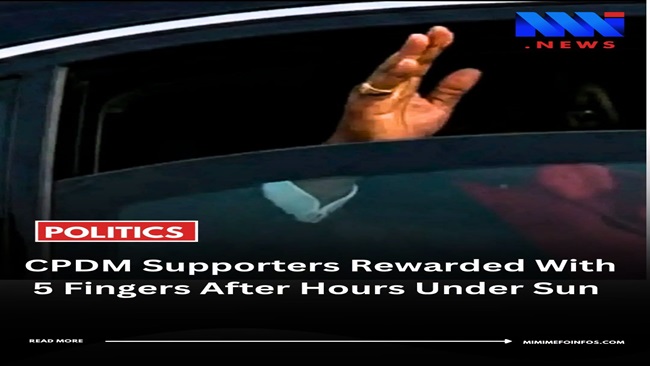 Biya’s hand: a source of glory and shame
Most Commented Posts
 4 Anglophone detainees killed in Yaounde
18 comments Chantal Biya says she will return to Cameroon if General Ivo Yenwo, Martin Belinga Eboutou and Ferdinand Ngoh Ngoh are sacked
13 comments The Anglophone Problem – When Facts don’t Lie
12 comments Anglophone Nationalism: Barrister Eyambe says “hidden plans are at work”
12 comments Largest wave of arrest by BIR in Bamenda
10 comments
Featured
-

Martinez Zogo Trial: questions over missing phone linked to Amougou Belinga
-

Revealed: Colonel Danwe admits ordering Martinez Zogo operation
-

Archbishop Nkea to battle decade of war with new peace Catechism
-

Southern Cameroons Crisis: 7 kidnapped by suspected Amba fighters in Bangourain
-

Southern Cameroons Crisis: 3 killed, 2 injured in bar shooting in Bamenda
-

US military nearing ‘breakdown’ amid sustained Iranian attacks
-

The Cameroonian army must put its conscience to the test
9, February 2026
How Cameroon pays the price for disrespecting contracts 0
by soter • Editorial, Headline News
Contracts are not threats to sovereignty. They are instruments of credibility.
A state that cannot keep its word cannot build an economy. A government that treats contracts as politics invites bankruptcy.
International tribunals ask only one question:
Did the State respect its obligations?
And increasingly, Cameroon is forced to answer:
No
Nkongho Felix Agbor (“Agbor Balla”)
Lawyer and Human Rights Advocate
In Cameroon, public authorities often behave as though contracts are optional documents — instruments that can be suspended, modified, or terminated at will, depending on political convenience or changes in leadership. At home, such decisions may appear cost-free. Officials feel untouchable, shielded by weak institutions, political influence, and a culture of impunity.
But beyond Cameroon’s borders lies a different reality: a global legal system where contracts are enforceable, states are accountable, and breaches are punished not by speeches, but by billions in damages.
Every time Cameroon fails to respect a contract or abrogates one without due process, it exposes itself to international arbitration, costly litigation, massive compensation awards, reputational damage, and long-term economic loss.
And the bill is paid not by ministers — but by citizens.
The International System Cameroon Cannot Escape
Most major state contracts especially in infrastructure, mining, energy, telecommunications, aviation, and public-private partnerships — include international dispute resolution clauses.
These typically refer disputes to institutions such as the International Centre for Settlement of Investment Disputes (ICSID), the International Chamber of Commerce (ICC), the Permanent Court of Arbitration (PCA), and the OHADA Common Court of Justice and Arbitration (CCJA).
Once Cameroon signs such contracts, it waives part of its sovereignty. It accepts that foreign tribunals — not Cameroonian authorities — will judge disputes.
There is no political protection at these forums.
No presidential decree.
No “high instructions”.
Only law. Evidence. And consequences.
Practical Cameroonian Examples: When the State Pays
1. The Antonio Conceição Case: Over 1 Billion FCFA
Perhaps the clearest recent example is the dismissal of football coach Antonio Conceição.
After leading the Indomitable Lions to third place at AFCON 2021, Conceição was dismissed without following contractual procedures. FIFA and later the Swiss Federal Tribunal ruled in his favour.
Cameroon was ordered to pay over 1.6 million euros — more than 1 billion FCFA.
The State eventually had to pay to avoid international sanctions.
This was not a football issue.
It was a contract law failure paid from public funds.
2. The Olembe Stadium and Magil: Over 15 Billion FCFA Frozen
The construction of the Olembe Sports Complex in Yaoundé has become a textbook case of how infrastructure contracts turn into financial disasters.
Following disputes with the contractor, Magil Construction, the matter went to international arbitration in Paris.
Cameroon was ordered to deposit more than 15 billion FCFA into an escrow account.
That is 15 billion francs blocked — not for hospitals, not for schools, not for roads but locked in a legal dispute.
3. The SGS Dispute – A Current Risk
Cameroon is currently facing a serious contractual crisis involving SGS, the Swiss multinational responsible for inspection and verification services linked to customs and trade.
SGS operates at the heart of Cameroon’s revenue system.
Recent administrative attempts to suspend or alter this contract without transparent legal process risk triggering international arbitration.
If this happens, Cameroon faces:
• Compensation claims
• Lost profit damages
• Years of interest
• Millions in legal fees
• Possible seizure of state assets abroad
To his credit, the Prime Minister has intervened to seek an institutional solution. This is welcome.
But the SGS episode illustrates a deeper problem:
in Cameroon, contracts are often treated politically first — and legally later.
At international level, SGS is not dealing with a ministry.
It is dealing with the Republic of Cameroon.
And the Republic cannot hide behind circulars.
The Dangerous Illusion of Domestic Power
Cameroonian officials often behave as if:
“What happens in Yaoundé stays in Yaoundé.”
This is false.
A contract signed in Yaoundé is enforceable in Paris, London, Washington, and The Hague.
A minister/Director may feel powerful locally.
But internationally, Cameroon is just another debtor.
Law Is Cheaper Than Arbitration
Good governance is cheaper than litigation.
Dialogue is cheaper than damages.
Due process is cheaper than seizure.
The paradox is brutal:
Cameroon spends more money fighting contracts than honouring them.
Conclusion: Sovereignty Without Law Is Poverty
Contracts are not threats to sovereignty.
They are instruments of credibility.
A state that cannot keep its word cannot build an economy.
A government that treats contracts as politics invites bankruptcy.
International tribunals ask only one question:
Did the State respect its obligations?
And increasingly, Cameroon is forced to answer:
No.
Written and edited by Barrister Agbor Balla