Featured
 Who really pushed for the return of the Vice President of the Republic?
  When politics fails a nation, football and the Church become the battleground
  Biya has had his era; Cameroon must now be allowed to enter its next one
  Biya’s hand: a source of glory and shame
  So, Cameroonians, what exactly do you want from President Biya?
Most Commented Posts
 4 Anglophone detainees killed in Yaounde
18 comments Chantal Biya says she will return to Cameroon if General Ivo Yenwo, Martin Belinga Eboutou and Ferdinand Ngoh Ngoh are sacked
13 comments The Anglophone Problem – When Facts don’t Lie
12 comments Anglophone Nationalism: Barrister Eyambe says “hidden plans are at work”
12 comments Largest wave of arrest by BIR in Bamenda
10 comments
Featured
-

Dangote refinery launches continent’s biggest IPO
-

Norway joins 11 other states to criminalize trade with West Bank settlements
-

Southern Cameroons Crisis: 3 civilians, one Amba fighter killed in Ekona
-
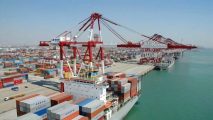
White Elephant: Kribi Port sinks to 395th globally after one of the sharpest drops in performance
-

President Putin says figures reflect ‘structural, deep, profound shifts’ in global economy
-

Dion Ngute reaffirms peace efforts amid fresh violence in Ambazonia
-

Yemen’s Houthis seize key island in Bab al-Mandab strait
1, August 2026
CPDM Crime Syndicate: 3 state-owned companies account for 93% of public enterprise debt 0
Three state-owned companies—SONARA, Camair-Co, and CAMTEL—account for nearly all of the direct domestic debt currently reported for Cameroon’s public enterprises, underscoring how a handful of companies dominate the government’s commercial-sector debt exposure.
According to data from the Autonomous Sinking Fund (CAA) analyzed by Investir au Cameroun, the three companies carried a combined CFA297.3 billion ($510 million) in direct domestic debt as of the end of June 2026, representing 93% of the CFA319.6 billion outstanding across public enterprises and establishments.
The figure does not include floating debt or the liabilities of the Cameroon Electricity Company (Socadel), which are still being assessed.
The reported debt stock was unchanged from May. However, it declined by 0.8% over three months and by 8.3% year over year. These changes apply only to direct domestic debt contracted by public entities and exclude other categories of liabilities tracked separately by the CAA.
SONARA Alone Represents Nearly 60% of the Total
With CFA191.3 billion in outstanding debt, the National Refining Company (SONARA) remains by far the country’s most indebted public enterprise in this category, accounting for 59.9% of the total portfolio.
The CAA breaks down SONARA’s debt into CFA162.4 billion in bank loans and CFA28.8 billion owed to suppliers. The rounded figures add up to CFA191.2 billion, leaving a CFA100 million difference from the published total, likely due to rounding in the report.
Despite remaining the largest debtor, SONARA has reduced its outstanding debt by CFA8.2 billion since December 2025, when it stood at CFA199.5 billion. The 4.1% decline comes as the company continues to seek financing for the rehabilitation of its refinery, whose operations were halted after a fire in May 2019.
Camair-Co ranks second with CFA62.4 billion, equal to 19.5% of the reported debt stock. Its outstanding debt has remained unchanged since December 2025.
CAMTEL completes the top three with CFA43.6 billion, or 13.6% of the total. The state-owned telecommunications operator reduced its domestic debt by CFA5.9 billion, or 11.9%, compared with the CFA49.5 billion recorded at the end of June 2025.
All other public entities combined account for just CFA22.3 billion, or 7% of the portfolio. The Cameroon Development Corporation carries CFA9.4 billion in debt, followed by FEICOM with CFA7.6 billion, Camwater with CFA5.2 billion, and the Port Authority of Douala with CFA100 million.
Floating Debt Adds Another CFA156.5 Billion
The 93% concentration does not include the floating debt of public enterprises, which the CAA tracks separately.
That category totaled CFA156.5 billion at the end of June 2026, down 19.5% from a year earlier.
Tax and customs obligations make up the largest share at 68.6%, or about CFA107.4 billion. Commercial debt accounts for 21.3%, or CFA33.3 billion. Academic debt represents about CFA13 billion, or 8.3% of the total, while social security obligations amount to CFA2.8 billion, or 1.8%.
The breakdown shows that the liabilities of public enterprises extend beyond bank borrowing and supplier debt to include unpaid taxes, customs duties, social contributions, and other obligations accumulated through day-to-day operations.
Socadel Could Significantly Change the Debt Picture
The CAA notes that the CFA319.6 billion reported for direct domestic debt does not yet include the liabilities of Socadel, created following the renationalization of former power utility Eneo.
The assessment of those liabilities is still underway, based on a preliminary estimate of roughly CFA800 billion.
Taken on its own, that indicative amount is about two and a half times larger than the entire direct domestic debt currently reported for public enterprises. However, it cannot be added directly to the CFA319.6 billion until the CAA finalizes the assessment and determines how the liabilities should be classified, including bank debt, supplier obligations, tax liabilities, social contributions, and any overlapping claims involving other public entities.
As a result, while SONARA, Camair-Co, and CAMTEL currently account for 93% of the direct domestic debt officially reported by the CAA, that concentration reflects only the published portfolio. Once Socadel’s liabilities are incorporated, the financial profile of Cameroon’s state-owned commercial sector could change substantially.
Source: Business in Cameroon