Featured
 Mr Biya, the time has come for you to step down with dignity
 Unity Palace needs a new idea and a new head of state
 Martinez Zogo Affair: Biya must clean house and make way for a new generation
 Ambazonia People’s Liberation Authority explains motives for the new transition
 A year after Biya’s disputed re-election, CPDM remains without a timetable for next year’s polls.
Most Commented Posts
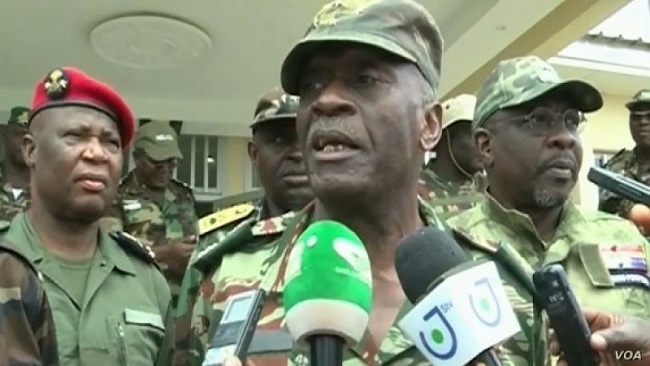 4 Anglophone detainees killed in Yaounde
18 comments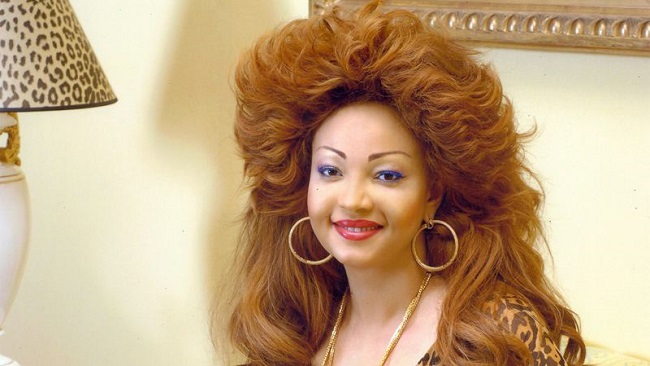 Chantal Biya says she will return to Cameroon if General Ivo Yenwo, Martin Belinga Eboutou and Ferdinand Ngoh Ngoh are sacked
13 comments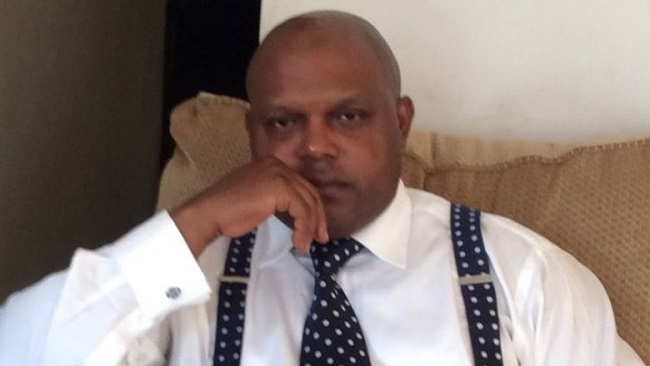 The Anglophone Problem – When Facts don’t Lie
12 comments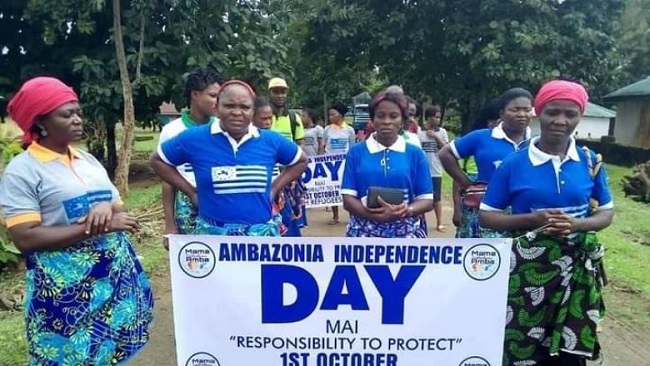 Anglophone Nationalism: Barrister Eyambe says “hidden plans are at work”
12 comments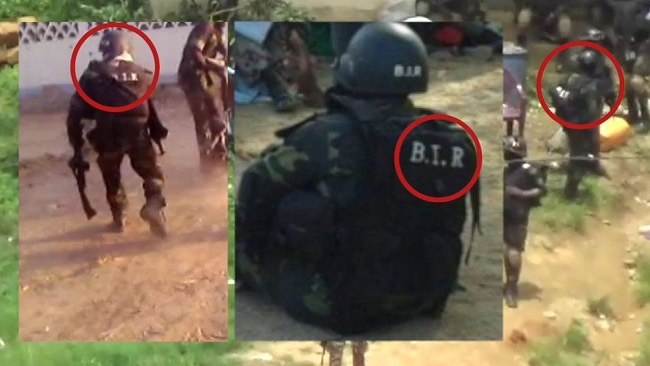 Largest wave of arrest by BIR in Bamenda
10 comments
Featured
-
Edgar Alain Mebe Ngo’o: ex- defense minister blessed with a sudden procedural adjournment
-

Mr Biya, the time has come for you to step down with dignity
-

Harry Kane ends England’s 25-year Ballon d’Or drought
-

Cameroon’s sports betting tax revenue remains unclear
-

Revealed: 2 Franklin Templeton Funds hold CFAF 2 billion in Cameroon bonds
-

Brazil’s Lula beats odds and seals re-election, rival Bolsonaro demands annulment
-
Top officials from Saudi Arabia, Pakistan, Turkey due in Iran for security talks
28, October 2026
Mr Biya, the time has come for you to step down with dignity 0
by soter • Editorial, Headline News, Politics
When promises of change yield to silence, when the post of vice president is created but left vacant and when a nation is kept guessing about its future, the question is no longer simply who governs Cameroon, but how long the country must wait for a new chapter to begin.
Frankly speaking, there comes a moment in the life of every leader when the greatest act of patriotism is no longer to hold on to power, but to know when to let it go. For Cameroon, that moment demands urgent and honest reflection.
Biya, at 93, remains the central figure in a political system that has revolved around him for decades. His longevity in power is extraordinary, but longevity alone is not a measure of leadership. History does not ultimately judge leaders by the number of years they occupy the presidential palace. It judges them by what they build, what they leave behind and whether their departure opens the door to a more hopeful future.
Today, Cameroon stands before an uncomfortable question: how long must a nation continue to wait for change while the machinery of government appears trapped in uncertainty? Biya promises change. Yet the expected reshuffle does not come. A vice-presidential post is created, but the office remains vacant. At the highest levels of government, uncertainty persists where clarity is needed and speculation flourishes where decisive leadership should prevail.These are not merely administrative questions. They strike at the heart of national confidence.
A country cannot indefinitely be governed by anticipation. Citizens cannot build their future around rumours of appointments, whispers of succession and endless speculation about what their president might do next. Government is not a theatre in which the public must continually guess the next act. It is a solemn responsibility to provide direction, stability, accountability and hope. Cameroon deserves a government that acts, not a nation that waits.
Mr. Biya, your political journey has spanned generations. You have witnessed profound changes in the world, in Africa and within Cameroon itself. You have occupied the highest office of the Republic for more than four decades, shaping the country’s institutions and political culture in ways that will be debated long after your presidency ends. But a question of conscience must now be asked: what more can be achieved by prolonging a political era that has already lasted so long?
Leadership requires more than the ability to remain in office. It requires the wisdom to recognise when personal authority has begun to overshadow institutional renewal. It requires the courage to understand that a nation must be greater than any individual, however powerful, experienced or historically significant.
No head of state owns a republic. No political office is a personal inheritance. The state belongs to its citizens and the future belongs to generations who must be given the opportunity to shape it. Cameroon is a country of talented young people, hardworking families, courageous professionals, enterprising farmers and ambitious entrepreneurs. Many yearn for opportunities, dependable public institutions, better services and a political environment in which merit and ideas can flourish. They deserve more than the perpetual question of who will occupy the next office or when the next reshuffle will happen. They deserve a credible vision of the future, backed by action.
A nation cannot keep its young people suspended between expectation and disappointment while the political clock seems reluctant to move. The creation of a vice-presidential office, followed by the continued absence of an occupant, carries a symbolism that should not be ignored.
At a time when questions of succession, continuity and institutional preparedness are of national importance, an empty office invites more questions than it answers. Who is expected to provide continuity? What arrangements are being made to ensure a smooth transfer of authority? How can citizens be reassured that the country’s future does not depend indefinitely on the decisions of one individual? These are legitimate questions in any republic.
A vice-presidency, like any other constitutional office, must serve the country rather than merely exist on paper. If such an institution is created, the public deserves clarity about its purpose, its responsibilities and the process by which it will be filled. The same principle applies to a government reshuffle. Appointments matter, but the deeper issue is whether government is capable of renewing itself, responding to citizens’ needs and earning public trust. The problem is not simply the absence of a name on an office door. It is the uncertainty that grows when institutions appear unable to communicate a clear and credible direction.
Cameroon needs certainty rooted in strong institutions, not reassurance dependent on one man’s next announcement.
Mr. Biya, stepping down is not necessarily an admission of failure. Sometimes, it is the final and most consequential demonstration of wisdom. There is dignity in recognising that leadership has its season. There is honour in leaving office voluntarily, peacefully and constitutionally. There is statesmanship in creating the conditions for a successor to emerge without fear, confusion or institutional disruption.
Biya, you now have an opportunity to make your departure a defining moment in Cameroon’s history. Rather than allowing the question of succession to become a source of prolonged anxiety, you could help transform it into a moment of national renewal. Rather than leaving the country to speculate about the future, you could provide clarity. Rather than allowing the end of your presidency to be determined by uncertainty, you could shape a peaceful and orderly transition. That would be a legacy worth protecting.
The argument for stepping down is not that age alone automatically disqualifies a person from public service. It is that no individual, regardless of age, experience or political standing, should become indispensable to the functioning of a nation. A healthy republic must be capable of renewal. Its institutions must be stronger than the personalities who lead them. The most enduring leaders understand that the measure of their success is not whether their country can survive without them while they remain in office, but whether they have prepared it to thrive after they leave.
Mr. Biya, you do not need to remain in power indefinitely to preserve your place in history. You can serve your country by making room for the next generation of leadership. You can choose a departure defined by dignity rather than prolonged uncertainty, by national interest rather than personal attachment to office and by the confidence that Cameroon is capable of moving forward.
A country of Cameroon’s size, diversity and potential cannot afford to make its political future revolve indefinitely around a single personality. That nation is bigger than Biya. Its Anglophone and Francophone communities, its regions, its young and old, its citizens at home and abroad all have a stake in the future of the Republic. Their aspirations may differ, but they share a fundamental interest in a country whose institutions are stable, whose leadership is accountable and whose future is not permanently clouded by uncertainty.
Cameroon needs renewed public confidence. It needs institutions that command respect. It needs credible avenues for political competition, meaningful dialogue and peaceful change. It needs a future in which the peaceful transfer of power is not treated as an extraordinary event but as a normal feature of democratic life.
A voluntary departure by the so-called head of state, conducted in accordance with the Constitution and accompanied by credible safeguards for a peaceful transition, could help establish an important precedent: that power is exercised in trust for the people, not held indefinitely as a personal possession.
Such a decision would not, by itself, resolve all of Cameroon’s challenges. The next leadership would still face the difficult work of strengthening institutions, addressing grievances, improving public services and rebuilding confidence. Nor would a change of president automatically guarantee better governance. But political renewal must begin somewhere. And when one leader has occupied the presidency for more than four decades, making room for a new chapter is a legitimate and necessary national conversation.
The question is not whether Cameroon has capable people beyond the present administration. It does. The question is whether the political system will allow renewal to take place peacefully, transparently and credibly.
Mr. Paul Biya, history offers leaders a choice about how they wish to be remembered. You can continue to preside over a nation anxiously waiting for answers about its political future. Or you can take the initiative and help bring that uncertainty to an end.
Mr. Biya, you can leave Cameroon guessing about the next reshuffle, the next appointment and the next stage of succession. Or you can demonstrate the statesmanship required to ensure that the future of Cameroon does not remain hostage to unanswered questions.
Mr. Biya, you can allow the end of your political era to become a prolonged national dilemma. Or you can turn it into an orderly transition that strengthens the Republic and reassures its citizens. The choice is yours, but the consequences extend far beyond you.
Cameroonians are not asking for the impossible. They are asking for leadership that recognises the importance of time, the necessity of institutional renewal and the dignity of letting go. A head of state that voluntarily creates space for new leadership does not surrender his country’s future. He helps secure it. A leader who leaves peacefully and constitutionally can offer the nation something more valuable than another promise: a demonstration that the Republic is capable of moving beyond the person who has dominated its politics for so long. Mr. Paul Biya, the time has come to consider stepping down with dignity.
Let your final act in office be one that puts Cameroon first. Let it be a decision that reduces uncertainty, strengthens constitutional institutions and gives the next generation a genuine opportunity to serve. Let your legacy be measured not merely by how long you remained at the helm, but by whether you had the courage to prepare the country for life beyond your presidency.
And when the time comes to choose between holding on to power and opening the door to national renewal, history is often kinder to those who understand that the highest form of leadership is knowing when to leave. Cameroon belongs to its people. Its future must not wait forever.
The moment for a dignified departure is not a moment to fear. It is an opportunity to place the nation above the individual, the Republic above the presidency, and the future above the past.
By Soter Tarh Agbaw-Ebai