Featured
 Martinez Zogo Affair: Biya must clean house and make way for a new generation
  Ambazonia People’s Liberation Authority explains motives for the new transition
  A year after Biya’s disputed re-election, CPDM remains without a timetable for next year’s polls.
 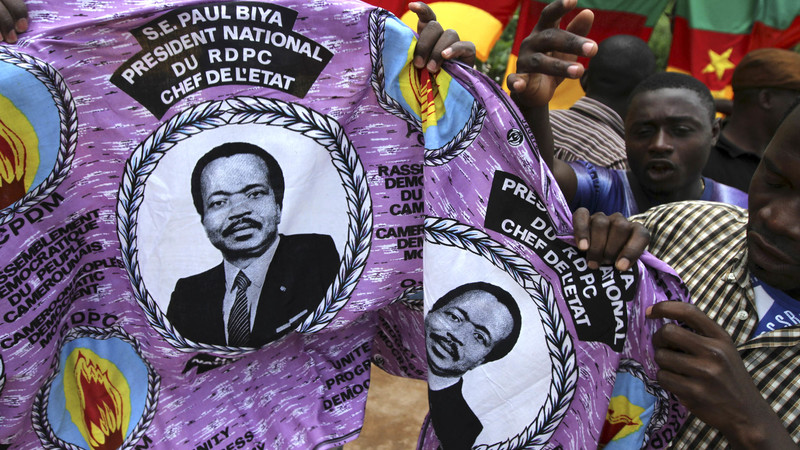 Ruling CPDM Party: When a political message runs out of the road
  Dion Ngute in Buea: Peace cannot be a slogan; Prime Minister must go beyond dialogue
Most Commented Posts
 4 Anglophone detainees killed in Yaounde
18 comments Chantal Biya says she will return to Cameroon if General Ivo Yenwo, Martin Belinga Eboutou and Ferdinand Ngoh Ngoh are sacked
13 comments The Anglophone Problem – When Facts don’t Lie
12 comments Anglophone Nationalism: Barrister Eyambe says “hidden plans are at work”
12 comments Largest wave of arrest by BIR in Bamenda
10 comments
Featured
-

Formula 1: Hamilton sets sights on racing in African grand prix
-

Yaoundé: anti-corruption agency calls for stronger powers after 20 years of limited progress
-

Martinez Zogo Affair: Biya must clean house and make way for a new generation
-

Biya’s health crisis is starting to alarm investors
-

Cameroon’s Eurobond yields hit record high after Fitch downgrade
-

World Bank Group launches first digital strategy to expand access and create jobs
-

Biya regime raises stake in Sonara to 98%, diluting TotalEnergies to 0.42%
3, September 2026
Cameroon’s CEMAC treasury debt tops CFA 2 trillion 0
Cameroon’s outstanding Treasury securities on the CEMAC public debt market exceeded CFA2 trillion at the end of July 2026, but their annual growth slowed sharply after two years of much faster increases.
The stock reached CFA2.061 trillion as of July 31, up CFA80.4 billion, or 4.1%, from CFA1.981 trillion a year earlier, according to monthly statistics published by the Bank of Central African States (BEAC).
Cameroon had the third-largest stock of outstanding government securities in the regional market. Gabon ranked first with CFA3.424 trillion, followed by Congo with CFA3.041 trillion. Cameroon accounted for 19.5% of the CFA10.561 trillion in government securities outstanding across CEMAC’s six member countries.
Annual growth slows to 4.1%
The increase between July 2025 and July 2026 represents a significant slowdown from the previous two years. Cameroon’s outstanding securities rose by CFA293 billion, or 23.7%, between July 2023 and July 2024. The increase then reached CFA452.2 billion, or 29.6%, between July 2024 and July 2025.
The latest annual increase fell to CFA80.4 billion. The slowdown does not mean that the stock has started to decline, however. It rose by CFA52.1 billion in July 2026 alone, from CFA2.009 trillion in June to CFA2.061 trillion, an increase of 2.59% in one month.
Outstanding securities also differ from the total amount of debt issued by the Treasury over a given period. The figure represents securities that remain unpaid at a specific date and reflects both new issuance and repayments. The outstanding stock alone therefore cannot show whether slower annual growth resulted from lower fundraising, faster repayments or a combination of the two.
Borrowing costs decline from a year earlier
Higher financing costs do not, on their own, explain the slower increase either. The average cost of Cameroon’s Treasury bills, known as BTA, fell to 6.97% in July 2026 from 7.10% a year earlier. The average cost of Treasury bonds, or OTA, declined more sharply, to 7.36% from 8.29%.
Borrowing nevertheless remains considerably more expensive than during the earlier development of the market. In June 2018, Cameroon’s average BTA cost stood at 2.81%, compared with nearly 7% in July 2026.
Bonds account for more than two-thirds of the stock
Of the CFA2.061 trillion in outstanding Cameroonian securities, Treasury bonds accounted for CFA1.394 trillion, or 67.6%. Treasury bills, which mature within one year, represented the remaining CFA666.9 billion, or 32.4%.
Primary dealers held CFA1.433 trillion in Cameroonian securities, equivalent to 69.5% of the total, while institutional investors held CFA562.1 billion, or 27.3%. Investors based in Cameroon owned CFA1.711 trillion, about 83% of the outstanding stock.
The BEAC-organized market has become a major source of state financing, although it is not Cameroon’s only regional funding channel. The government also raises capital through the Central African Stock Exchange (BVMAC). In 2023, it secured CFA176.3 billion there through a multi-tranche bond issue.
Source: Business in Cameroon