Featured
 World Bank Group statement on the conflict in the Middle East
  Anglophone Vice President: a deeply counterproductive idea
  Ambazonia Crisis: latest on Sisiku Ayuk Tabe’s arrest, trial and conviction
 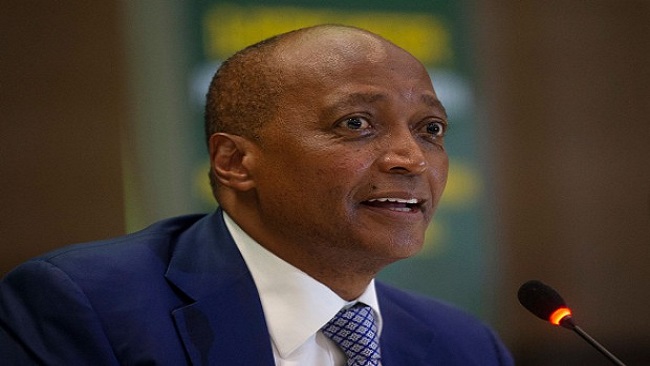 2025 Africa Cup of Nations: Patrice Motsepe should go and go now!
 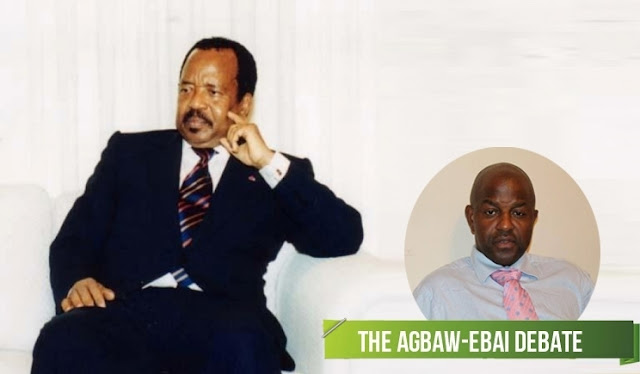 Changes in the Senate and National Assembly: who becomes next head of state?
Most Commented Posts
 4 Anglophone detainees killed in Yaounde
18 comments Chantal Biya says she will return to Cameroon if General Ivo Yenwo, Martin Belinga Eboutou and Ferdinand Ngoh Ngoh are sacked
13 comments The Anglophone Problem – When Facts don’t Lie
12 comments Anglophone Nationalism: Barrister Eyambe says “hidden plans are at work”
12 comments Largest wave of arrest by BIR in Bamenda
10 comments
Featured
-

Biya regime advances talks with South Korea on Yaoundé emergency care project
-
Bamenda Airport passes test flight ahead of Papal Visit
-
Archbishop of Canterbury to visit Cameroon and Ghana
-
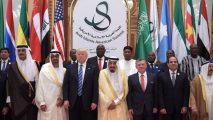
Arab states hosting US bases forfeit sovereignty, can’t challenge Iran’s self-defense
-
Iran weighing withdrawal from NPT after US-Israel attacks on nuclear sites
-

Etoudi fast-tracks urban upgrades as WTO Summit opens, Papal visit looms
-
13 Cameroonians selected for the 2026 cohort of Tony Elumelu Foundation Program
29, March 2026
Arab states hosting US bases forfeit sovereignty, can’t challenge Iran’s self-defense 0
Arab states in the Persian Gulf region hosting permanent US military bases no longer meet the legal definition of fully sovereign nations and therefore have no standing to object to Iran’s right to defend itself against American aggression, says a lawyer.
Reza Nasri, an international lawyer and foreign policy analyst, citing black-letter international law, in a post on X, said countries including Saudi Arabia, Qatar, Bahrain, Kuwait, the United Arab Emirates, and Jordan have effectively surrendered a core attribute of statehood: the exclusive capacity to enter relations with other states.
Nasri based his argument on Article 1 of the 1933 Montevideo Convention on the Rights and Duties of States, which defines a sovereign state by four cumulative criteria: a permanent population, a defined territory, a government, and — crucially — “the capacity to enter into relations with other States.”
Drawing on landmark international arbitrations such as the Island of Palmas case (1928) and the Lotus case (1927), Nasri emphasized that this capacity requires exclusive and independent authority over territory and external affairs, free from subordination to any other external power.
According to Nasri, the permanent presence of US military bases under Status of Forces Agreements (SOFAs) systematically strips host Arab states of that exclusivity.
These agreements typically grant US forces extraterritorial immunity, exclusive operational command, and control over significant areas of sovereign territory.
“Local courts cannot prosecute US personnel,” Nasri noted. “Local legislatures cannot inspect bases. Host governments cannot unilaterally order eviction without risking severe economic or military retaliation.”
He further said that CIA operational centers embedded within or alongside these bases conduct intelligence, surveillance, rendition, and lethal activities beyond any effective Arab oversight.
“A state that cannot control who bears arms on its soil, who conducts intelligence operations, or who decides when foreign forces depart has, by definition, surrendered the exclusivity of authority required by Montevideo,” Nasri stated.
The analyst further remarked that these states have become, in legal terms, “semi-sovereign protectorates, leased territory, or modern vassals in all but name.”
Having voluntarily or under duress forsaken the fourth Montevideo criterion, they cannot invoke the full protections of sovereign equality under the UN Charter (Article 2(1)) or the principle of non-intervention (Article 2(7)) — particularly against the very power whose bases they host, he asserted.
Nasri asserted that Arab host states lack standing to object when Iran exercises its inherent right of self-defense against American aggression emanating from bases on Arab soil.
“Symbols of statehood such as flags, UN membership, and national anthems confer no genuine sovereignty when the fundamental attributes of independence have been surrendered,” he said. “Least of all the standing to object when Iran exercises its inherent right of self-defense against American aggression emanating from bases on Arab soil.”
His remarks come as tensions continue to rise in the Persian Gulf region over the complicity of some Arab states in the American-Israeli war of aggression against Iran.
Iranian armed forces have in recent weeks carried out waves of retaliatory missile and drone strikes targeting American bases and assets across the region.
Iran had previously warned the regional countries against allowing their soil or airspace to be used for any act of aggression against the Islamic Republic.
Source: Press TV