
31, August 2018
Southern Cameroons Crisis: Schools Reopen, but Without Safety Guarantee 0
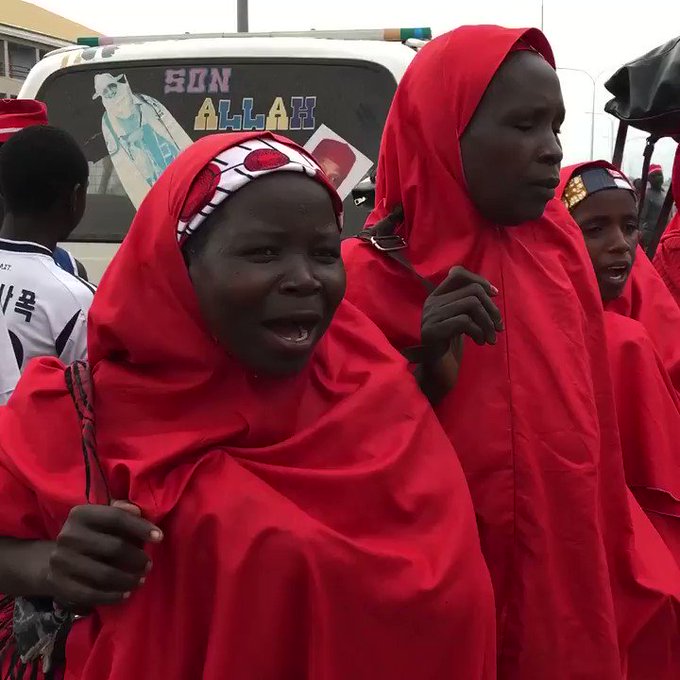
With Cameroon’s school year set to resume September 3, a group of students and their parents arrived Wednesday at the Government Bilingual High School in the northwestern town of Batibo.
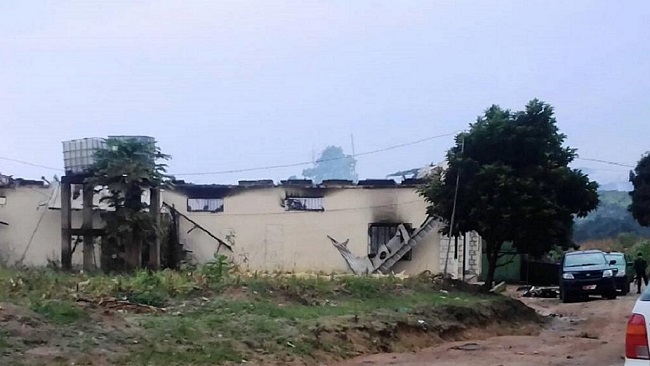
Deserted for more than a year, the school is in a terrible state — infested with insects, and with grass growing through the floor.

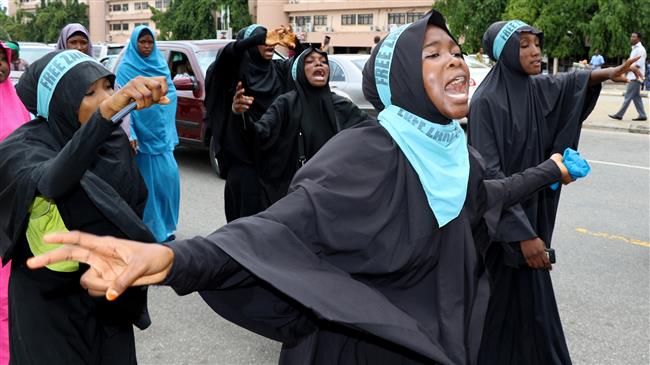
Hundreds of schools in the area have been abandoned since armed separatists attacked schools and other public buildings two years ago.
The insurgents, who are fighting for an independent, English-speaking state, saw the schools as legitimate targets because they forced the French language on locals.
The violence saw thousands of students either move to other school districts or, more commonly, stay home.
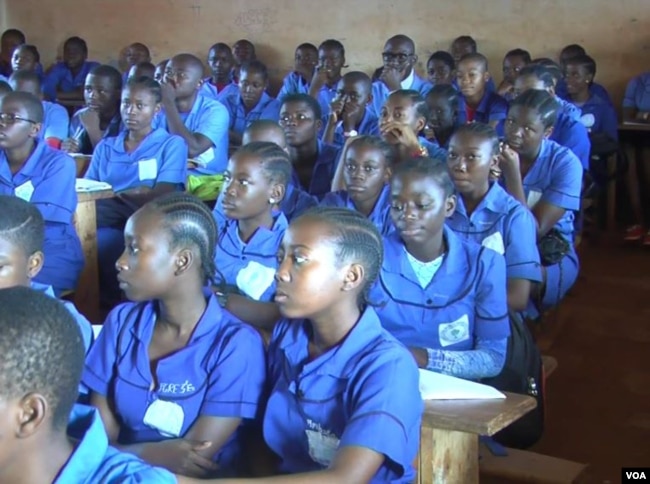
Grace Nembo, 42, was not deterred. She came to ensure her 13-year-old son gets an education. She said it was a parent’s duty “to see his or her own child educated so that that child can be edified to be able to face the society and the world at large.”
The separatists had demanded that schools remain closed until all government troops left the English-speaking northwest and southwest provinces.
Warning to parents
This week, the separatists announced on social media that parents could begin sending their children back to area schools if they wished. However, the message warned that the separatists were still fighting Cameroon’s military and could not guarantee school safety.
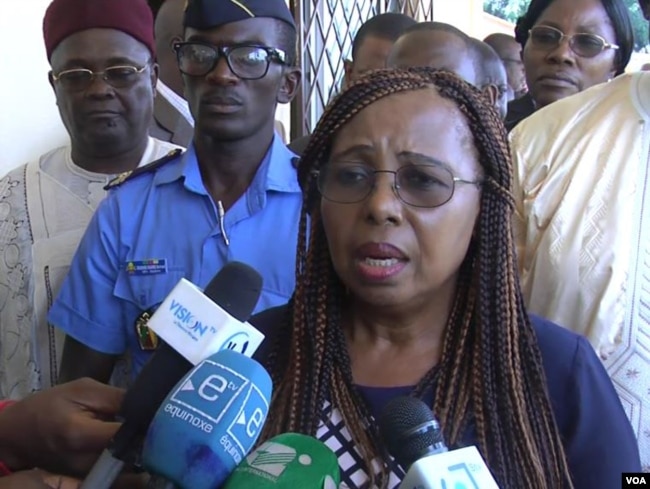
The governor of the northwest region, Deben Tchoffo, sought to assure parents that security measures were in place to protect their children.
“I still give firm instructions to the administrative authorities, to security services, to take their responsibilities to accompany the resumption of classes,” Tchoffo said.
Peter Ngah escaped the fighting in Batibo and said he was not confident his child would be safe there. He will instead send his son to an English school in the French-speaking town of Bafoussam, where there is more security.
“I am ready for my children to go to school, but at the same time, we are very skeptical following the security situation,” he said.
The United Nations says more than 200,000 people have been displaced by the violence in Cameroon’s English-speaking regions. A majority of them are school-age children.
VOA

















31, August 2018
Dozens killed after days of clashes near Libyan capital 0
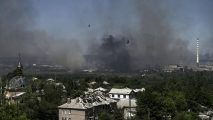
Violent clashes resumed late Thursday afternoon between rival militias south of the Libyan capital, just hours after a truce was announced to end fighting that has killed almost 30 people since Monday.
The fighting broke out on Monday in suburbs south of Tripoli and continued into Wednesday evening after a truce collapsed, despite an appeal by the United Nations for calm.
The clashes had paused on Thursday after a ceasefire agreement announced by officials from western areas, but by late afternoon the hostilities had resumed. Residents in the Khellat al-Ferjan area reported the use of heavy weapons and rifle fire.
Two teenagers were killed when a rocket hit a house in the Sebia district, according to a local official and AFP journalists on the scene. The health ministry had earlier said at least 27 people were killed and 91 were wounded in this week’s fighting, most of them civilians.
Fayez al-Sarraj, the leader of the internationally recognised Government of National Accord (GNA), has tasked forces from western and central regions of Libya with ensuring the rivals adhere to the ceasefire.
These forces are meant to guarantee the withdrawal of the two rival camps from front lines and ensure normal life returns in the districts affected by the fighting.
To be ‘held accountable’
The proposed pacifying forces consist mainly of powerful armed groups from the cities of Misrata and Zintan in the west, which are technically under the GNA’s defence ministry.
Under the orders of Sarraj, who heads the Libyan army, these military units will be allowed to operate in the capital and its environs only until September 30, when they must leave.
The Misrata and Zintan militias controlled the Libyan capital from the fall of dictator Muammar Ghadhafi in 2011 until 2014, when a coalition of militias mainly from Misrata seized the city. This week’s fighting has pitted Tripoli militias loyal to the GNA against the so-called 7th Brigade.
This unit is from the town of Tarhuna southeast of the capital and is supposed to operate under the GNA’s defence ministry. In a televised speech, Sarraj said on Thursday that the 7th Brigade had been “dissolved” since April, before calling on the rival camps to respect the ceasefire.
In a joint statement, the embassies of Britain, France, Italy and the United States on Thursday said they were “deeply concerned about the recent clashes in and around Tripoli that are destabilising the situation”.
“Pursuing political aims through violence will only further exacerbate the suffering of the population of Libya, and threaten broader stability”, the statement said. “Those who undermine Libya’s peace, security and stability will be held accountable.”
Separately on Thursday, the UN’s refugee agency said it had helped earlier in the week to evacuate hundreds of migrants held in a detention centre close to where clashes were raging.
Some 300 migrants mainly from Eritrea, Ethiopia and Somalia were transferred Tuesday to the capital’s Abu Salim detention centre, “which is in a relatively safer location where international organisations can provide aid to them”, the United Nations High Commissioner for Refugees said.
The Libyan capital has been at the centre of a battle for influence between armed groups since Kadhafi’s fall. Successive transitional authorities, including the GNA, have been unable to form a functioning army or regular security forces and have been forced to rely on militias to keep the city safe. In mid-2017, pro-GNA militias neutralised several rival groups in Tripoli. Since then, clashes have been rare.
(AFP)