
1, July 2018
Boyo villagers tell of Francophone forces’ reprisal killings after restoration’ deadly attack on police officer 0
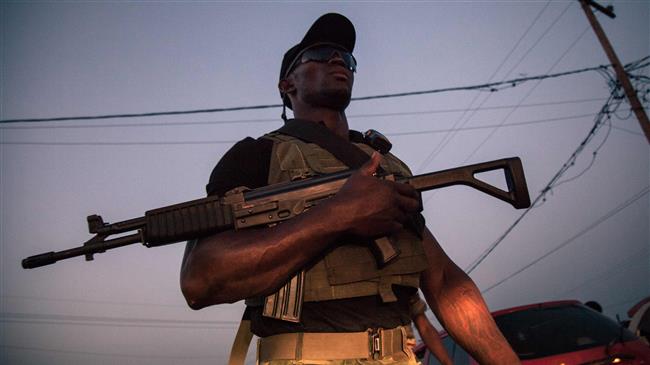
Following the crisis that has rocked Southern Cameroons and the solid resistance from Ambazonian Restoration Forces, the Biya government has reportedly stepped up its excessive use of military might to crush the self defense actions by the English speaking communities. Yaoundé has consistently rejected calls for genuine dialogue and the 85 year old Biya has ordered another massive deployment of French Cameroun soldiers to Southern Cameroons.
This weekend has seen nearly all the villages along the stretch of road linking Fundong and Bamenda deserted. Cameroon Concord News correspondent in the Bamenda County noted that Southern Cameroonians in the Northern Zone have escaped into the bushes anticipating a military onslaught being planned by government forces in retaliation for the killing of a police officer earlier this week. The said police officer was allegedly arrested by an unknown group of Ambazonian Resistance Forces three weeks ago. His badly mutilated body was found along the Fundong -Njinikom road a day after Cameroon government troops shot and killed a family man whose name we got as Titus at his home in Boyui.
A native of the area told this reporter that the late Titus was gun down in front of his wife and children. We understand that military action is already going on at Baingo, with soldiers forcing passengers out of cars, and asking them to undress themselves and roll over in mud, humiliating them in an unthinkable pattern. Our informant in Baingo has also confirmed the killing of a lady late yesterday.
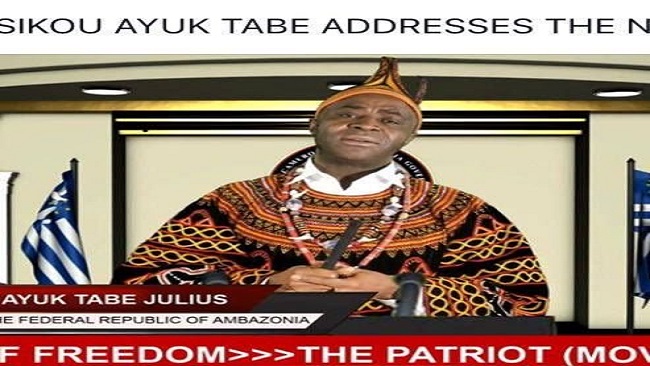
Elsewhere in Fundong, a CPDM Councilor and business tycoon, Njvua Ignatius was killed by members of the Southern Cameroons Restoration Forces. The pro Biya comedian was an outspoken and diehard supporter of the Yaoundé regime and noted for defying orders given by the Interim Government of the Federal Republic of Ambazonia.
A prominent acolyte of the Yaoundé regime was heard murmuring privately in Bamenda that the collapse of the central authority in Southern Cameroons is an indication that President Biya is no longer the man in charge. Last week, footage of a video emerged on social media showing Francophone army soldiers firing from a machine gun into homes without any visible threat to their security.
From the nation’s capital in Yaoundé, the political situation appear to be going well for the Biya Francophone regime that has deployed approximately 35,000 army soldiers in Southern Cameroons and has destroyed more than 72 Southern Cameroons towns and villages.
But the view deep inside the Federal Republic of Ambazonia tells a different story as some officials and Southern Cameroons opinion leaders recently told Senator Peter Mafany Musonge. The complete absence of a genuine political process to accompany the military onslaught going on in Southern Cameroons is instead driving all Ambazonian communities including Anglophone CPDM militants to consider allying with the Interim Government of the Federal Republic of Ambazonia.
By Staffman Ntam Charles Ngeh in Bonn
Germany






















2, July 2018
Cameroon Accelerating Toward Armed Conflict 0
The House Foreign Affairs subcommittee on Africa, Global Health, Global Human Rights, and International Organizations met on Wednesday to discuss challenges in the Republic of Cameroon. Over the past year, the relationship between Cameroon’s government and the country’s minority Anglophone community has become increasingly violent, accelerating into armed conflict.
Hans De Marie Heungoup, a senior analyst at the International Crisis Group, called conflict in the Anglophone regions “the biggest security threat to Cameroon stability, which if left unaddressed could turn into civil war as has occurred in other African countries,” in a statement issued to the subcommittee.
The roots of the current conflict go back to Cameroon’s achieving independence almost 60 years ago.
Prior to independence, France and the United Kingdom colonized the territory. French Cameroon became independent in 1960, and one year later part of British-controlled Cameroon joined in a referendum overseen by the United Nations.
Since that referendum, the Anglophone community in Cameroon has felt increasingly marginalized. Initially, political power between the Anglophone and Francophone regions of Cameroon was balanced in a federal system. In the years following independence and unification, however, Cameroon moved toward a unitary, rather than a federal model, thereby limiting political autonomy for the minority Anglophone community.
The political system also provides for a strong executive. In 2008 constitutional amendments abolished term limits and granted the president immunity from prosecution after leaving office, resulting in protests. President Paul Biya, who has been in office since 1982, has concentrated power in the French-speaking part of Cameroon. His political party, the Cameroon People’s Democratic Movement, controls most of the seats in the National Assembly and the Senate.
The English-speaking community also feels marginalized economically. The government tends to invest more in projects in French-speaking regions, as opposed to Anglophone areas. For example, the 2017 public investment budget allocated $225 million for projects in the Francophone South region, while the Anglophone North West and South West regions were given just over $150 million combined.
The current crisis began in late 2016, when lawyers and teachers in the Anglophone regions protested the appointment of French-speaking judges and teachers who lacked familiarity with British customs in the Anglophone parts of Cameroon. Negotiations with the government collapsed, spurring a crackdown that included cutting internet access in English-speaking regions and prosecuting leading activists.
Protests reignited in late 2017, and on Oct. 1, the anniversary of the reunification of Francophone and part of Anglophone Cameroon, secessionists proclaimed an independent state called Ambazonia.
The International Crisis Group reported that “defence and security forces responded with disproportionate force, leading to at least 40 deaths and over 100 injured protesters between 28 September and 2 October.” Cameroon security forces also “arrested hundreds of people without warrant, including in their homes” and “made use of torture and inhuman and degrading treatment.”
The report adds that the violence of September and October 2017 “opened up a rift between the government and the population, exacerbating the climate of mistrust and making the idea of secession more attractive.”
Christopher Fomunyoh, a senior associate and regional director for Central and West Africa programs at the National Democratic Institute, told the Free Beacon that support for secession has increased over the past two years “in large part because of the manner in which this crisis has been managed.”
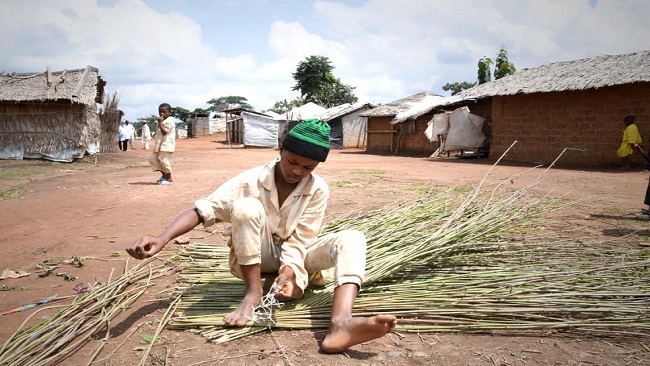
In the past eight months, over one hundred secessionists and civilians have been killed by security forces, and hundreds of others have been arrested. Rebels have reportedly killed at least 80 soldiers in the past year and have tortured local officials and government supporters. The U.N. says more than 160,000 people have been displaced within Cameroon since 2016, and over 20,000 refugees had fled to Nigeria by the end of March.
Earlier this month, BBC News released video depicting violations of human rights, primarily by security forces. A clip from April shows soldiers setting fire to a house in Azi, a village in the Anglophone South West region. The soldiers’ uniforms were consistent with those worn by Cameroon’s elite Rapid Intervention Battalion, although a government official claimed that separatists are able to obtain military uniforms and commit violent acts in order to blame the government.
Fomunyoh thinks that if a transparent referendum or consultative process took place in Anglophone Cameroon, then “the vast majority of Anglophones today would say that based on the grievances of the past plus the manner in which this government has managed this crisis in the past two years, there is no reason for them to be part of the Republic of Cameroon.”
If the government continues to insist on a violent crackdown and refuses dialogue, Fomunyoh warns, “the potential for this crisis to worsen is extremely high” because of “long pent-up frustrations and grievances that are legitimate and need to be properly addressed.”
Source: The Washington Beacon