
28, June 2018
Ambazonia Crisis has brought Cameroon to the brink of civil war 0
Cameroon’s governance and security problems have historically attracted little outside attention. But this seems likely to change, for two reasons. The first is the growing political crisis in the Central African nation’s English-speaking region. The second is a presidential election scheduled for October 2018.
Roughly 20% of the country’s population of 24.6 million people are Anglophone. The majority are Francophone. The unfair domination of French-speaking politicians in government has long been the source of conflict.
Activists in the country’s Anglophone western regions are protesting their forced assimilation into the dominant Francophone society. They argue that this process violates their minority rights, which are protected under agreements that date back to the 1960s. Anglophone political representation and involvement at many levels of society has dwindled since the Federal Republic of Cameroon became the United Republic of Cameroon in 1972. There are growing calls for the Anglophone region to secede from Cameroon.
This festering conflict represents a major test as Cameroon prepares for the October elections.
Three things are urgently needed now in Cameroon. The first is to understand the origins of the crisis. The second is to support an inclusive national dialogue. And the third is to ensure that the 2018 elections are free and fair for all.
Growing crisis
Before 1961, the Southern Cameroons were a British administered territory from Nigeria. They elected to join the Republic of Cameroon by UN plebiscite in 1961 around the time of decolonization.

A power-sharing agreement was reached: the executive branch of government was meant to be shared by Francophones and Anglophones. But that agreement has not been upheld and, over the years, Anglophone political representation has been steadily eroded.
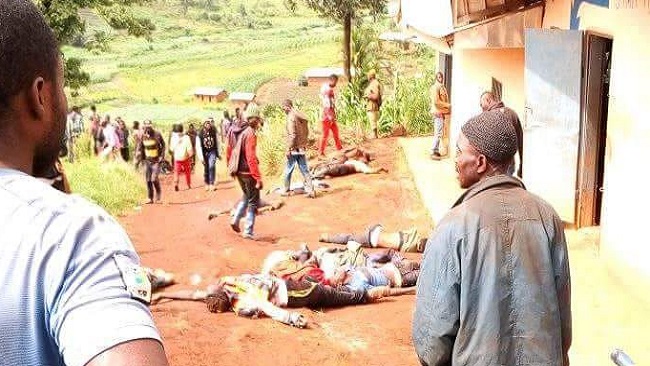
The crisis came to a head in late 2016 when lawyers, joined by teachers and others with similar grievances, led protests in major western cities demanding that the integrity of their professional institutions be protected and their minority rights respected.
President Paul Biya responded by deploying troops to the region and blocking internet access. When peaceful demonstrations were met with violent repression it exacerbated tensions and escalated the conflict to a national political crisis.
On June 12, Amnesty International issued a report documenting human rights violations in Cameroon. The International Crisis Group says that at least 120 civilians and 43 members of security forces have been killed in the most recent waves of violence.
More than 20,000 people have fled to neighbouring Nigeria, and an estimated 160,000 are displaced within Cameroon.
Some human rights activists worry that Cameroon could be the site of Africa’s next civil war.
Agbor Nkongho, an Anglophone human rights lawyer and director of the Center for Human Rights and Democracy in Africa, told the Washington Post:
We are gradually, gradually getting there (civil war). I’m not seeing the willingness of the government to try to find and address the issue in a way that we will not get there.
Another issue is that there are diverse views even within the Anglophone and Francophone communities about what would be best for Cameroon going forward.
Obstacles to national unity
In October 2017 the separatist leader Julius Ayuk Tabe declared the independence of the Republic of Ambazonia. His interim government laid claim to a territory whose borders are the same as the UN Trust Territory of Southern Cameroons under British rule (1922-1961).

The interim government’s spokesman, Nso Foncha Nkem, invitedFrancophones to leave the region and called on Anglophones in Biya’s “rubber-stamp” government to return to Ambazonia and support the movement. He also pleaded for unity, asking that Anglophones speak in one voice.
However, that call has not overcome the challenges posed by diverse viewpoints within the Anglophone population itself. Some favour secession. Others want to return to the 1961 federation and the power-sharing agreement. There are those who prefer decentralization that would devolve power to regional leaders, and some who simply want an administrative solution that would leave the Republic of Cameroon as it stands.
And among the Francophone population, there is some support for the radical separatists, while some see the Anglophone situation as a general crisis of governance and others deny any problem exists.
Mongo Beti, a Francophone novelist and activist who spent 30 years in exile, observed after returning home in the 1990s that a general absence of identification with a viable, unified nation due to various divisions had frayed Cameroon’s social fabric and was a significant impediment to progress.
It is unclear whether Biya, who is 85 and in power since 1982, will run for re-election. His 38 years in office as a corrupt, absent leader have left the nation in tatters. The vast majority of Cameroonians, whether Anglophone or Francophone, are hungry for change.
The way forward?
There is an urgent need for an inclusive national dialogue to harness this desire for change.
The government must recognize that it faces a substantive national crisis and take extraordinary steps. A general conversation about governance in all its regions is also necessary. Given the depth and severity of people’s grievances, a holistic approach is needed that would address issues of governance, security, and civic engagement to mend the bonds that have been broken.
This is necessary if the current crisis it to become an opportunity to develop a new road map for the future that could empower citizens.
Culled from Quartz Media
















28, June 2018
Southern Cameroons Crisis: Yaounde says Military Casualties Mounting 0
Cameroon’s government says the number of soldiers and police killed while fighting armed English-speaking separatists who want to split from the French speaking regions of the country has increased from 80 to more than 100 in the last two weeks and kidnapping of members of the security forces also continue to rise.
With civilians and separatists complaining of widespread human rights abuses by the military and police, calls are growing for genuine dialogue to end the war.
Members of civil society are pressing Cameroonian President Paul Biya to free arrested leaders of armed groups for peace to return and the carnage to stop.
Speaking before an unusually quiet parliament, Cameroon Defense Minister Joseph Beti Assomo read the names of soldiers and policemen who have died in the war against armed separatists fighting for the independence of an English-speaking-state in Cameroon.
As Beti Assomo read through the list, VOA counted more than 120 names of slain servicemen.
The defense minister was invited by the lawmakers to give a balance sheet of a war that Cameroon president Paul Biya declared seven months ago against people he said were “terrorists” wanting to divide his country.
Robert Bapooh Lipot, a UPC opposition political party lawmaker, says it was the most touching plenary session of parliament he has ever witnessed in Cameroon.
“This is the worst thing which can happen to a soldier,” he said. “A soldier knows that he can die while defending the integrity of his nation against another army, but never against its own citizens. That is why we think that those who took guns against our nation, they must now abandon this option and know that we are belonging to the same country.”
The figures given by Beti Assomo indicate that about 40 more soldiers had lost their lives in less than one week since Cameroon’s prime minister, Philemon Yang, announced that the country had lost about 84 military and policemen and launched a $23 million emergency humanitarian assistance plan for hundreds of thousands of citizens who he said live in precarious and life-threatening conditions in Cameroon and in neighboring Nigeria due to war.
He said hundreds had been killed, and 74,000 internally displaced persons were facing famine along with disastrous health conditions. He said 21,000 others had fled to Nigeria.
United Nations estimates are even higher. The world body says more than 100,000 people, a majority of them school-aged children, have fled the violence in the English-speaking regions for safer locations. Forty thousand have crossed over to Nigeria and many are missing.
A new report published two weeks ago by the international human rights group Amnesty International criticizes both the Cameroon military and armed separatists for using unnecessary and excessive force, stating that civilians are frequently caught up in the violence.
Amnesty said Cameroon’s military has been responding with arbitrary arrests, torture, unlawful killings and destruction of property, which the group says radicalizes youths and drives them to join the separatists. Cameroonian government officials described Amnesty’s allegations as unfounded.
Emmanuel Tatah, a civil society activist and leader of a group known as Unite Cameroon, says the conflict continues to claim lives because many people do not trust the military and the leadership.
“We should be guided by truth. There is a lack of confidence between the people, the government and the institutions,” he said.
There have been calls for President Biya to be open to dialogue and to release Ayuk Tabe, the man who proclaimed himself as president of what he called the English-speaking “Republic of Ambazonia.” Tabe was arrested in Nigeria with 47 of his collaborators and extradited to Cameroon. His supporters have vowed on social media that Cameroon will not have peace if he and his peers are not released.
Violence broke out in the English-speaking northwest and southwest regions of Cameroon in November 2016 when a strike by English-speaking lawyers and teachers against what they described a marginalization by the French-speaking majority in the bilingual country degenerated into calls for secession. In November 2017, President Paul Biya declared war on the separatists, labeling them “terrorists.”
Biya has said on several occasions he is not ready to listen to anything that may compromise the unity of his country.
Source: VOA