
24, July 2022
The Holy Father Pope Francis arrives in Canada to apologise for Indigenous school abuse 0
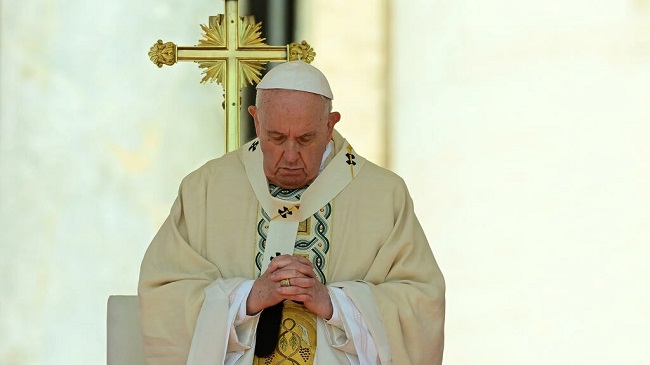
Pope Francis arrived Sunday in Canada, where he is expected to personally apologize to Indigenous survivors of abuse committed over a span of decades at residential schools run by the Catholic Church.
The head of the world’s 1.3 billion Catholics landed at Edmonton’s international airport shortly after 11 am (1700 GMT).
He was welcomed by Canadian Prime Minister Justin Trudeau and Mary Simon, the country’s first Indigenous governor general, as well as Indigenous leaders in an airport ceremony that began with drums and chanting.
Afterwards Francis received welcome gifts from Indigenous leaders, shaking or kissing their hands and making conversation with each before the short ceremony ended.
During the 10-hour flight from Rome Francis told journalists travelling with him that “we must be aware that this is a penitential journey.”
The 85-year-old pontiff’s Canada visit is primarily to apologize to survivors for the Church’s role in the scandal that a national truth and reconciliation commission has called “cultural genocide”.
From the late 1800s to the 1990s, Canada’s government sent about 150,000 First Nations, Metis and Inuit children into 139 residential schools run by the Church, where they were cut off from their families, language and culture.
Many were physically and sexually abused by headmasters and teachers.
Thousands of children are believed to have died of disease, malnutrition or neglect.
Since May 2021, more than 1,300 unmarked graves have been discovered at the sites of the former schools.
A delegation of Indigenous peoples travelled to the Vatican in April and met the pope — a precursor to Francis’ six-day trip — after which he formally apologized.
But doing so again on Canadian soil will be of huge significance for survivors and their families, for whom the land of their ancestors is of particular importance.
The flight constituted the longest since 2019 for the pope, who has been suffering from knee pain that has forced him to use a cane or wheelchair in recent outings.
The pope was in a wheelchair Sunday and used a lifting platform to board the plane in Rome, and was also in a wheelchair on the tarmac in Edmonton, an AFP correspondent accompanying him said.
‘Too late’
After resting Sunday, the pope will travel Monday to the community of Maskwacis, some 100 kilometres (62 miles) south of Edmonton, and address an estimated crowd of 15,000 expected to include former students from across the country.
“I would like a lot of people to come,” said Charlotte Roan, 44, interviewed by AFP in June. The member of the Ermineskin Cree Nation said she wanted people to come “to hear that it wasn’t made up”.
Others see the pope’s visit as too little too late, including Linda McGilvery with the Saddle Lake Cree Nation near Saint Paul, about 200 kilometres east of Edmonton.
“I wouldn’t go out of my way to see him,” said the 68-year-old.
“For me it’s kind of too late, because a lot of the people suffered, and the priests and the nuns have now passed on.”
McGilvery spent eight years of her childhood in one of the schools, from age six to 13.
“Being in the residential school I lost a lot of my culture, my ancestry. That’s many years of loss,” she told AFP.
After a mass before tens of thousands of faithful in Edmonton on Tuesday, Francis will head northwest to an important pilgrimage site, the Lac Sainte Anne.
Following a July 27-29 visit to Quebec City, he will end his trip in Iqaluit, capital of the northern territory of Nunavut and home to the largest Inuit population in Canada.
There he will meet with former residential school students, before returning to Italy.
In total, Francis is expected to deliver four speeches and four homilies, all in Spanish.
Francis is the second pope to visit Canada, after John Paul II, who visited three times (1984, 1987 and 2002).
Source: AFP












24, July 2022
Macron to meet President Paul Biya, 89, who has ruled Cameroon for almost 40 years 0
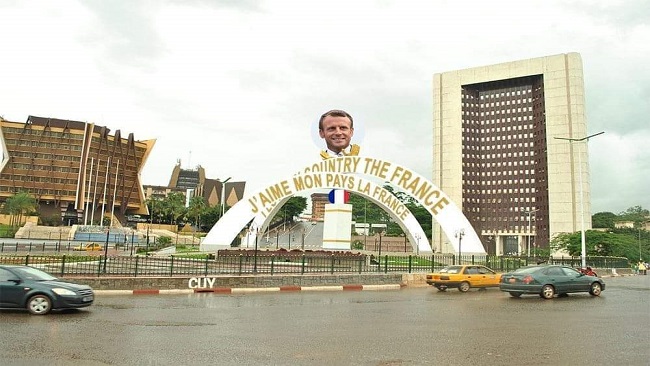
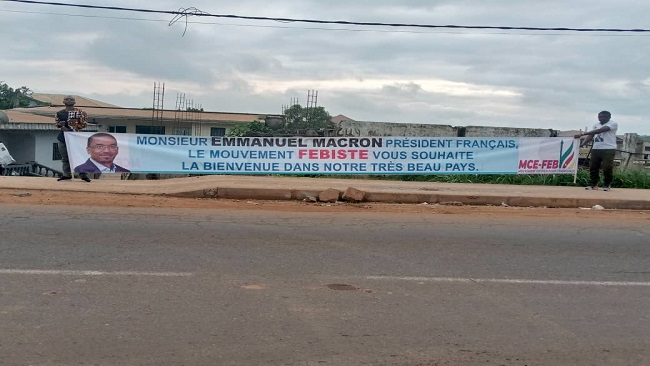
President Emmanuel Macron on Monday begins a three-nation tour of western African states in the first trip to Africa of his new term as he seeks to reboot France’s post-colonial relationship with the continent.
Macron will begin his July 25-28 tour, also the first venture outside Europe of his new mandate, with a visit to Cameroon, before moving on to Benin and then finishing the trip in Guinea-Bissau.
Top of the agenda in the talks will be food supply issues, with African nations fearing shortages especially of grain due to Russia’s invasion of Ukraine.
But security will also loom large as France prepares to complete its pullout from Mali this year, with all countries in the region seeking to head off fears of Islamist insurgencies.
The trip to three countries which rarely feature on the itinerary of global leaders comes with Macron, who won a new term in April, pledging to keep up his bid for a new relationship between France and Africa.
France has also followed with concern the emergence of other powers seeking a foothold in an area Paris still considers parts of its sphere of influence, notably Turkey under President Recep Tayyip Erdogan but also increasingly China and Russia.
‘Political priority’
The tour “will show the commitment of the president in the process of renewing the relationship with the African continent”, said a French presidential official, who asked not to be named.
It will signal that the African continent is a “political priority” of his presidency.
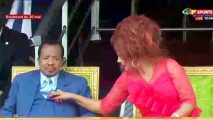
In Cameroon, which has been riven by ethnic violence and an insurgency by anglophone separatists, Macron will meet President Paul Biya, 89, who has ruled the country for almost 40 years and is the longest-serving non-royal leader in the world.
Biya has run the country with an iron fist, refusing demands for federalism and cracking down on the rebellion by separatists.
Macron will move on Wednesday to Benin, a neighbour of Africa’s most populous nation Nigeria. The north of the country has faced more deadly attacks, with the jihadist threat now spreading from the Sahel to Gulf of Guinea nations.
He is likely to be lauded for championing the return in November of 26 historic treasures which were stolen in 1892 by French colonial forces from Abomey, capital of the former Dahomey kingdom located in the south of modern-day Benin.
Benin was long praised for its thriving multi-party democracy. But critics say its democracy has steadily eroded under President Patrice Talon over the last half decade. Opposition leader Reckya Madougou was sentenced in 2021 to 20 years in prison on terrorism charges.
On Thursday, Macron will finish his tour in Guinea-Bissau, which has been riven by political crisis at a time when its President Umaro Sissoco Embalo is preparing to take the helm of the Economic Community of West African States (ECOWAS).
Rethink strategy
With all the countries criticised by activists over their rights records, the Elysee has insisted that governance and rights issues will be raised, albeit “without media noise but in the form of direct exchanges between the heads of states”.
Macron’s first term was marked by visits to non-francophone African countries including regional powerhouses Nigeria and South Africa as he sought to engage with the entire continent and not just former French possessions.
Benin is a former French colony, but Guinea-Bissau was once a Portuguese colony while Cameroon’s colonial heritage is a mixture of British and German as well as French.
Macron meanwhile has insisted France’s military presence in the region will adapt rather than disappear once the pullout from Mali is complete.
He announced last week that a rethink of France’s presence would be complete by autumn, saying the military should be “less exposed” in the future but their deployment still a “strategic necessity”.
The pullout from Mali follows a breakdown in relations with the country’s ruling junta, which Western states accuse of relying on Russian Wagner mercenaries rather than European allies to fight an Islamist insurgency.
Source: AFP