
5, June 2025
Over 3000 Southern Cameroonians trapped in Nigeria after being trafficked 0
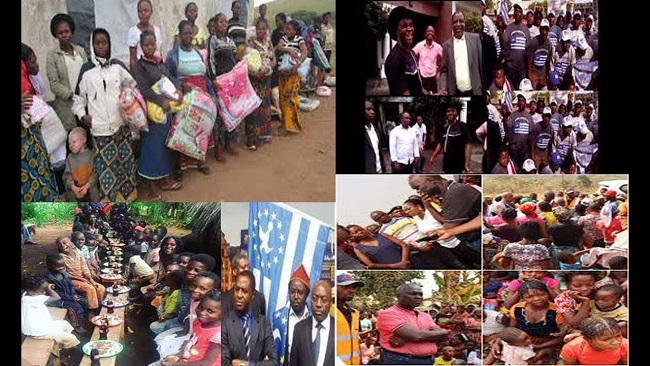
Amid the escalating violence in Cameroon’s Anglophone regions, a less visible but devastating crisis is taking hold: Human trafficking.
The ongoing conflict, primarily concentrated in the North West and South West regions – often referred to collectively as the Anglophone regions – has created a climate of fear, displacement, and desperation, which traffickers are exploiting.
The Justice and Peace Commission of the Catholic Diocese of Kumbo has highlighted this alarming trend. According to Lukong Isidore Njodzeven, the deputy diocesan coordinator for the Justice and Peace Commission of the Kumbo Diocese, at least 3,000 Cameroonians, predominantly coming from the conflict-affected areas of the Anglophone regions, have been trafficked across the border into neighboring Nigeria.
“We worked closely with a Pastor in Nigeria and can confirm that some 3000 Cameroonians from the two regions are now trapped in Nigeria’s human trafficking ring,” he told Crux, explaining such trafficking seems to be a direct function of the ongoing separatist war in the region.
“Among its devastating consequences, the crisis has led to widespread displacement, destroyed homes, and torn families apart. UNICEF reports approximately 800,000 children are missing out on education, leaving them particularly susceptible to exploitation. The crisis has also worsened poverty, making both individuals and families more vulnerable to trafficking and exploitation,” Njodzeven said.
Economic vulnerability in the two regions fuels the trade in humans-a reality that tangos with the 2023 International Organization for Migration [IOM], Economic Vulnerability Report, which reveals that a 1 percent rise in unemployment leads to a 0.5 percent increase in human trafficking cases.
Njodzeven said the initial destination is not always Nigeria. Traffickers present countries like Ghana, Togo, Burkina Faso and Niger as perfect destinations “where people can make wealth.”
“With so much poverty-a situation made worse by the ongoing separatist crisis, many young people usually fall prey to the trafficking networks,” he said.
Tragically, these individuals eventually find out that they have been deceived and transported instead to Nigeria, where they frequently endure severe hardships, including forced labor, exploitation, and abuse, far from their homes and support networks.
“Ghana for instance enjoys a gold mining boom and the agents are very good at convincing young people who sometimes feel they have little to live for anymore in Cameroon, that a job in a gold mine would guarantee the kind of wealth that would lift their entire household out of poverty. The family sometime would sell everything they have just to get their children across the border to those supposed goldmines. The agent in Cameroon then takes the victim to the Nigerian border, and there, the story turns sour,” he told Crux.
He said once in captivity, the trafficked youths have their passports confiscated, their phones seized.
“From time to time, the traffickers would allow their captives to call their family back in Cameroon, but it’s only one message: tell your parents that you are okay, but that you need more money,” Njodzeven continued.
“Trafficking in human beings is a whole industry,” he said.
According to a 2024 report by the International Labor Organization, the illegal industry now generates $172.6 billion from forced commercial sexual exploitation annually. The same report which is corroborated by the UN estimates that traffickers hold 49.6 million people in modern slavery worldwide, including 12 million children.
The United Nations Office on Drugs and Crime (UNODC)’s 2023 Global Report on Trafficking in Persons further breakdown the numbers, stating that “private sector entities exploit approximately 17.3 million victims, traffickers force 6.3 million into commercial sexual exploitation, and state actors subject 3.9 million to forced labor.”
“These aren’t just statistics. These are human beings caught in networks of exploitation,” said Yvonne Fonka, GBV Focal Point at the Justice and Peace Commission of the Kumbo Diocese.
She said it is increasingly hard fighting off the traffickers, because many involve highly placed individuals in society.
In addition, victims find it hard coming forward, fearing not only retribution from their traffickers who might be very powerful, but also wary of the stigmatization by society and sometimes rejection by their own families.
“When a woman for instance has suffered rape, abuse and all sorts of horrible treatment, sometimes they are too ashamed to speak out,” she explained.
“If your parents have emptied their bank account or sold the family land to enable you to travel, the expectation is that you will come back to alleviate poverty in the family. It becomes frustrating when you come back with absolutely nothing. Under such circumstances, many victims are too ashamed to speak openly about their ordeal,” she said.
Source: Crux



















5, June 2025
Cameroonians in Texas face deportation as Trump moves to end protected status 0
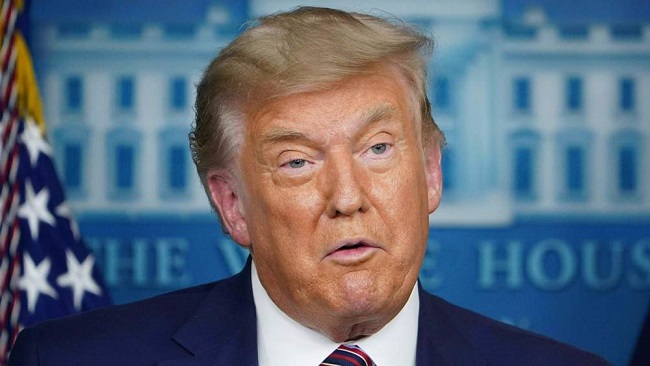
The Trump administration gave notice in the Federal Register on Wednesday that it is withdrawing Temporary Protected Status (TPS) for Cameroonians in the United States, effective Aug. 4. That could mean deportation for thousands of Texas residents.
Texas hosts the second-largest community in the U.S. of people from the West African nation of Cameroon.
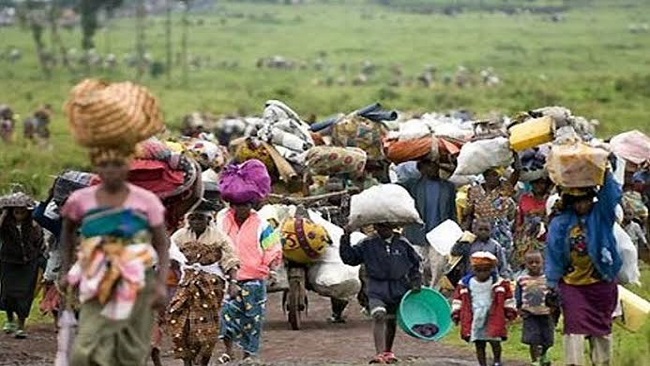
“For about the past decade, Cameroon has been in a state of armed conflict,” said Ryan Downer, legal director of the Washington Lawyers’ Committee for Civil Rights and Urban Affairs. “About 6,000 people have been killed. As a result of the conflict, more than a million people have been displaced, either internally or to neighboring countries. And this is a clash between government forces and armed separatists in the country, and there have been multiple terrorist attacks over the course of that time.”
TPS is designed to provide temporary haven in the U.S. for migrants from countries where their lives might be in danger if they were forced to return because of such conditions as wars or environmental disasters.
The Washington Lawyers’ Committee and other civil rights organizations previously sued the Trump administration, when it signaled it planned to end TPS for Cameroonians and Afghans without providing the 60 days’ notice required by statute. The Department of Homeland Security subsequently published a notice in mid-May stating that TPS for Afghans will end July 14.
But Downer said the administration still isn’t complying with the statute, because the law requires the notice be given 60 days before the current grant of TPS is set to expire. In the case of Cameroonians, that date is June 7.
“Because there was no termination notice issued 60 days prior to the expiration date,” Downer said, “the statute says there’s an automatic six-month extension.”
If a judge agrees, that would extend Temporary Protected Status for Afghans to November of this year and for Cameroonians to December.
“We understand that the status is supposed to be temporary, and there are periodic reviews to assess whether or not an extension or termination is warranted,” Downer said. “But part of the purpose of the statute was to provide some measure of stability for TPS holders, so that your status can’t be yanked out from underneath you the next day, so that folks have some time to organize their lives, they have time to make arrangements for where they’re going to live, and to give some measure of predictability to the lives of people who – by definition, if you’re a TPS holder – are in a vulnerable state.”
The U.S. Department of Homeland Security did not respond immediately to a request for comment on Wednesday.
The Trump administration’s moves follow a victory in the Supreme Court, in which eight of the nine justices ruled the White House had the power to end TPS for thousands of Venezuelans in the U.S.
“That decision didn’t have a lot of reasonings, unfortunately, so it’s difficult to decipher exactly what the Supreme Court was doing there other than what was presented in the text of the opinion, which is just granting a stay of the district court’s order in that case, but we don’t know yet what the implications are going to be,” Downer said.
Source: Houston Public Media