

12, January 2026
Yaoundé awaits Biya’s new cabinet amid hope and skepticism 0
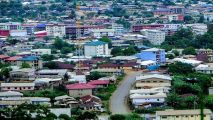
As Yaoundé the capital awaits the imminent announcement of the 2026 Biya cabinet, the nation once again finds itself at a familiar crossroads of expectation and uncertainty. The 92-year old Cameroonian dictator is expected to unveil a new cabinet that many are hoping will respond to the country’s pressing political, economic, and social challenges.
Cabinet shakeups under Biya have often generated intense political discourse, not because they come along with any meaningful change, but because they guarantee Biya’s continued stay in power. For many now living below the UN poverty line, the key question is not when the new men and women will be presented to the public by state run Cameroon Radio and Television but whether it will bring meaningful transformation or simply reinforce the status quo.
The nation is at the mercy of Biya and his appointees and it is facing a convergence of crises that demand urgent and competent leadership. Cameroon’s high cost of living continues to strain households, youth unemployment remains alarmingly high, and insecurity persists in the Far North and the English speaking Cameroon regions. Government departments, from the Ministry of Health to National Education are all struggling with chronic underfunding and inefficiency. Added to this worry is a new development that the old guards of the ruling party are refusing to quit the political stage. Against this backdrop, the formation of the President Biya 2026 cabinet will be closely scrutinized as a measure of the regime’s willingness to confront these realities.
As pointed out by the man widely believed to have won the presidential poll Issa Tchiroma Bakary, there is growing public fatigue with recycled cabinet ministers and long-serving barons of the regime whose records offer little or no evidence of innovation or accountability. Cameroonians, particularly the youth, are calling for new faces—technocrats with proven competence, integrity, and a clear understanding of modern governance. They are seeking a cabinet that can move beyond empty rhetoric and deliver tangible results.
At the same time, several political commentators have reportedly noted that appointments into President Biya’s cabinet often reflect loyalty to the dictator and regional balancing rather than performance. If the upcoming Biya cabinet follows this familiar pattern, public skepticism is likely to deepen. In an era where Cameroonians are more informed and vocal than ever, symbolism without substance may no longer suffice.
The expected reshuffle is also coming at a time when Yaoundé’s international image matters greatly. Cameroon’s economic partners and donors are already pushing for reform. A credible, dynamic young cabinet could help restore confidence and attract foreign investors. Conversely, a new Biya government perceived as stagnant may reinforce doubts about the nation’s governance trajectory.
Many on the streets in major cities such as Douala, Bertoua, Garoua have noted that the announcement of a new cabinet should not be treated as a routine ruling CPDM exercise but an opportunity to reset national priorities, restore public trust, and demonstrate commitment to the nation’s renewal. Whether the 92-year-old Biya seizes this opportunity remains to be seen.
For now, Cameroon is a nation in waiting and citizens are waiting with cautious hope, tempered by undue excitement, that this new cabinet will rise to the demands of the moment and place the national interest above all else.
By Soter Tarh Agbaw-Ebai




















13, January 2026
Global economy shows resilience amid historic trade, policy uncertainty 0
The global economy is proving more resilient than anticipated despite persistent trade tensions and policy uncertainty, according to the World Bank’s latest Global Economic Prospects report. Global growth is projected to remain broadly steady over the next two years, easing to 2.6% in 2026 before rising to 2.7% in 2027, an upward revision from the June forecast.
The resilience reflects better-than-expected growth—especially in the United States, which accounts for about two-thirds of the upward revision to the forecast in 2026. Even so, if these forecasts hold, the 2020s are on track to be the weakest decade for global growth since the 1960s. The sluggish pace is widening the gap in living standards across the world, the report finds: at the end of 2025, nearly all advanced economies enjoyed per capita incomes exceeding their 2019 levels, but about one in four developing economies had lower per capita incomes.
In 2025, growth was supported by a surge in trade ahead of policy changes and swift readjustments in global supply chains. These boosts are expected to fade in 2026 as trade and domestic demand soften. However, the easing global financial conditions and fiscal expansion in several large economies should help cushion the slowdown, according to the report. Global inflation is projected to edge down to 2.6% in 2026, reflecting softer labor markets and lower energy prices. Growth is expected to pick up in 2027 as trade flows adjust and policy uncertainty diminishes.
“With each passing year, the global economy has become less capable of generating growth and seemingly more resilient to policy uncertainty,” said Indermit Gill, the World Bank Group’s Chief Economist and Senior Vice President for Development Economics. “But economic dynamism and resilience cannot diverge for long without fracturing public finance and credit markets. Over the coming years, the world economy is set to grow slower than it did in the troubled 1990s—while carrying record levels of public and private debt. To avert stagnation and joblessness, governments in emerging and advanced economies must aggressively liberalize private investment and trade, rein in public consumption, and invest in new technologies and education.”
In 2026, growth in developing economies is expected to slow to 4% from 4.2% in 2025 before edging up to 4.1% in 2027 as trade tensions ease, commodity prices stabilize, financial conditions improve, and investment flows strengthen. Growth is projected to be higher in low-income countries, reaching an average of 5.6% over 2026–27, buoyed by firming domestic demand, recovering exports, and moderating inflation. However, this will not be sufficient to narrow the income gap between developing and advanced economies. Per capita income growth in developing economies is projected to be 3% in 2026—about a percentage point below its 2000-2019 average. At this pace, per capita income in developing economies is expected to be only 12% of the level in advanced economies.
These trends could intensify the job-creation challenge confronting developing economies, where 1.2 billion young people will reach working age over the next decade. Overcoming the jobs challenge will require a comprehensive policy effort centered on three pillars. The first is strengthening physical, digital, and human capital to raise productivity and employability. The second is improving the business environment by enhancing policy credibility and regulatory certainty so firms can expand. The third is mobilizing private capital at scale to support investment. Together, these measures can help shift job creation toward more productive and formal employment, supporting income growth and poverty alleviation.
In addition, developing economies need to bolster their fiscal sustainability, which has been eroded in recent years by overlapping shocks, growing development needs, and rising debt-servicing costs. A special-focus chapter of the report provides a comprehensive analysis of the use of fiscal rules by developing economies, which set clear limits on government borrowing and spending to help manage public finances. These rules are generally linked to stronger growth, higher private investment, more stable financial sectors, and a greater capacity to cope with external shocks.
“With public debt in emerging and developing economies at its highest level in more than half a century, restoring fiscal credibility has become an urgent priority,” said M. Ayhan Kose, the World Bank Group’s Deputy Chief Economist and Director of the Prospects Group. “Well-designed fiscal rules can help governments stabilize debt, rebuild policy buffers, and respond more effectively to shocks. But rules alone are not enough: credibility, enforcement, and political commitment ultimately determine whether fiscal rules deliver stability and growth.”
More than half of developing economies now have at least one fiscal rule in place. These can include limits on fiscal deficits, public debt, government expenditures, or revenue collection. Developing economies that adopt fiscal rules typically see their budget balance improve by 1.4 percentage points of GDP after five years, once interest payments and the ups and downs of the business cycle are accounted for. Use of fiscal rules also increases by 9 percentage points the likelihood of a multi-year improvement in budget balances. However, the medium- and long-term benefits of fiscal rules depend heavily on the strength of institutions, the economic context in which the rules are introduced, and how the rules are designed, the report finds.