
23, April 2020
Cameroon and COVID-19: Face masks are compulsory — but unaffordable for many 0
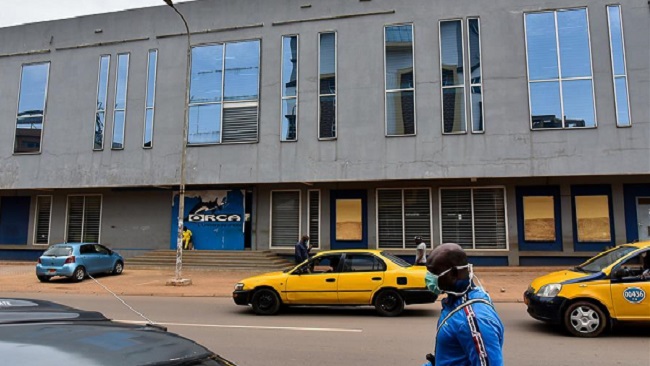
Eric Wule has a problem. He lives in Kumba, a city in southwest Cameroon, and this week his government has told him — together with all other 25-million citizens — that it is illegal to appear in public without a face mask. This is part of the government’s measures to prevent the spread of the coronavirus. As of April 18, Cameroon had recorded 1 017 cases of the disease, including 22 deaths.
But surgical masks are in short supply, and Wule is struggling to find one. The masks that are being sold, he cannot afford: the price has quintupled, from 100 CFA francs (about R3.12) to between 500 CFA francs and 1 000 CFA francs.
Wule is not the only person struggling to comply with the emergency regulations. There are simply not enough face masks in Cameroon for everyone.
“The masks are scarce and even seem unavailable. Families and friends will use that which is available in turns just to escape police trouble,” commented one civil society activist, who asked not to be named.
Many people have started making masks themselves, from fabric, but this comes with its own risks. “They have not been well educated on how to use these reusable masks. The management of the cloth mask is also problematic. They are being fabricated in homes and no attention is paid to sterilisation after fabrication. The Covid-19 status of the persons fabricating them are also not known,” said Dr Ade Harrison Manju, the director of Benakuma district hospital.
Harrison has also observed people trying on face masks before purchasing them. “This seems to be a new mode of transmission. Imagine buying a mask that has been tried on previously by about 10 people whose status you do not know. It is risky!” he said.
The World Health Organisation cautions that wearing a mask alone is not an adequate defence against Covid-19, and that “there is currently no evidence that wearing a mask (whether medical or other types) by healthy persons in the wider community setting, including universal community masking, can prevent them from infection with respiratory viruses, including Covid-19.”
The politics of protection
One campaign designed to support Cameroonians in this difficult time is the Survie-Cameroon-Survival Initiative, which aimed to raise €1-million for relief efforts. But it was declared illegal by the government, perhaps because it was founded by Maurice Kamto, the main opposition leader. The interior ministry has taken steps to freeze the campaign’s bank account.
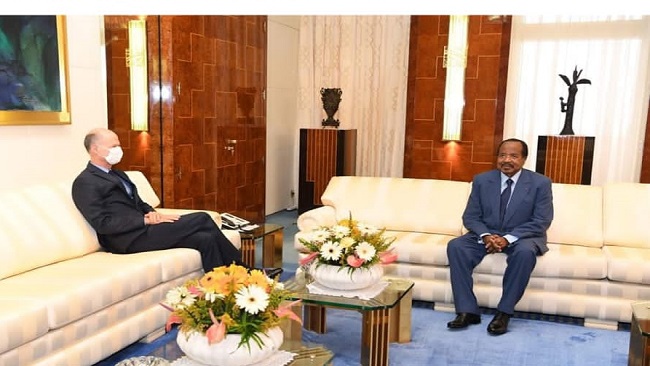
For his part, Kamto has accused President Paul Biya of being absent during this crisis, and has asked Parliament to declare a power vacancy and organise new elections. Kamto may have a point: Biya had not been seen in public for about a month. This week, following Kamto’s stinging criticism, the presidency released a photograph of Biya meeting the French ambassador to Cameroon. A tweet from Biya’s account read: “On the menu for our exchange this afternoon: managing the Covid-19 pandemic in Cameroon, France and around the world.”
Kamto was not impressed. “Cameroonians are expecting him to address the nation, to tell them exactly what is going on, to share his vision,” said Kamto, speaking to the Washington Post. “Whether that photo is real? Authentic? I don’t know.”
Nkongho Felix Agbor, a renowned Buea-based human rights lawyer, condemned the politicisation of Covid-19. “This is not the time [for] playing politics with the lives of our people, many of whom are dying. There is a need for a collective action,” he said.
Others see the government restriction as unwise. Ndansi Elvis, a United States-based Cameroonian with deep knowledge of health economics, calls it “insanity.” He thinks it is an act of cowardice for the government to order the closure of the account of a solidarity fund aimed at fighting this pandemic, simply because of political rivalry. “Are the funds to be used in sponsoring any terrorist act? Can government convince those donating from all over the world to donate to its own fundraiser when they know well that because of credibility issues people may not donate as much?”
Source: Mail/Guardian












23, April 2020
Nigeria: Southern Cameroons refugees in Benue State want Biya prosecuted for genocide 0
Southern Cameroonian refugees currently on asylum in Benue have appealed to the Nigerian government to use her position to intervene for a cease fire in the prolonged crisis that has claimed thousands of lives and forced hundreds of thousands to take refuge in neighbouring countries.
The refugees equally called on the International Criminal Court in the Hague to arrest the Cameroonian President, Mr. Paul Biya over alleged crimes and genocide against Ambazonians.
Leader of the refugees’ community in Nigeria, Chief Agba Christopher Ipa, made the call during an interview with newsmen, Sunday at the Ikyogen refugees camp in Kwande local government area of Benue state.
He said when they had crisis in their country, the President of Cameroon declared war on civilians, forcing them to run down to Nigeria with some of them finding themselves in Benue state.
“We are crying and thanking the Nigerian government for the concern they have for us the Cameroonian refugees.
“We want the Nigerian government to help us see how they can solve our problem so that there will be a ceasefire in our country for us to go back,” Chief Agba Christopher pleaded.
On his part, the chairman of Kwande local government area, hosting the refugees, Mr. Tertsua Yarkwan said the Ambazonian crisis has gone beyond the Cameroonian situation and called on the African Union to mediate in the crisis.
The council chairman explained that the Cameroonian refugees would be given equal status to integrate them into the Nigerian society if the crisis in their country persists as the local government was financially constrained in feeding and providing basic needs for the refugees.
He implored the African Union to do something about the humanitarian situation in Cameroon.
“I implore not only the Nigerian government but also the African Union to do something. You know, we are in the ECOWAS area in West Africa. The Cameroonians are coming from Central Africa. So that goes beyond ECOWAS to intervene.
“I plead with the leadership of African Union to be more proactive on this issue and not to see it as a local Cameroonian problem.
“Nigeria is already having the effect of this crisis. Besides being in Kwande, the refugees are in Cross River, they are also in Taraba state.”
Source: Blueprint, Nigeria