
17, July 2020
Yaounde Rejects Evidence of Forcing Civilians to Fight Boko Haram 0
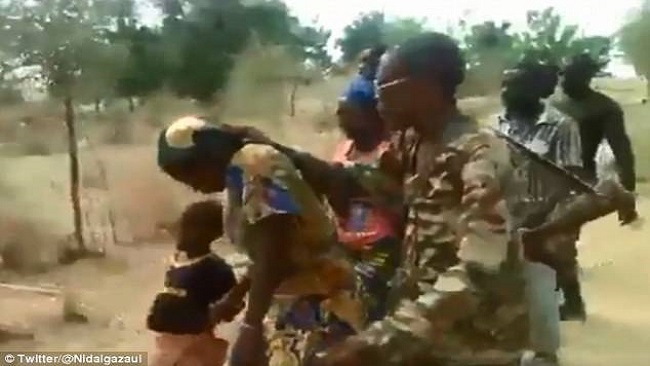
Cameroon has rejected a Human Rights Watch report that says its military forces civilians to serve on guard duty against Boko Haram militants. The rights group says Cameroon’s military has abused villagers along the border with Nigeria who refused to join militias.
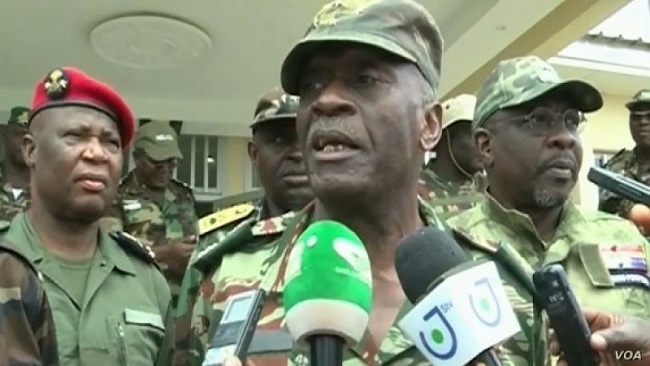
Governor of Cameroon’s Far North Region Midjiyawa Bakari insists that members of military-organized civilian militias are all volunteers.
Speaking via a messaging application from the region’s capital, Maroua, he said the state encourages the militias to keep a watch out for Boko Haram.
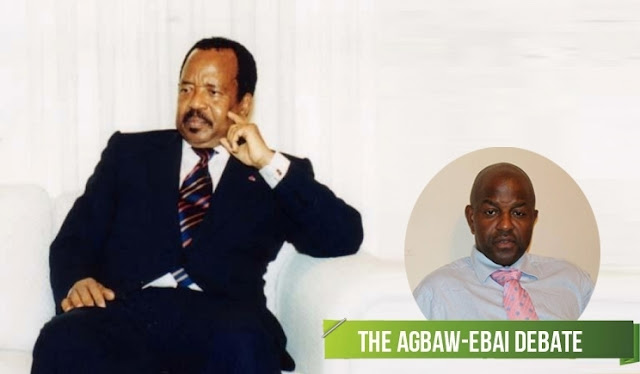
He said President Paul Biya asked all Cameroonians to help stop Boko Haram terrorism by denouncing suspects and strange visitors in their communities. Bakari said people who join militia groups are volunteers who have agreed to collaborate with the military and government by sharing information on any potential attack.
Last week, Human Rights Watch reported that the military in the northern border town of Mozogo was forcing civilians to perform night guard duty against Boko Haram terrorists.

The report said soldiers beat and threatened the poorly equipped and untrained civilians who refused to keep guard.
Many civilians who were scared of doing night duty fled, the report stated.
Human Rights Watch Central Africa researcher Ilaria Allegrozzi said fighting Boko Haram is the job of the military – not civilians.
“We ask the Cameroonians authorities to immediately stop forcing civilians to perform night guard duties. We ask them to investigate the abuses that we have uncovered including the beatings, the threats and the forced labor and hold those responsible to account. It is not the job of the ordinary people to protect their town from Boko Haaram. It is the security forces who should do so,” said Allegrozzi.
Bakari denied that civilians who join the militias were poorly equipped, and said they receive what he described as great assistance.
But, 37-year-old cattle rancher Bouba Nouvadjava said the military forced him to join an under-equipped militia without guns in the northern town of Kolofata.

He spoke via a messaging application from Kolofata.
He said they have bow and arrows to intervene when possible and have been given telephones to call the military if the attackers are heavily armed.
Independent researcher on Boko Haram, Touman Oussmaila, said the militias need to be properly trained and armed.
He said very often the government gives the militias flashlights, telephones, and boots but then leaves them to fend for themselves. There is a credibility and morality crisis among civilians who join the militias, said Oussmaila, because they are forced. Some militia members can be accidentally killed by the military, he said, because they do not know how to communicate with the troops. The militias, said Oussmaila, lack basic self-defense training.
Cameroon authorities say Boko Haram last year was targeting the militias because they were a barrier to the Islamists’ small-scale attacks on schools and markets.
Governor Bakari said that in 2019, the regional government gave a half-million dollars’ worth of food and an unspecified amount of money to support the militias.
He pledged to give $1 million more to the militias by the end of this year.
Source: VOA







17, July 2020
Southern Cameroons Crisis: More than 60 abducted civilians freed in Lebialem County 0
Some 63 civilians who were held on Monday in the Lebialem County in Southern Cameroons were released Wednesday night, according to local authorities.
“The armed group released 25 people on Tuesday and the rest of us were released late Wednesday. Some of us who could afford paid a ransom before we were freed. We were maltreated,” one of those who held said but preferred not to be named.
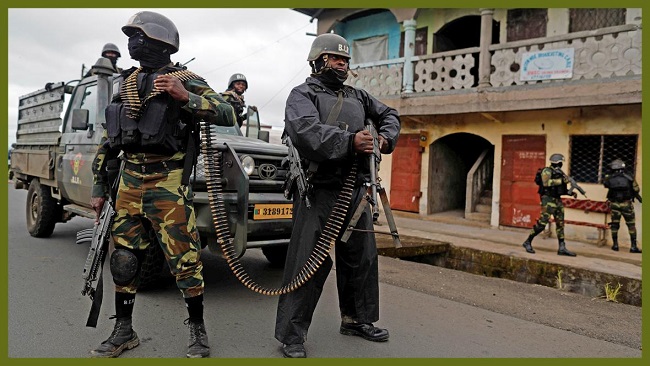
Cameroon government army spokesman said, the abduction was led by a separatist commander nicknamed “general Aekeh” who is “notorious for atrocities against civilians” in the locality.
The 63 civilians who included children and women were abducted at their homes and a bar in Mmouck Leteh, a locality in Lebialem County.
Southern Cameroons have seen a rise in clashes between French Cameroun government forces and armed Ambazonia Restoration Groups in spite of repeated calls by the United Nations for the establishment of a ceasefire amid COVID-19 pandemic.
Since 2017, Southern Cameroonians have been fighting to maintain an independent nation which they established and named as the Federal Republic of Ambazonia.
By Fon Lawrence with files from Xinhuanet