
1, January 2020
North Korea’s Kim says world will soon witness ‘new strategic weapon’ 0
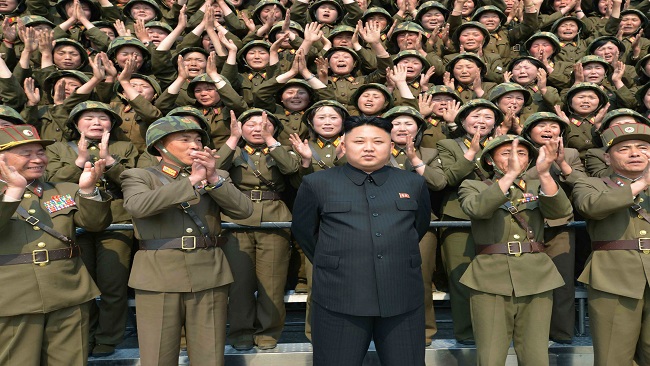
North Korean leader Kim Jong Un on Wednesday said his country will continue developing nuclear programmes and introduce a “new strategic weapon” in the near future, state media KCNA said, after the United States missed a year-end deadline for a restart of denuclearisation talks.ADVERTISING
Kim convened a rare four-day meeting of the ruling Workers’ Party’s policy-making committee since Saturday as the United States had not responded to his repeated calls for concessions to reopen negotiations, dismissing the deadline as artificial.
Kim had warned he might have to seek a “new path” if Washington fails to meet his expectations. U.S. military commanders said Pyongyang’s actions could include the testing of an intercontinental ballistic missile (ICBM), which it has halted since 2017, alongside nuclear warhead tests.
There were no grounds for North Korea to be bound any longer by the self-declared nuclear and ICBM test moratorium as the United States continued joint military drills with South Korea, adopted cutting-edge weapons and imposed sanctions while making “gangster-like demands”, Kim said, according to KCNA.
He pledged to further develop North Korea’s nuclear deterrent but left the door open for dialogue, saying the “scope and depth” of that deterrent will be “properly coordinated depending on” the attitude of the United States.
“The world will witness a new strategic weapon to be possessed by the DPRK in the near future,” Kim said, using the acronym for North Korea’s official name, the Democratic People’s Republic of Korea.
“We will reliably put on constant alert the powerful nuclear deterrent capable of containing the nuclear threats from the U.S. and guaranteeing our long-term security.”
(REUTERS)

















2, January 2020
Yaounde: Mixed Reaction to Biya’s Renewed Threats to Ambazonians 0
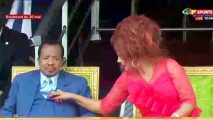
There have been mixed reactions in Cameroon to President Paul Biya’s renewed threat to crush separatist fighters in the country’s two English-speaking regions. Many Cameroonians were expecting Biya to announce new peace measures in an end-of-year message.
President Biya said the security problems in the Northwest and Southwest regions remain the most urgent issue to be tackled in the new year.
He said he had taken several measures allowing armed groups and fighters to lay down their weapons, but said the fighters, who are mostly youths, have been brainwashed by Cameroonians in the diaspora.
Biya said his military will henceforth show no mercy for those who continue to refuse to surrender and be forgiven.
“We will have no other choice than to combat them in order to protect all our fellow citizens,” he said. “Our Defense and Security Forces will, once again, perform their duty with restraint, but without weakness. I wish to reassure them of my full support and high esteem.”
Biya accused Cameroonians in the diaspora of funding violence back at home by continuing to buy weapons and said they should, out of patriotism, refrain from destroying their country.
The comments drew immediate criticism from opposition leaders. John Fru Ndi, leader of Cameroon’s opposition Social Democratic Front party, says he was scandalized that Biya did not announce measures to stop the separatist crisis that is in its fourth year.
He says after the national dialogue Biya held in October, Cameroonians expected him to free separatist leader Ayuk Tabe Julius and his collaborators to allow peace to return.
“I expected that in a speech like this he would say Anglophone activists, I pardon you. Now with this olive branch that I have extended, can all those in the bushes {fighters} come out let us talk,” he said. “But Mr. Biya said if you want peace be prepared for war. I saw in him then that that was somebody who wanted to fight under all costs before his term comes to an end.”
Maurice Kamto, leader of the opposition Cameroon Renaissance Movement, said Biya is deceiving himself and the world that he is resolving the separatist crisis. He said the president should convene what he called a sincere dialogue.
“The broad inclusive national dialogue must deal with among other issues, including particularly the reform of the electoral system, the guarantee of fundamental human rights and public freedoms and the guarantee of the independence of justice,” he said.
Cameroon is scheduled to hold local and parliamentary elections next month. Fru Ndi said with the current tensions in the English speaking regions, it will be difficult to conduct any elections successfully.
Violence erupted in the two regions in 2017 when teachers and lawyers protested alleged discrimination at the hands of Cameroon’s French-speaking majority. The crisis has killed at least 3,000 people and displaced over 500,000, according to the United Nations.
Separatist leaders on social media described Biya’s message as a non-event and said they will continue to fight until they have their independence.
Source: VOA