
25, February 2026
Ngarbuh massacre trial short on justice 0
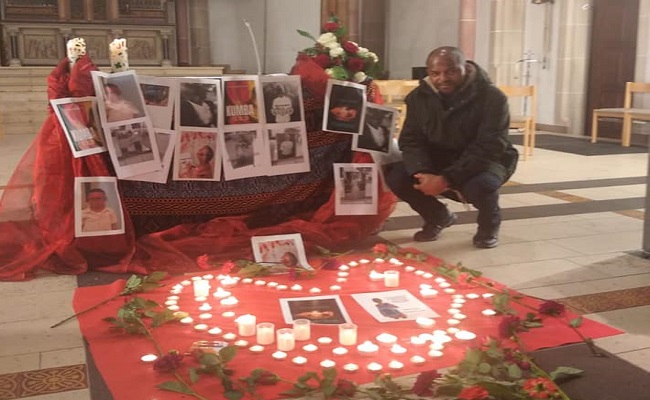
The lenient prison terms for defendants on trial for the February 2020 massacre in Ngarbuh, in Cameroon’s North-West region, compounds the authorities’ insufficient efforts to hold senior military officers accountable and compensate victims’ families, Human Rights Watch said today.
On February 20, 2026, a military court in Cameroon’s capital, Yaoundé, sentenced three security force members and a pro-government militia member who was tried in absentia for the killing of 21 people—as well as other abuses—by the military and Fulani militiamen in Ngarbuh on February 14, 2020. The court handed down sentences of between 5 and 10 years and modest fines.
“Prosecutors did not pursue any evidence about who planned and ordered the killings,” said Ilaria Allegrozzi, senior Africa researcher at Human Rights Watch. “The failure of Cameroon’s prosecutors and judiciary to investigate those bearing command responsibility, combined with the denial of reparations, exacerbates the suffering of victims’ families.”
The trial, which lasted more than five years, was marred by serious shortcomings. Authorities never arrested or charged senior officers who authorized and oversaw the operation. Seventeen ethnic Fulani militiamen accused of murder remain at large. Victims’ families had only limited access to and participation in the proceedings, key evidence was excluded, and the court rejected claims for compensation.
Human Rights Watch research found that government forces and allied ethnic Fulani militiamen killed 21 people in Ngarbuh, including 13 children and a pregnant woman. The assailants also burned at least five homes, looted dozens of properties, and beat residents during what appeared to be a reprisal operation against a community suspected of harboring separatist fighters. Since 2016, brutalviolence has engulfed Cameroon’s Anglophone North-West and South-West regions, where armed separatist groups are seeking independence.
Initially, the government denied any involvement of its forces in the killings and publicly discredited human rights groups, United Nations agencies, and media outlets that reported on the massacre. On March 1, 2020, following domestic and internationalpressure, President Paul Biya established a commission of inquiry.
The commission concluded that security forces and members of “local vigilance groups” carried out a reconnaissance operation in Ngarbuh, where they confronted separatist fighters, killing five. In the ensuing violence, 13 civilians were killed. The commission found that soldiers then attempted to cover up the killings by burning homes and filing a false report.
President Biya ordered disciplinary proceedings against the commander of the 52nd Motorized Infantry Battalion (Bataillon d’Infanterie Motorisé, BIM), who had authorized the operation, as well as criminal proceedings against three members of the security forces—two lower-ranking soldiers and a gendarme—who were arrested in June 2020.
The trial opened on December 17, 2020. The defendants included the three security force members—Baba Guida, Gilbert Haranga, and Cyrille Sanding Sanding—and the 17 ethnic Fulani militiamen. Only one of them, Tata Nfor, also known as “Bullet,” was identified by name and tried in absentia.
On January 15, 2026, the court convicted the three soldiers and Nfor as co-perpetrators in murder, arson, and destruction; Guida and Sanding were also convicted of disobeying orders and Haranga of disobeying orders and violence against a pregnant woman.
On February 20, the court sentenced Haranga and Nfor to 10 years in prison, Guida to 8 years, and Sanding to 5 years. Each was also fined 183,100 CFA francs (about US$328).
Under Cameroon’s penal code, murder is punishable by life in prison, and co-perpetrators are subject to the same penalties as principal offenders unless otherwise provided by law. The sentences imposed on two defendants in this case are relatively light, taking into account the gravity of the crimes, Human Rights Watch said.
While international law does not prescribe strict sentencing guidelines, international practice provides that punishment for serious crimes should reflect the gravity of the crime and serve the purposes, among others, of deterrence and retribution.
Barrister Menkem Sother, the lawyer representing the victims’ families, told Human Rights Watch that the public prosecutor initially requested five-year prison terms for the three security force members, contending that they were “brave soldiers” who had long participated in military operations. The judges ultimately confirmed a five-year sentence for Sanding, who has already served that time and is expected to be released in the coming days.
Sother requested 1,700,000,000 CFA francs (about $3,049,970) in compensation on behalf of the victims. The court rejected the claim as “unjustified,” asserting that the victims had already received a total of 80,000,000 CFA francs (about $143,528). Sother said, though, that there is no proof that any payment has been made.
The Ngarbuh proceedings were repeatedly delayed, often due to the absence of judges and other court officials. The court refused to admit key evidence, including death certificates to identify all of those killed, and the victims’ families were allowed only minimal participation. The military court in Yaoundé is about 450 kilometers from Ngarbuh, making it difficult for family members to attend. Family members’ lawyers had expressed concern about the issue. Only three victims’ relatives and one witness testified before the court, Sother said.
Defense and civil parties’ lawyers have 10 days to appeal the court’s decision. Henri Athanase Atangana, a defense lawyer representing Guida and Haranga, told the media that he would consult his clients before deciding whether to do so. Sother told Human Rights Watch that he does not intend to appeal, saying: “I have carried this cross alone.”
At the outset of the trial, there was sustained mobilization in support of the victims’ families, with several lawyers offering pro bono representation and numerous national and international human rights and civil society organizations attending or closely monitoring the proceedings. However, this collective engagement gradually waned, and for the final three years the families were represented solely by Sother, who represented their interests with unwavering dedication.
The UN Centre for Human Rights and Democracy in Central Africa, which is based in Yaoundé and is mandated to promote and protect human rights, including through ensuring the rule of law and accountability for human rights violations, assigned a lawyer to attend one hearing in 2022. “But after that, I’ve never seen her again,” Sother said.
The International Covenant on Civil and Political Rights, which Cameroon ratified in 1984, provides that states parties should ensure that any person whose rights are violated has access to an effective remedy, determined by competent judicial, administrative, or legislative authorities, and that such remedies are duly enforced.
“The Ngarbuh trial has delivered neither full accountability nor meaningful redress,” Allegrozzi said. “The United Nations Centre for Human Rights and Democracy in Central Africa should offer legal and technical assistance to the victims’ families, to enable them to file a well-grounded appeal seeking reparations and to ensure continued protection of their rights throughout the process.”
Source: Human Rights Watch














25, February 2026
Biya regime orders 3,442 teachers to prove status or face payroll removal 0
Secondary Education Minister Nalova Lyonga on February 23 published a list of 3,442 teachers ordered to report to “door 507 bis” of her ministry within fourteen days. Those concerned must present “supporting documents confirming their current administrative status, failing which they will be simply and outright removed from the state payroll,” she said.
The summons follows a data collection exercise conducted by the Ministry of Finance through Cameroon’s airports. An analysis of travel records showed that the officials had traveled outside Cameroon in recent years. According to sources familiar with the matter, the objective is now to verify that they have returned to the country and are effectively present at their assigned posts.
Emigration to Canada in the Background
The operation comes amid continued emigration, particularly to Canada. In recent years, many Cameroonian teachers have left their posts to seek better opportunities abroad while continuing to receive salaries in Cameroon. For the state, the issue is also fiscal: such situations create budgetary losses and weaken the continuity of public education services.
Removing teachers who have emigrated to Canada or other countries from the payroll is part of the broader Physical Headcount of State Personnel (Coppe). Launched in 2018, the initiative aims to eliminate public employees who are illegally listed on the state payroll.
According to the Ministry of Finance, Coppe has already led to the removal of 10,000 fictitious public employees from the payroll, generating annual budget savings of about CFA30 billion since 2019. On November 27, 2025, at the National Assembly, Public Service Minister Joseph Lé also announced that, under the same operation, around 6,000 civil servants had been dismissed from the public service following disciplinary proceedings.
Source: Business in Cameroon