
7, October 2026
Cameroon must prepare for the post-Biya era 0
Many in Yaoundé the nation’s capital and elsewhere are still involved in some form of political discourse on the formation of a new government by President Biya. This is an indication that the nation may be caught unprepared for the end of an era.
For nearly four decades, Paul Biya has been the dominant figure in Cameroon’s political landscape. His presidency has outlasted governments, political generations and in many respects, entire chapters of the country’s modern history. But history has a way of moving forward, whether political systems are ready for it or not.
Today, the question is no longer simply whether Cameroon will eventually enter a post-Paul Biya era. The more urgent question is whether the country will be prepared when that moment arrives.
The growing international attention surrounding succession in Yaoundé should therefore be understood as a warning and also as an opportunity. Reports that American diplomats are examining possible scenarios and consulting international partners suggest that foreign governments are already thinking beyond the current political order and considering how their economic and security interests might be protected in a changing Cameroon.
Whether every diplomatic calculation being reported is accurate is almost beside the point. What matters is the larger reality: serious international actors plan for political transitions before they happen. Cameroon must do the same. A nation cannot outsource its future
There is nothing inherently wrong with Washington, Paris, Brussels or other international capitals assessing what a post-Biya Cameroon could mean for their interests. States protect their interests. Governments plan for uncertainty. Diplomacy by its nature looks ahead. But Cameroon must not allow outsiders to think more seriously about its political future than Cameroonians themselves.
The succession of a head of state who has occupied the highest office for decades is not merely a matter of replacing one individual with another. It raises fundamental questions about institutions, political legitimacy, national cohesion, security, the economy and the peaceful transfer of power. Cameroon therefore needs to move the conversation away from the so-called new government and toward institutions. We need a transition that is constitutional, peaceful, credible and nationally owned. The greatest danger is not change—it is unprepared change.
Political transitions become dangerous when societies pretend they are impossible until they suddenly become unavoidable. Biya and his ruling Beti-Bulu-Ewondo clans have already witnessed the consequences of unresolved political tensions. The ongoing Ambazonia crisis, political polarization, economic frustrations and growing demands for greater accountability have demonstrated the costs of allowing grievances to accumulate without credible institutional solutions. The Biya succession crisis would only deepen those vulnerabilities.
The ruling CPDM party should therefore be preparing Cameroonians now for a political environment in which leadership can change without the state itself becoming destabilized.
That means reminding those hiding the President that the presidency is not a family affair and above all, strengthening the institutions that must survive every Head of State, parliament, the judiciary, the electoral system, the security services, the civil service and the independent media. A republic cannot depend indefinitely on the permanence of one individual. The post-Biya question must belong to Cameroonians.
There is one important issue that must be defended. Cameroon’s future cannot be negotiated exclusively in foreign capitals.
International partners will inevitably have interests in what happens in Yaoundé. Cameroon occupies a strategically important position in Central Africa. Its economy, security environment, regional influence and relationship with the Gulf of Guinea make political stability there important far beyond its borders. But international interest must not become international ownership of Cameroon’s political destiny. The people of Cameroon—not foreign governments, diplomats, business interests or political elites—must ultimately determine who governs them.
That requires an environment in which Cameroonians can participate freely and peacefully, political parties can compete credibly, elections can command public confidence and institutions can manage disagreement without resorting to repression or violence. The ruling CPDM class in all constituencies and sub-constituencies must understand this message. Those who currently hold power should not interpret the prospect of political change as an existential threat.
A mature political system like the one they claim to have in Yaoundé understands that leadership eventually changes. The objective should be to ensure that when it does, the country remains intact, stable and confident in its institutions. The question should not be: How do we prevent change? Or how do we fight to keep one of Biya’s sons in power? It should be: How do we manage change without allowing the country to fracture? That requires political courage.
It requires Biya to appoint an Anglophone Vice President who will strengthen institutions rather than personalize them. It requires the opposition to demonstrate that it is capable of offering credible alternatives rather than merely opposing the incumbent. It requires civil society to demand accountability while rejecting political violence. And it requires the international community to support democratic and constitutional processes rather than attempting to select Cameroon’s next leadership from outside the country. A new political generation in Cameroon is waiting and perhaps the most important reality in Cameroon now is generational.
Millions of Cameroonians have lived their entire political lives under one president. A younger generation has grown up in a world profoundly different from the one that existed when Paul Biya first assumed office.
Their expectations are different. They are more connected to the world. They are demanding greater transparency, economic opportunity, accountable government and a political system that reflects the realities of contemporary Cameroon. Their aspirations cannot simply be dismissed as political impatience. They are part of the natural evolution of a nation.
The arrival of a post-Biya era should therefore not be viewed solely through the narrow lens of succession. It should be an opportunity for Cameroon as a nation to renew its social contract. Etoudi should prepare now, before history forces the question.
The lesson from other countries is clear: transitions are safest when institutions prepare before the moment of transition arrives.
The ruling CPDM party should establish a national conversation about the future of the republic. It should reinforce constitutional safeguards, improve confidence in the electoral process, encourage genuine political dialogue and ensure that the security forces remain institutions of the state rather than instruments of political competition. Above all, Cameroonians must reject the idea that political change necessarily means instability. Change and chaos are not synonyms.
A peaceful transfer of political power can strengthen a nation. A credible election can reinforce national unity. A functioning constitutional order can absorb political shocks without collapsing. Cameroon has the opportunity to demonstrate precisely that.
The question of Paul Biya’s succession should therefore no longer be treated as an uncomfortable subject to be postponed indefinitely. It is a national question that deserves sober, courageous and forward-looking discussion.
The world may already be looking toward the Cameroon that comes after Paul Biya. Cameroon itself must now look in the mirror and ask what kind of country it wants to become. The end of one political era does not have to mean the end of stability. It can mark the beginning of institutional renewal. But only if the country prepares for it! The time to prepare for change in Yaoundé is not after change arrives. It is now.
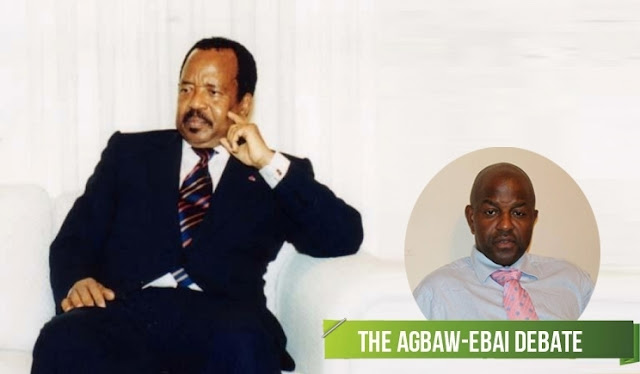
By Soter Tarh Agbaw-Ebai











7, October 2026
Messi bids farewell to Argentina fans in emotional international finale 0
Lionel Messi brought the curtain down on his 21-year international career on Tuesday, bidding farewell to adoring Argentina fans in an emotional final appearance for the former world champions in Buenos Aires.
In a perfectly scripted finale, the 39-year-old widely regarded as the greatest football player in history signed off with his 126th international goal in front of 85,000 supporters as Argentina cruised to a 3-0 victory over Benin.
Messi, playing in his record-extending 208th international, also provided the assist for the opening goal scored by veteran Nicolas Otamendi, with Nico Paz also scoring.
But the match was a footnote to the occasion itself, which saw Messi savouring the adulation of the Monumental Stadium crowd one last time for an event which had been billed as “The Last Tango”.
Beforehand, Messi wiped away tears as the bus carrying him and his Argentina team-mates made its way through crowds of wellwishers en route to the stadium.
Messi took the field alongside his three children and received affectionate waves from his wife, Antonela Roccuzzo, and his mother, Celia Cuccittini, who were watching from a VIP box.
Shortly before kick off, a giant Argentina jersey bearing the word “Gracias” (Thank You) above the football superstar’s No.10 was laid out on the pitch as the crowd roared their approval.
Messi welled up again as Falklands War veteran Fabio Santana sang the national anthem beside a banner which read – “The Malvinas are Argentine” – the same banner held aloft by players after their 2-1 World Cup semi-final win over England.
The match was halted in the 10th minute – in tribute to Messi’s famous shirt number – for a minute-long ovation to the former Barcelona and Paris Saint-Germain star.
He crowned the occasion with a goal from the penalty spot in the 71st minute.
‘Gave it my all’
At the final whistle a drone show lit up the night sky above the stadium, showing Messi’s image and thanking the eight-time Ballon D’Or-winner for his career.
Messi’s farewell came two and a half months after Argentina’s World Cup final defeat to Spain in New Jersey, where Messi exited in tears after making little impression in an ill-tempered 1-0 loss.
“I gave it my all; I have nothing left to give, and besides, there are great young players coming up who deserve their chance,” Messi wrote at the time.
Before Tuesday’s game, the University of Buenos Aires awarded Messi an honorary doctorate in a ceremony at the Argentine Football Association (AFA) headquarters.
Messi, who has in the past spoken of his regret at not studying more, expressed pride at the distinction.
“To be able to say that I am an honorary doctor!,” he joked.
Outside the Argentina Football Association headquarters, fans unfurled a huge Argentine flag with his image inscribed “The joy of my life.”
Former Barcelona team-mate Neymar paid tribute to the departing champion on X.
“It’s not just Argentina that thanks you, the world thanks you for everything you did for football. Thank you for making me love football even more,” he said.
Messi remains under contract with Inter Miami until 2028, although following the death of his father, Jorge, two months ago, he revealed he may hang up his boots for good sooner than anticipated.
Messi’s departure comes four years after his greatest triumph in international football, leading Argentina to victory at the 2022 World Cup to end the country’s 36-year wait for a third title, cementing his status as Diego Maradona’s heir.
“I believe Messi gave everything, absolutely everything, so it doesn’t bother me at all that he’s leaving. He has more than earned it, let him enjoy himself, let him rest,” Cecilia Adriano, 52, told AFP.
During his time with the Albiceleste, Argentina won one World Cup, were runners-up twice (Brazil 2014 and North America 2026) and were also crowned Copa America champions in 2021 and 2024.
Source: AFP